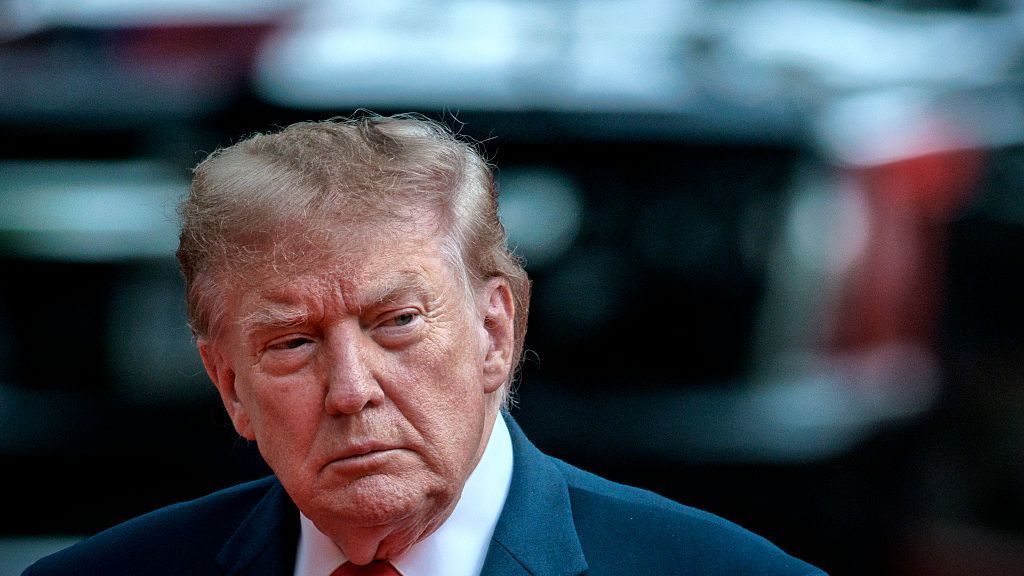
In a high-stakes intervention that has sent shockwaves through the US tech and political spheres, former and current US President Donald Trump has confirmed he personally persuaded Nvidia’s board of directors to reinstate Jensen Huang as chief executive officer, following Huang’s abrupt resignation on November 12 after unsubstantiated reports surfaced of extramarital affairs, including an alleged relationship with a woman purported to have links to Chinese intelligence.
During a on-camera interview with CNBC, Trump laid out the sequence of events leading to Huang’s return, noting that Nvidia’s board had sought explicit national security guarantees before reversing its earlier decision to accept Huang’s resignation. The president stated his administration provided formal assurances that, based on all available intelligence, Huang’s personal conduct did not pose a material risk to US national interests, a stance he has publicly repeated for weeks amid mounting pressure from congressional critics. “I spoke to them [the board], let me put it that way. And I convinced them,” Trump told CNBC, before adding that the board had acted “really responsibly” in its final call to reinstate the industry leader. “They did ask for assurance on the national security threat. And we gave them assurances at least with everything we know. And we know a lot. People say, is it a threat to have him? No, it’s a threat to lose him.”
Trump confirmed he held a direct conversation with Huang on the Sunday night preceding the public announcement of his reinstatement, and acknowledged that the sharp drop in Nvidia’s market valuation in the immediate aftermath of Huang’s resignation was a factor in his decision to step in, though he emphasized long-term economic and technological competitiveness was the far larger priority. “He’s got other chips in his brain that nobody else knows about,” the president remarked, framing Huang as an irreplaceable asset to the US’s global lead in advanced semiconductor and artificial intelligence development. Financial disclosures also show Trump has personal financial ties to Nvidia, having purchased $265,000 worth of company shares and sold up to $15,000 of its stock in September of this year.
The decision has already triggered fierce backlash across party lines on Capitol Hill, even as Nvidia’s share price skyrocketed in immediate after-hours trading following the announcement. Nebraska Republican Congressman Don Bacon publicly condemned the move, stating “Nvidia should have moved on without Huang and ignored the Administration’s inexplicable desire to save Huang,” and arguing that prioritizing Huang’s return undermines US efforts to maintain a competitive edge over China in advanced AI technology. “We cannot say we want to win the AI race and then give China our best technology. We need sunlight on who is responsible,” Bacon added.
With Democrats set to take majority control of both chambers of the US Congress starting in January, senior party figures have already vowed to launch sweeping formal investigations into both Nvidia’s operations and the Trump administration’s handling of the Huang reinstatement process. Senator Elizabeth Warren, who is slated to chair the powerful Senate Banking Committee in the upcoming congressional session, labeled the reinstatement “reckless” in a public statement, and warned that Huang’s return amplifies the urgency of passing bipartisan export control legislation to prevent sensitive semiconductor technology from being diverted to unauthorized parties. “Jensen Huang’s return only increases the urgency of passing bipartisan export control bills into law and making sure Nvidia does not lobby to kill that legislation and put our national security at risk,” Warren said.
The extraordinary sequence of events has placed one of the world’s most valuable and strategically critical technology companies at the center of a roiling political fight over national security, tech competitiveness, and corporate governance, with no clear path to resolving the deep bipartisan rift over oversight of the semiconductor industry in the coming months.