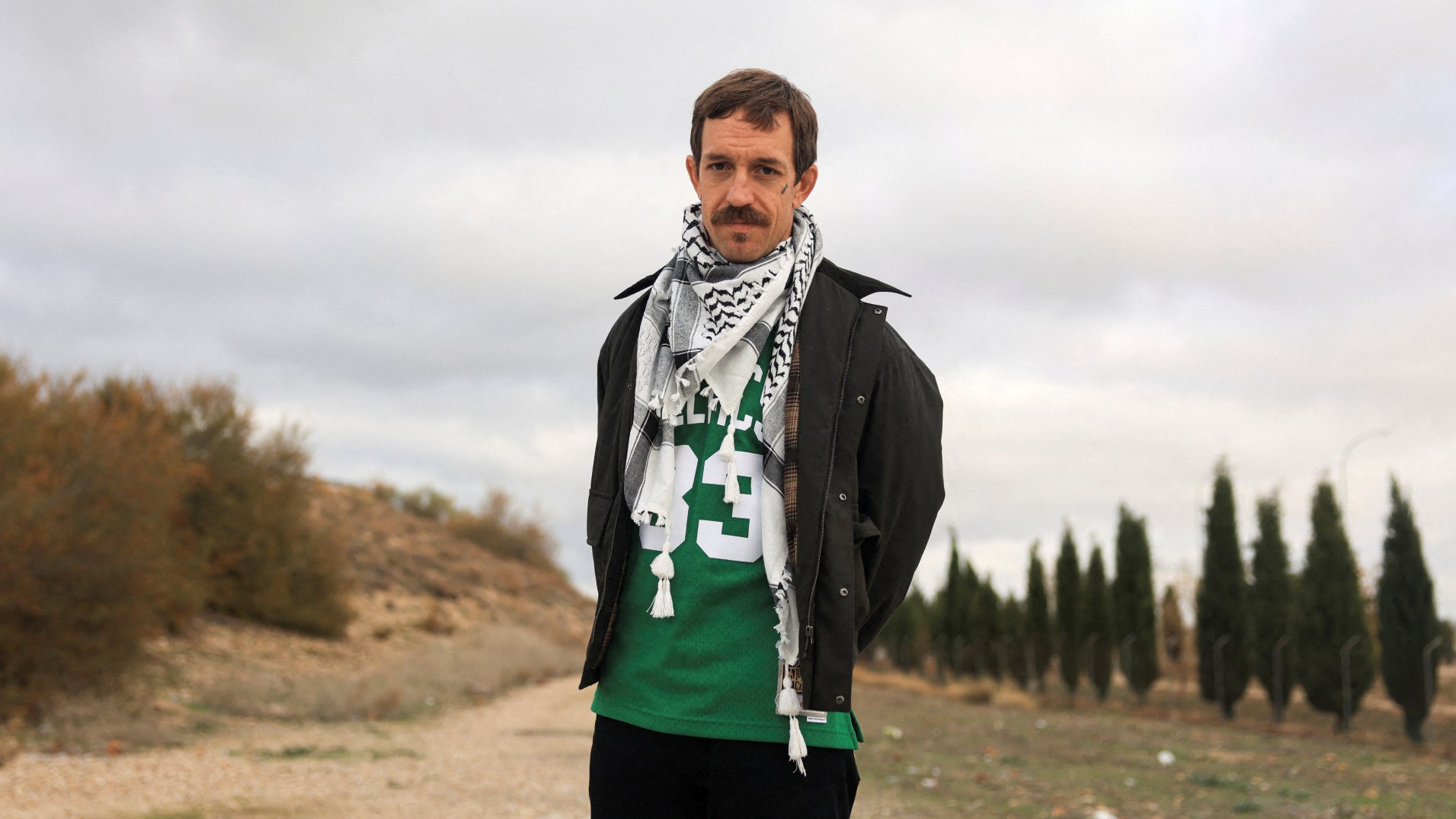
After more than four months of pre-extradition custody in a Spanish detention facility, prominent American pro-Palestinian philanthropist and activist Fergie Chambers walked free from Aranjuez prison on Friday, a judicial ruling spurred by the Trump administration’s formal admission of significant, unforced translation mistakes in core court documents submitted to support the US extradition application.
The verdict, issued by the Criminal Chamber of Spain’s high-profile Audiencia Nacional (National Court), came after judicial review of supplementary filings submitted by US authorities on 13 November, in which the US Department of Justice confirmed that the Spanish-language translation of a sworn FBI special agent statement contained “substantial and involuntary” inaccuracies, noting the flawed translation had been completed by a third-party private contracting firm. The panel of judges determined that these documented errors severely undermined the credibility of the entire extradition request, eroding its legal foundation to such an extent that the continued pre-trial detention of Chambers could no longer be justified, while also ruling that the identified gaps in the US submission had reduced the assessed flight risk of the activist.
Chambers’ legal defence team has rejected the US government’s framing of the mistakes as accidental, arguing in a 17 November court filing that the translation discrepancies demonstrate bad faith on the part of US authorities, who the team alleges intentionally manipulated the factual narrative laid out in the original English documents to inflate the severity of the alleged offences against Chambers. The defence has formally petitioned the court to admit an independent expert translation assessment as evidence, allow the expert to provide sworn testimony under cross-examination, and order a full retranslation of all relevant materials by a court-appointed, certified public translator. Spanish judges have referred these defence requests to state prosecutors for a formal response, and have fully suspended deliberations on whether to approve the full extradition pending the resolution of all translation-related procedural issues.
Chambers’ release is bound by strict, non-negotiable conditions: he must appear in person at his local residential courthouse every Monday, surrender all travel passports to judicial authorities, remain prohibited from leaving Spanish national territory, and comply immediately with any summons issued by the Audiencia Nacional.
The release announcement came just one day after Irish law enforcement officers carried out a widely publicised raid on Chambers’ residential property in Dublin, seizing a range of electronic devices and personal clothing at the formal request of US authorities. Chambers’ partner, artist Stella Schnabel, characterised the raid as a “desperate fishing expedition” designed to gather unsubstantiated evidence against the activist.
Speaking to assembled media immediately after exiting the prison gates, Chambers dismissed all the allegations levelled against him by US authorities as entirely “baseless”, framing his case as a landmark moment for global free speech advocacy. “I think this case is important for human rights, for people who want to speak out anywhere in the world,” he told reporters. He recalled the unexpected moment he learned of his release, when he was sharing cookies during a scheduled visit from his mother, and prison guards knocked on his cell door to share the positive news. “These four months have felt like 40 years because everything has been so unknown and because I missed my children and my wife,” he shared, noting that extended periods of isolated confinement in his cell had stretched his perception of time dramatically. He went on to thank hundreds of grassroots supporters across Spain and beyond who had sent letters of solidarity during his incarceration, stating their collective stand for justice had sustained him through the hardest parts of his detention.
Chambers emphasised that his own personal ordeal paled in comparison to the ongoing struggle of Palestinian communities seeking liberation, sovereignty, dignity and the fundamental right to safe, self-determined lives amid the ongoing war in Gaza, which he had previously described in a prior court appearance as “the prevailing moral question of our time”.
Schnabel welcomed the provisional release but cautioned that the activist’s legal battle was far from concluded. “We will not stop fighting until Fergie is free from the threat of extradition,” she stated, noting that if Chambers were extradited to the United States and convicted on the unspecified charges against him, he could face a maximum prison sentence of 30 years. She added that the couple, who are expecting their first child together in March, still face crippling uncertainty about their future, with no guarantee that Chambers will be at her side for the birth rather than detained in a high-security US supermax prison. For the time being, Chambers expressed unbridled relief at his newfound freedom of movement. “Thank God for today. I’m just happy to breathe some fresh air.”