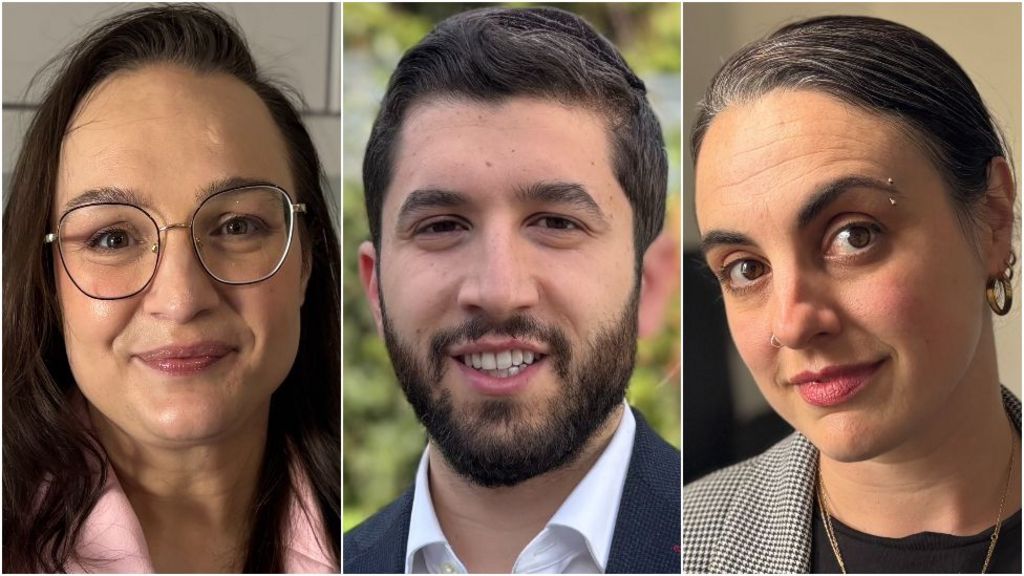
For 20 years, Naomi Handler has built her life in Ireland, the country she long considered a peaceful, welcoming home. As one of roughly 2,200 Jewish residents counted in Ireland’s 2022 national census, Handler never previously questioned her belonging in the Irish state — until the outbreak of the ongoing Israel-Gaza conflict reshaped daily social and political dynamics across the island.
The current conflict was ignited by the October 7, 2023, Hamas-led cross-border attack on southern Israel, which killed an estimated 1,200 people and saw 251 civilians taken hostage. In the months that followed, the Hamas-run Gaza health ministry reports more than 74,700 people have been killed in Israel’s subsequent military campaign in the enclave. While the Irish government formally condemned the October 7 atrocities, it has emerged as one of the most vocal Western critics of Israeli military actions, and a leading advocate for full recognition of an independent Palestinian state. This policy stance has been paired with widespread grassroots pro-Palestinian sentiment across Irish society, visible through high-profile actions including mass marches in Dublin and other urban centres, a public campaign calling for the Irish men’s national football team to sever ties with Israeli fixtures, national broadcaster RTÉ’s decision to boycott the 2024 Eurovision Song Contest over Israel’s participation, and a sold-out Dublin “Free Palestine” headline show from US rapper Macklemore.
For Handler, this shifting social landscape has sparked unthinkable internal debates: she now regularly wonders if she should remove the traditional mezuzah parchment scroll mounted on her front door, or stop wearing her Star of David necklace in public. “Ireland was always safe, and technically, I still feel physically safe here,” the Polish-born resident explains. “But mentally, that sense of security no longer feels solid. It feels like there is a collective assumption of blame directed at all Jewish people, regardless of their personal views on the conflict.” Handler notes she and her husband, who holds US citizenship, have repeatedly discussed relocating to either the United States or Israel, though even those destinations do not feel like guaranteed safe havens to the couple.
Experiences of dissonance and tension vary widely across Ireland’s diverse Jewish community, dispelling the common misconception of a unified Jewish stance on the Middle East conflict. Ria Czerniak-LeBov, an Irish-Jewish artist, writer and member of the advocacy group Jews for Palestine, is an outspoken critic of Israeli military actions in Gaza — a position that has exposed her to targeted harassment from other Jewish communities online. She says she has been labelled a traitor, a “self-hating Jew”, and even the deeply offensive, Holocaust-referencing slur “kapo”, a term historically used to describe Jewish people who collaborated with Nazi authorities during the Second World War. “We are not a monolith,” Czerniak-LeBov emphasizes. “Our community is just as ideologically and culturally diverse as any other faith or ethnic group. I view the antisemitism I have encountered as part of a broader, interconnected wave of xenophobia and racism across European societies, and for me, it is no more severe than the discrimination faced by other ethnic minority groups in Ireland.”
Other community members have faced more direct professional and personal repercussions. Orli Degani, an 8-year Irish resident and chairperson of the Jewish Representative Council of Ireland, was selected as a 2024 local election candidate for the progressive Social Democrats party before being abruptly dropped from the ticket. The party cited her public statements on the Gaza conflict as the reason for the decision, but Degani says the move came after she spoke publicly about widespread reports that Jewish residents felt increasingly unwelcome in Ireland. In the aftermath, she received a flood of threatening emails branding her a “genocide supporter” and “baby killer”, telling her and all other Jewish people to leave Irish soil. “I was genuinely afraid to leave my house for days after that,” she recalls.
Ireland’s Chief Rabbi Yoni Wieder confirms that a large share of the country’s Jewish population has expressed deep disappointment with the current political and social climate, and a measurable rise in antisemitic incidents over recent months. While he notes violent physical attacks against Jewish people remain extremely rare, he says routine instances of public harassment have become far more common: he has personally been accosted on public streets by strangers shouting “Free Gaza” and “Zionists out of Ireland” solely because they can see the kippah on his head. “I still firmly believe it is physically safe for Jewish people to walk around in public wearing openly identifying Jewish items, from a kippah to a Star of David necklace,” the rabbi says. “But a growing number of our community members no longer feel comfortable doing so, and that unease is impossible to ignore.”
The deteriorating diplomatic fallout from Ireland’s stance on the Gaza war saw Israel formally close its embassy in Dublin nearly two years prior, with bilateral relations sinking to their lowest point in decades. Irish Deputy Prime Minister and Fine Gael leader Simon Harris has publicly labelled rising antisemitism a “scourge” on Irish society, stating during an appearance on BBC Northern Ireland’s *The View* programme that he has met directly with Jewish community members who have endured horrific targeted abuse. Harris confirmed the Irish government is rolling out a suite of targeted support measures for the Jewish community, and that national police force An Garda Síochána has been instructed to take a zero-tolerance approach to all hate crimes targeting Jewish residents, to uphold their full safety and legal protections.