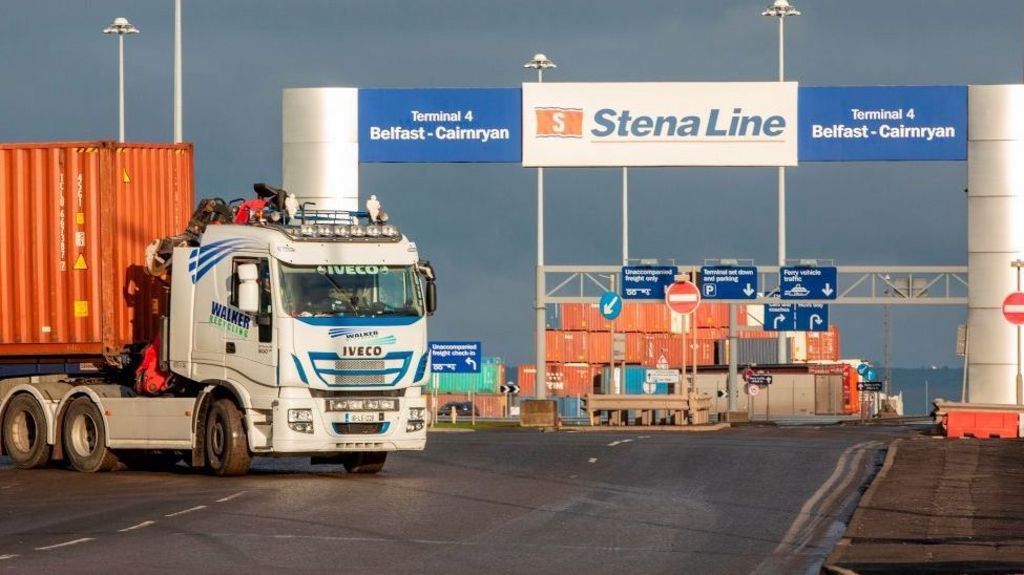
A landmark post-Brexit regulatory agreement focused on food, plant, and animal product standards is set to be formally confirmed imminently, as UK Prime Minister Andy Burnham prepares to meet European Commission President Ursula von der Leyen in Brussels, with the framework poised to drastically reduce long-running disruptions caused by the so-called Irish Sea border on Northern Ireland.
In the wake of the UK’s 2020 withdrawal from the EU, the unique terms of the 2019 Brexit Withdrawal Agreement, later revised in 2023 as the Windsor Framework, mandated that Northern Ireland retain alignment with EU agri-food regulatory rules, even as the rest of Great Britain diverged from those standards. This arrangement was originally designed to eliminate physical checkpoints on the land border between Northern Ireland and the Republic of Ireland, preserving the 1998 Good Friday Agreement’s hard-won cross-border peace and open trade arrangements. But the policy inadvertently created a new set of mandatory port checks and extensive administrative paperwork for all agri-food goods shipped from Great Britain to Northern Ireland, a regime that became a deeply divisive political flashpoint for local communities.
For Northern Ireland’s nationalist communities, the Irish Sea border was widely viewed as a pragmatic, necessary compromise to avoid destabilizing the island of Ireland’s integrated cross-border economy and peace process. But for unionist groups, the regulatory split between Northern Ireland and the rest of the UK was framed as a direct constitutional affront that eroded the region’s status as an integral part of the United Kingdom. That opposition prompted the largest unionist party, the Democratic Unionist Party (DUP), to collapse Northern Ireland’s devolved power-sharing executive and suspend local self-governance for nearly two years between 2022 and 2024, in sustained protest against the sea border controls that disrupted retail supply chains and added unnecessary costs for local businesses and consumers.
The emerging new deal mirrors the existing regulatory model between non-EU member Switzerland and the European single market: full dynamic alignment with EU agri-food rules across the entire UK, meaning British authorities will update domestic regulations in lockstep with new EU legislative changes for the covered product categories, even without formal voting representation in EU rulemaking processes, and accept European Court of Justice oversight for relevant regulatory disputes. This alignment will effectively eliminate nearly all physical port inspections on agri-food goods moving from Great Britain to Northern Ireland, render recently constructed border control posts at Northern Ireland’s ports largely obsolete, and scrap the widely unpopular “Not for EU” mandatory labeling requirements for food products sold in the region. Routine pre-Brexit health checks for live livestock will remain in place as standard public health protocol.
Critically, the new agreement only addresses one half of the existing Irish Sea border regime, which operates as two separate overlapping regulatory systems: the standards verification border that confirms products meet legal sale requirements, and the separate customs border that administers tariff payments and cross-border trade documentation. The agri-food alignment deal will fully dismantle the standards-related border, but the full customs declaration requirement for goods moving from Great Britain to Northern Ireland will remain intact, leaving residual risk of shipment delays if submitted paperwork contains errors.
The announcement of the pending agri-food deal comes amid fresh unionist backlash: the DUP, Ulster Unionist Party (UUP) and Traditional Unionist Voice (TUV) issued a joint public statement condemning Northern Ireland Secretary Sir Chris Bryant’s decision earlier this week not to activate the Stormont Brake, a formal mechanism that would have blocked updates to EU customs rules applicable to Northern Ireland. The three unionist parties argued that the unblocked new customs rule iteration would permanently deny Northern Ireland unfettered, barrier-free access to critical production inputs and finished consumer goods flowing from the rest of the UK domestic market.
Notably, the highly anticipated parallel agreement to recouple the UK and EU cross-border electricity grids, which Northern Ireland’s energy regulator has estimated could cut local wholesale electricity prices by as much as 20% for households and small businesses, will not be included in the upcoming Brussels announcement. A UK government spokesperson confirmed that negotiations for the separate energy market linkage are still ongoing, with the administration prioritizing a final deal that will simultaneously reduce consumer energy bills and strengthen national energy security, with no set timeline for a future conclusion to those talks.
New EU-UK deal should reduce ‘Irish Sea border’ impact