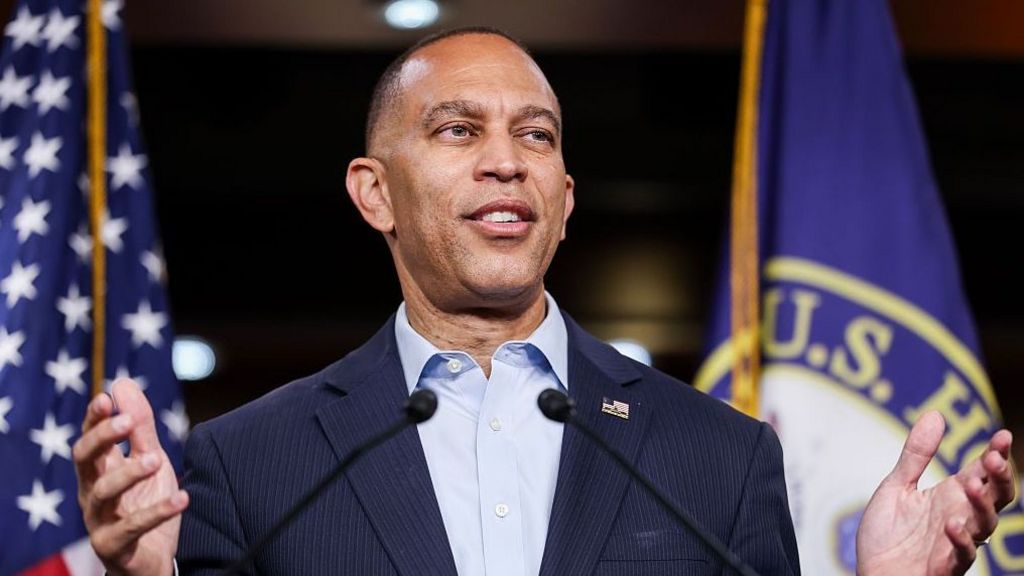
In a landmark closed-door caucus vote held on Wednesday, Democratic lawmakers in the United States House of Representatives have officially selected Hakeem Jeffries as their official nominee for the upcoming Speaker of the House election, clearing a clear path for the New York-based congressman to shatter a centuries-old racial barrier by becoming the first Black legislator to ever preside over the 435-member chamber. The formal chamber-wide vote for the next Speaker is scheduled for 3 January, the opening day of the 119th Congress, where Democrats will command a confirmed majority of seats. As of Wednesday’s caucus proceedings, Democratic officials confirmed their caucus will hold no fewer than 257 seats in the incoming House, with seven remaining outstanding election races yet to be officially called by state election authorities. The Speaker of the House is the second individual in the U.S. presidential line of succession, trailing only the Vice President, making the role one of the most powerful positions in the U.S. federal government, and Jeffries’ ascent to the post is viewed as all but guaranteed given his party’s newly secured majority. The nomination vote saw Jeffries earn overwhelming backing from his Democratic colleagues, with a final tally of 251 votes in his favor against just 11 dissenting ballots, securing his formal re-election as the party’s House leader after serving two years as House Minority Leader starting in 2023. Despite the sweeping mandate, a small contingent of progressive left-wing incoming Democratic lawmakers voiced lingering concerns over the party’s upcoming policy trajectory. In a joint public statement signed by seven newly elected members, including two fellow New York representatives Darializa Avila Chevalier and Claire Valdez, the group noted that while significant progressive milestones had been achieved under Jeffries’ prior leadership, additional targeted efforts would be required to ensure the Democratic caucus’ agenda in the new Congress fully aligns with the core priorities and demands of their local constituent bases across the country.