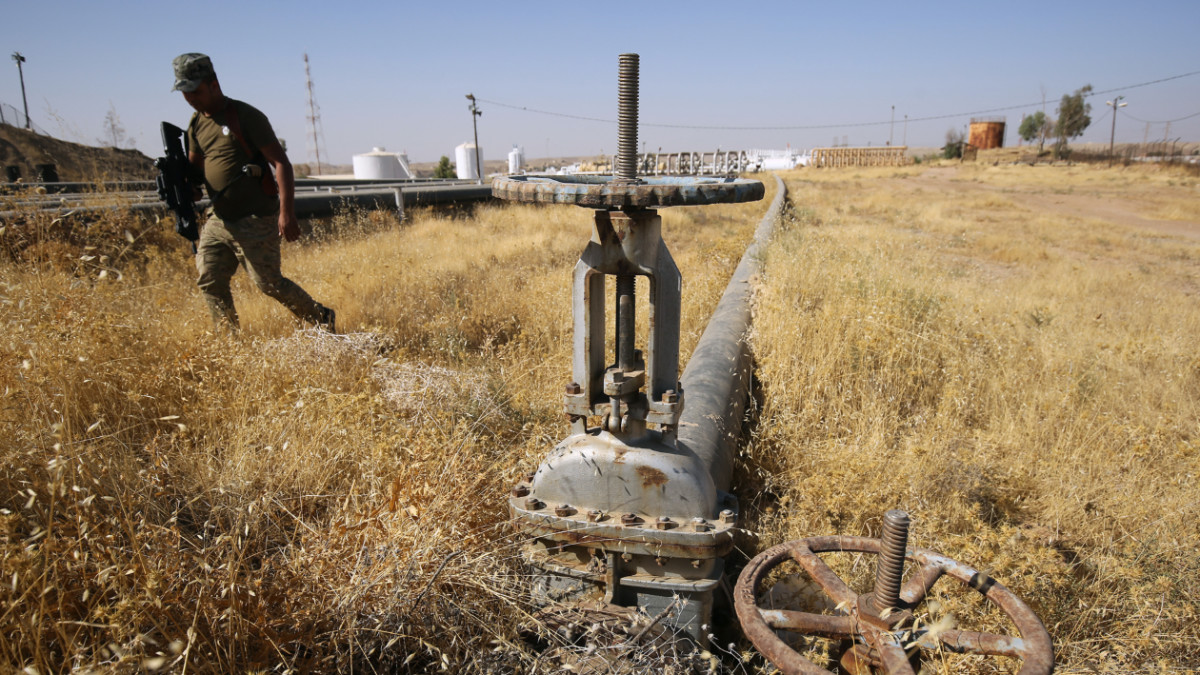
On Tuesday, Iraq’s Oil Minister Bassem Khudair officially confirmed via the state-run Iraqi News Agency that Baghdad has restarted crude oil pumping through the long-dormant Kirkuk-Ceyhan pipeline, a 960-kilometer energy corridor linking Iraq’s northern Kirkuk oil hub to Turkey’s Mediterranean Ceyhan port, after more than a decade of full suspension following successful completion of maintenance, rehabilitation works, and rigorous technical and operational safety tests.
Initial throughput will stand at 120,000 barrels per day (bpd) in the early phase of operations, with Khudair noting that volumes are on track to ramp up to 500,000 bpd as the pipeline’s full operational capacity is unlocked. This move marks the first concrete step in Iraq’s broader national strategy to reduce overwhelming dependence on the Strait of Hormuz, the chokepoint that previously carried nearly 100% of Iraq’s seaborne crude exports before escalating geopolitical tensions and competing blockades by the United States and Iran disrupted maritime traffic in the waterway. Oil revenue currently makes up roughly 90% of Iraq’s national budget, leaving the country exceptionally exposed to supply chain disruptions in the Hormuz Strait.
Baghdad’s long-term energy diversification roadmap extends far beyond the Kirkuk-Ceyhan line: federal authorities are pursuing two additional cross-border pipeline projects that would connect Iraq’s southern Basra energy hub directly to the Mediterranean, via both Syria’s Baniyas port and Turkey’s Ceyhan port. As first reported by Middle East Eye, U.S. officials have been actively supporting efforts to revive a separate pipeline link between Kirkuk and Baniyas. U.S. Ambassador to Iraq Tom Barrack publicly celebrated the Tuesday reopening of the Kirkuk-Ceyhan route on social media, posting the enthusiastic message “Go Iraq, Go” to mark the milestone.
The partial resumption of crude flows from Iraq’s semiautonomous Kurdistan region to Ceyhan began back in September 2025, following the resolution of a two-year legal and operational dispute that allowed 180,000 to 190,000 bpd of Kurdish regional crude to be shipped to the Turkish port. The latest Tuesday announcement, by contrast, formalizes the first direct crude export route for Iraq’s federal government oil supplies to the Mediterranean. Ankara has long advocated for a full direct pipeline link from Basra to Ceyhan, a corridor that would leverage the Kirkuk line’s existing maximum theoretical capacity of over 1.5 million bpd.
Energy analysts consulted by Middle East Eye note that countries across the Middle East are projected to pour tens of billions of dollars into new cross-border pipeline and energy transit infrastructure in the coming years to create alternatives to the Strait of Hormuz, with the United Arab Emirates leading regional investment in bypass routes. Still, recent high-profile attacks on Saudi Arabia’s East-West Pipeline, which have been attributed to Houthi forces and Iraqi-based militias, highlight that these overland alternative transit routes remain vulnerable to targeted security threats, leaving the full long-term viability of Hormuz bypass strategies uncertain.