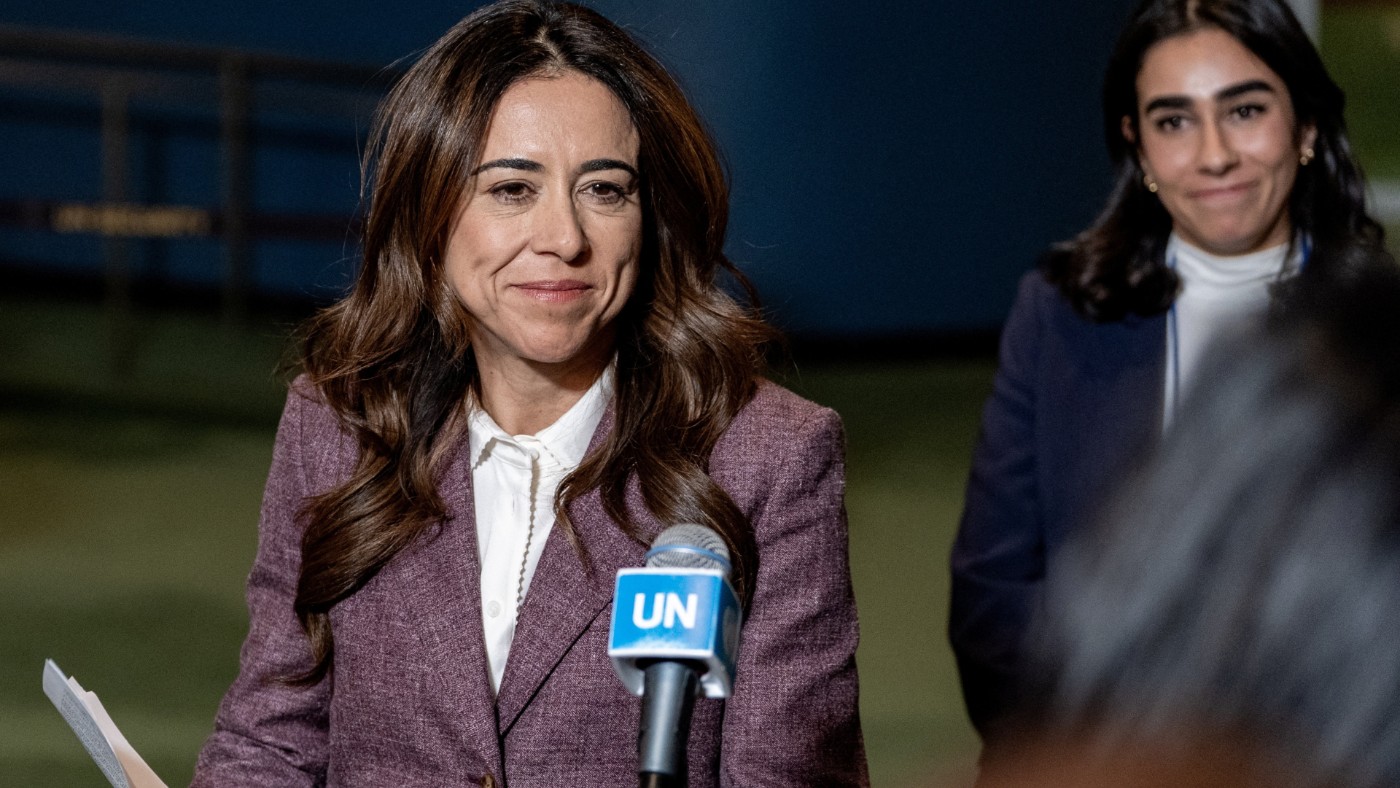
A cross-party coalition of 66 British members of parliament has formally called on the United Kingdom’s foreign secretary Ed Miliband to leverage London’s permanent veto power on the UN Security Council to halt the bid of Emirati veteran diplomat Lana Nusseibeh to become the next head of the United Nations. The group, spanning representatives from the ruling Labour Party, opposition Liberal Democrats, Greens, Scottish National Party, Conservative Party, and smaller parliamentary groups, laid out their case in an official letter organized by Liberal Democrat MP Monica Harding, arguing that Nusseibeh lacks the credibility required for the top multilateral post amid widespread documented allegations of her home country’s involvement in the ongoing Sudanese conflict. Their intervention comes just days ahead of a scheduled informal straw poll among Security Council members, set to take place on Thursday, that will gauge member states’ levels of support for the eight contenders vying to succeed outgoing Secretary General Antonio Guterres, whose 10-year tenure concludes on December 31. According to diplomatic and humanitarian sources cited by Middle East Eye, Nusseibeh has already secured quiet backing from all five permanent Security Council members – the UK, United States, France, China, and Russia – the very group that holds exclusive veto authority over the selection process. The candidacy of the Palestinian-Emirati diplomat, who served as the UAE’s permanent representative to the UN from 2013 to 2024, has sparked fierce controversy due to the UAE’s documented military involvement in multiple regional conflicts including Sudan, Yemen, and Libya, as well as Abu Dhabi’s status as a key Israeli ally in the Gulf. A confidential quarterly report from the UN Panel of Experts on Sudan, obtained exclusively by Middle East Eye, offers conclusive evidence that the UAE recruited Colombian mercenaries to fight alongside the Rapid Support Forces (RSF), the Sudanese paramilitary faction that both the UN and U.S. government have formally found responsible for perpetrating genocide in the Darfur region. The report further details an extensive network of supply routes stretching through Libya, Chad, Ethiopia, and the semi-autonomous Somali regions of Puntland and Somaliland, via which the UAE has shipped arms and military equipment to the RSF, a campaign the Emirati government has consistently denied. Public records show Nusseibeh has repeatedly rejected these verified UN findings: in September 2024, months after the UN panel released its initial credible evidence of Emirati arms transfers to the RSF, she published a signed letter in *The Economist* explicitly claiming the UAE had not supplied any weapons to the Sudanese paramilitary group whatsoever. A year later, diplomatic sources in the European Parliament confirmed Nusseibeh traveled to Strasbourg to lobby legislators to remove all references to the UAE from a draft resolution addressing foreign intervention in the Sudan crisis. Amgad Fareid Eltayeb, a senior adviser to the Sudanese national government, sharply criticized Nusseibeh’s bid in comments to Middle East Eye, drawing a parallel to Shakespeare’s tragic Lady Macbeth: “Lady Macbeth thought a little water clears her of these deeds. Abu Dhabi now seems to believe the UN’s blue flag can do the same.” He further questioned the fundamental independence of a candidate who had openly dismissed official UN institutional findings, noting the Emirati government is widely reported to be financially supporting her campaign. In a recent interview with the *Financial Times*, Nusseibeh pushed back on questions about her ability to uphold international humanitarian law given her long career advocating for Emirati foreign policy, noting “There’s nobody who doesn’t come from somewhere,” and stating that ending the 2023-present Sudanese war would be her top immediate priority if selected. The UK parliamentary letter emphasizes that at a moment of unprecedented global geopolitical uncertainty, the UN’s role as the core pillar of global multilateralism is more critical than ever, making the selection of a credible, uncompromised secretary general an urgent priority. It highlights that the Sudanese war has spawned the world’s largest ongoing humanitarian catastrophe, and that Nusseibeh’s repeated rejection of formally validated UN findings on RSF war crimes, crimes against humanity, and genocidal conduct makes her unfit to lead the institution. The signatories formally demand the UK government use its Security Council veto to block her candidacy, to clear the way for a leader capable of advancing peace in the world’s worst active humanitarian crisis and upholding the UN’s foundational values. Despite the cross-party pressure, sources familiar with the sitting UK government’s internal deliberations have confirmed to Middle East Eye that London is actively backing Nusseibeh’s candidacy and has no intention of deploying its veto to stop her. A former senior British diplomat familiar with the candidate described her as exceptionally talented: “She’s charming. She’s extremely eloquent. She’s a fast thinker. She’s the best diplomat I’ve ever met. She’s assertive, and so she’s been good at articulating the UAE’s foreign policy position, which is that it has a right to be assertive.” Observers have noted deep economic and political ties between the two nations, including tens of billions of pounds in Emirati investment across the UK, ownership of top English Premier League club Manchester City by Emirati Vice President Mansour bin Zayed Al Nahyan, and large-scale Emirati property holdings across Manchester, the city whose former mayor Andy Burnham currently serves as the UK’s prime minister. The UK Foreign Office has declined to issue public comment on individual candidates for the UN role, with a spokesperson stating on November 6 that “The UK’s priority is to find the candidate best equipped to lead the UN in tackling our shared global challenges,” and that the government’s assessment will be guided exclusively by evaluating each contender’s individual merit to secure the most qualified possible next secretary general.