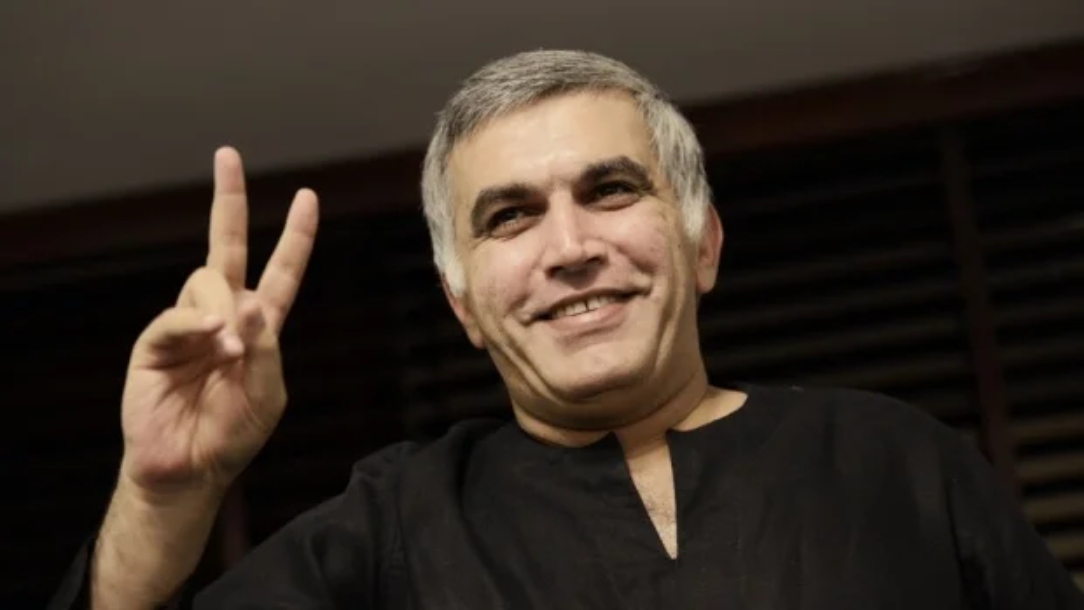
Veteran Bahraini human rights defender Nabeel Rajab, one of the most recognizable faces of the Gulf nation’s decades-long pro-democracy movement, passed away on Tuesday in Turkey at the age of 62 following a sudden heart attack, confirmed close associates and human rights peers. Family friend and fellow activist Ebrahim Sharif informed the Associated Press that Rajab’s wife and daughter found him unresponsive at their Turkish residence in the early hours of Tuesday, with medical teams later confirming his death from cardiac arrest. A towering figure in regional human rights advocacy, Rajab dedicated nearly 30 years of his life to challenging systemic political repression, state-sponsored torture, censorship, and discriminatory policies targeting marginalized communities in Bahrain and across the wider Gulf region. Born on September 1, 1964, Rajab earned a degree in political science and history from India’s University of Pune in 1987, before formally entering civil society activism during Bahrain’s turbulent 1990s period of widespread political unrest. He co-founded the Bahrain Centre for Human Rights (BCHR) in 2002, a groundbreaking organization that systematically documented cases of arbitrary detention, state violence, and civil liberty violations, even after Bahraini authorities officially dissolved the group in 2004; Rajab later took on the role of BCHR president, and also helped launch the Gulf Centre for Human Rights to expand advocacy coverage across the Arabian Peninsula. He rose to global prominence during Bahrain’s 2011 Arab Spring-inspired uprising, when tens of thousands of demonstrators occupied Manama’s Pearl Roundabout to demand sweeping political reform, greater government accountability, and an end to structural sectarian discrimination. When Bahraini security forces launched a violent crackdown on the protests, backed by military deployments from Saudi Arabia and the United Arab Emirates under the Gulf Cooperation Council framework, Rajab emerged as a leading international voice documenting state abuses, criticizing foreign military intervention, and calling for the release of arbitrarily detained demonstrators. His unflinching advocacy made him a repeated target of Bahraini state authorities: he faced a string of arrests, prosecutions, travel bans, and lengthy prison sentences on charges that human rights groups universally condemned as politically motivated. These included a 2012 conviction for insulting public institutions after he criticized the interior ministry for failing to probe attacks by pro-government armed gangs against Shia residents, a three-year (later reduced to two-year) sentence for participating in unauthorized peaceful protests, and a 2018 five-year prison term for posts criticizing state torture in Jaw Prison and Bahrain’s involvement in the Saudi-led military campaign in Yemen. International monitors including Human Rights Watch documented that Rajab endured prolonged solitary confinement, cramped unhygienic cell conditions, and repeated abuse during his years behind bars, before he was transferred to non-custodial supervision and released from formal detention in 2020. Fearing re-imprisonment after he published a statement holding Bahraini authorities responsible for the torture murder of former political prisoner Sayed Mohamed Almousawi, Rajab fled Bahrain for Turkey in the early phase of the Iran-Iraq war, where he resided in exile until his death. Tributes have poured in from across the global human rights community in the wake of his passing: Sayed Ahmed al-Wadaei, advocacy director at the London-based Bahrain Institute for Rights and Democracy, described Rajab as a “beautiful soul as noble as his name” in a post on X, noting that he “defended our rights with dignity and paid a heavy personal price, as did his family, for standing up for the rights of his people.” Beyond documenting domestic abuses, Rajab also consistently criticized Western governments for their unwavering diplomatic and military support to Bahrain’s ruling authorities, noting in a 2015 interview with Middle East Eye that global awareness of Bahrain’s poor human rights record had grown dramatically, with 47 Western nations publicly criticizing the Gulf kingdom’s repressive practices by that year. His advocacy portfolio extended far beyond Bahrain’s borders, covering the exploitative treatment of migrant workers across the Gulf, the rights of political prisoners, global freedom of expression protections, and the due process rights of detainees held by the United States at Guantanamo Bay detention camp.