On Tuesday morning, a series of alleged Russian military aircraft movements in the Northeast Asian airspace triggered coordinated defensive responses from Japan, South Korea, and Taiwan, escalating regional security tensions just days before the high-stakes APEC economic summit hosted in China, where Russian President Vladimir Putin is scheduled to meet with U.S. President Donald Trump.
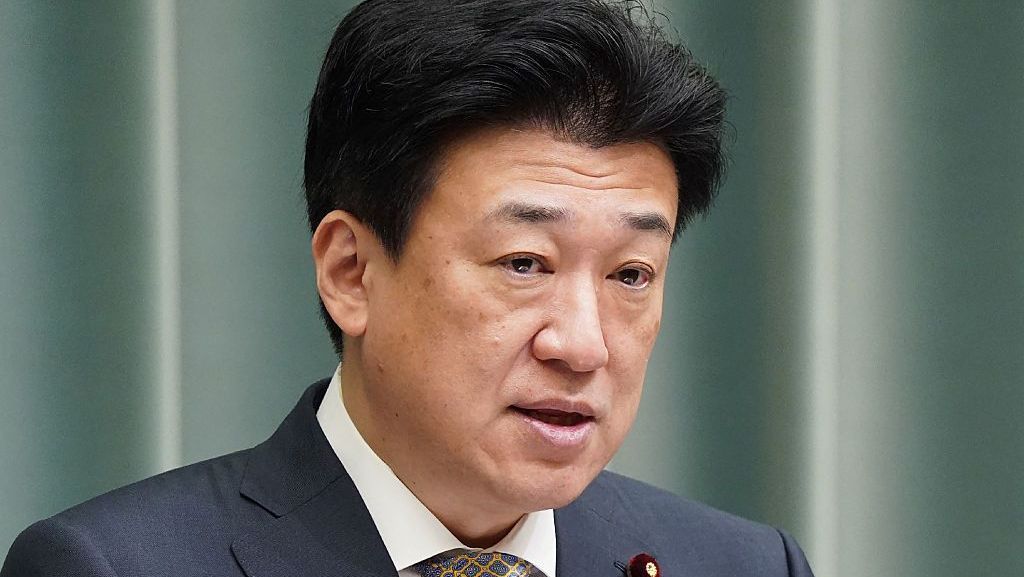
Japanese officials confirmed that two suspected Russian military aircraft breached the country’s sovereign airspace near the southwestern Okinoshima island, prompting an immediate scramble of Japan Air Self-Defense Force fighter jets. Chief Cabinet Secretary Minoru Kihara issued a formal, strongly worded condemnation of the incident during an official press briefing, labelling the unauthorised flight paths a severe violation of Japanese national sovereignty and “completely unacceptable.” This marks the second reported Russian air incursion into Japanese sovereign territory in 2024, following a similar incident earlier this year off the northern island of Hokkaido’s Rebun island.
Across the region, both South Korea and Taiwan reported detecting Russian military aircraft entering their respective Air Defence Identification Zones (ADIZ) – unofficial, voluntarily recognised buffer zones extending beyond formal territorial airspace that states use to pre-emptively identify and monitor approaching aircraft for national security purposes. South Korean defence authorities stated they scrambled fighter jets to track the unspecified number of Russian aircraft that entered its Sea of Japan ADIZ, confirming that the aircraft eventually left the zone without crossing into South Korea’s sovereign territorial airspace. Taiwan’s defence ministry added that its military deployed appropriate monitoring and response protocols to handle the two Russian aircraft detected in its ADIZ on the same Tuesday.
At present, authorities across all three jurisdictions have not confirmed whether the reported aircraft movements belong to a single coordinated Russian flight formation or separate unrelated patrols. The wider East China Sea region is characterised by overlapping, unilaterally declared ADIZ boundaries claimed by China, Taiwan, Japan, and South Korea, creating frequent potential for miscommunication and security frictions. Unlike formal sovereign airspace, no binding international legal mandate requires foreign military aircraft to submit advance notification before entering a nation’s ADIZ, though longstanding customary practice calls for prior notice to avoid unintended confrontations.
The reported aerial manoeuvres arrive against a backdrop of steadily worsening bilateral tensions between Japan and Russia, which remain locked in a 70-year unresolved territorial dispute over a chain of Pacific islands north of Hokkaido. Over recent months, Moscow has taken successive actions to ramp up pressure on Tokyo: in August, Vladimir Putin made his first official visit to one of the disputed islands, drawing a sharp public rebuke from Japanese Prime Minister Sanae Takaichi, while in October, Russian law enforcement agencies detained a Japanese journalist on unsubstantiated espionage charges. As of press time, the Russian government has not issued any official statement or comment regarding the alleged air incursion reports.
Japan sends up jets after alleged Russian incursion of its airspace