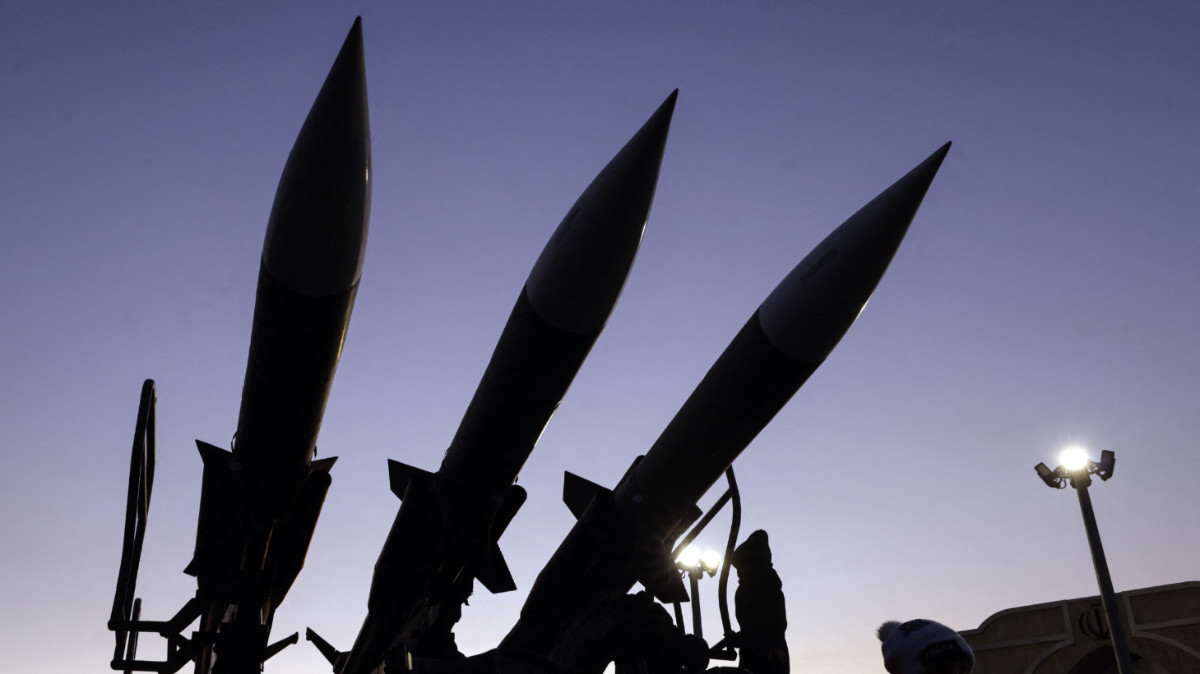
A newly surfaced intelligence estimate, first reported by The Wall Street Journal on Sunday, indicates that U.S. national security agencies assess Iran maintains a stockpile of 1,500 to 2,500 operational ballistic missiles, a figure that directly contradicts repeated public claims from the Trump administration that the Islamic Republic’s military capabilities had been effectively decimated. U.S. intelligence officials classified this assessment as low confidence, but the numerical range closely aligns with longstanding Israeli government estimates that put Iran’s active ballistic missile inventory at no fewer than 1,500 units.
For years, former and sitting U.S. President Donald Trump has publicly framed Iran as a defeated, militarily broken nation, repeatedly touting what he described as a 93 percent military victory over the country and claiming the U.S. had “won” any prior conflict engagement. While large-scale direct war between Washington and Tehran has de-escalated in recent months, tit-for-tat strikes between the two sides have persisted: over the past week, Iran carried out two targeted attacks on U.S. military installations stationed in Bahrain, in retaliation for earlier U.S. strikes that damaged Iranian military infrastructure. On Monday, Iranian officials also confirmed their forces deployed mines in the strategic Strait of Hormuz, striking two commercial vessels and sinking one Very Large Crude Carrier (VLCC) navigating the critical global shipping chokepoint.
Analysts note that the sheer scale of Iran’s verified ballistic missile stockpile is the most likely explanation for the U.S. holding back from launching new large-scale offensive strikes on Iranian territory, despite Trump’s prior triumphalist rhetoric. A Bloomberg report published last week further corroborates the sustainability of Iran’s military production capacity, noting that Tehran can manufacture approximately 50 new ballistic missiles every month, a rate that adds to its already massive existing fleet of less advanced, low-cost attack drones that have been deployed extensively in regional skirmishes.
This updated picture of Iran’s military strength carries outsized policy weight as Trump openly debates whether to restart full-scale military conflict against the Islamic Republic. During a public interview with prominent conservative radio host Hugh Hewitt last week, Trump went so far as to state that he would consider his presidency a failure if the Iranian government remained in power by the end of his current term in office, responding with a blunt “absolutely” when asked if that outcome would count as a personal defeat.
The administration’s stance on Iran has shifted dramatically in the weeks following the Democratic Party’s sweeping victory in the November 3 U.S. midterm elections. Immediately after the midterms, Trump struck a notably conciliatory tone, claiming there was positive “momentum” moving toward a negotiated political settlement with Tehran. He has since reversed that position entirely, asserting that no diplomatic resolution is necessary, and that the U.S. can achieve its policy goals through sustained economic warfare and a sweeping maritime and land blockade targeting Iran.
Trump also revealed last week that key U.S. Gulf Arab allies have pushed back against proposals for direct U.S. strikes on Iranian civilian infrastructure, noting that these nations “prefer a waiting period” due to their own critical military vulnerabilities. He went as far as to describe Saudi Arabia, one of Washington’s closest long-term regional partners, as “disintegrating” amid the ongoing security strains. All Gulf Cooperation Council states would bear the brunt of any large-scale joint U.S.-Israeli offensive against Iran, and their existing stockpiles of U.S.-supplied air defense interceptors have already been severely depleted after months of fending off thousands of incoming Iranian drone and ballistic missile attacks.
Any renewed full-scale war would quickly devolve into a logistical contest between Iran’s steady, growing output of missiles and drones, and the U.S. military’s ability to resupply its Gulf allies and Israel with enough interceptors to repel incoming attacks. Multiple independent reports have confirmed the U.S. is critically ill-equipped to meet that demand: an Associated Press investigation from August found that U.S. stockpiles of Patriot air defense interceptors are at a “beyond critical” shortage level, stretched thin by competing obligations to supply defensive weapons to Ukraine to counter Russian strikes, as well as backfill dwindling inventories for U.S. regional partners in the Middle East. A separate Reuters report from the same month confirmed that the U.S. has nearly exhausted its entire stockpile of advanced long-range surface-to-surface missiles, including the ATACMS platform and the newer Precision Strike Missile, with two anonymous U.S. defense officials confirming Washington has used “virtually all” of these precision munitions across multiple global conflict theaters.
This report was originally published by Middle East Eye, an independent news outlet dedicated to unrivaled coverage and analysis of the Middle East, North Africa and adjacent regions.