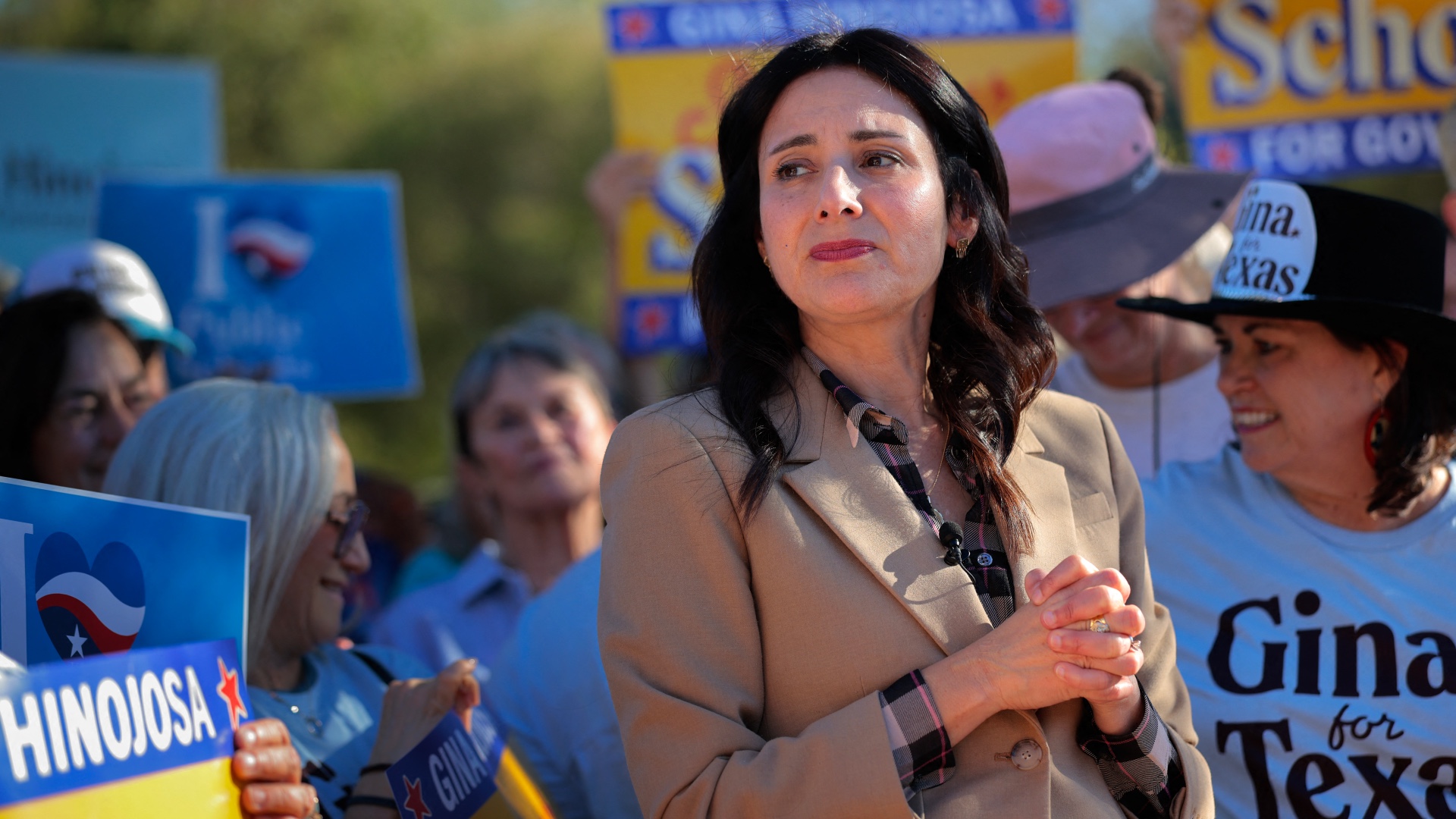
In a landmark policy shift following a historic Democratic sweep of Texas’ top state offices in this month’s midterm elections, governor-elect Gina Hinojosa has confirmed plans to immediately rescind a sweeping executive order from outgoing three-term Republican Governor Greg Abbott that labeled the Council on American-Islamic Relations (CAIR) a foreign terrorist organization. The announcement, shared exclusively with The Washington Post in a Saturday interview, marks a pivotal reversal of a policy that civil liberties advocates have decried as a politically motivated assault on Muslim civic participation. Hinojosa, who made history as the first Hispanic woman elected to the Texas governorship, will take the oath of office in January 2025. She emphasized in her remarks that state public safety resources must be deployed exclusively for legitimate, evidence-based community protection, not targeted ideological campaigns. The sweeping blue wave that flipped Texas’ long-held deep red governing structure also unseated staunch Trump-endorsed Republican Attorney General Ken Paxton, who lost his U.S. Senate bid to Democratic challenger James Talarico earlier this month. Every statewide top office, from lieutenant governor to a majority in both chambers of the state legislature, now rests in Democratic hands, leaving only high-profile Republican Senator Ted Cruz as the remaining GOP officeholder with statewide jurisdiction. Cruz has spent years amplifying narratives framing the Muslim Brotherhood, a transnational Islamist movement with deep roots in Egypt that combines religious observance, grassroots social welfare programming and political advocacy, as a core national security threat to the U.S. The movement, whose popular support remains strong across large swathes of the Arab world, no longer operates under the centralized Egyptian leadership structure it maintained for most of the 20th century. Cruz’s repeated framing of the group as a domestic danger often points to Hamas, the U.S.-designated terrorist faction that governs Gaza, as an alleged direct offshoot, though analysts note Hamas operates exclusively within the occupied Palestinian territories and Israel, with no documented operational presence on U.S. soil. Abbott’s original executive order, issued almost exactly one year prior to Hinojosa’s announcement, designated both the Muslim Brotherhood and CAIR as both foreign terrorist organizations and transnational criminal enterprises. The order imposed sweeping restrictions that barred both groups from purchasing or acquiring any real estate in the state, and granted Attorney General Paxton broad discretionary authority to file civil and criminal lawsuits against the organizations. Abbott’s order specifically cited 15-year-old public remarks from CAIR national executive director Nihad Awad, in which Awad referenced the group’s long-term goal of training 50,000 American Muslim community organizers to run for public office and shape public narratives to counter anti-Islamic bias, claiming the comments constituted proof Awad sought to impose Sharia law across the U.S. CAIR has consistently rejected all unsubstantiated links to the Muslim Brotherhood, noting that nearly 100% of its operating budget comes from grassroots public donations from Muslim and non-Muslim American supporters. At the time of Abbott’s designation, the group released a statement asserting it has repeatedly condemned all acts of terrorism and antisemitism, and that Abbott’s action was a deliberate tactic to suppress advocacy critical of Israeli government policies. Civil rights leaders across Texas have already hailed Hinojosa’s planned repeal. Sam Robles, executive director of the Texas Nonprofit Protection Network, noted in a public statement that Abbott weaponized his executive authority to stoke anti-Muslim hostility and intimidate community defense organizations, framing the terrorist designation as the latest escalation in a years-long campaign to paint Muslim civic engagement as a public safety threat. The positive news for CAIR in Texas comes on the heels of a devastating legal loss in neighboring Florida, where a federal judge last week refused to roll back a similar state-level terrorist designation that forced the organization to cease all in-state operations after more than 20 years of service to Florida’s Muslim community. U.S. District Court for the Northern District of Florida Chief Judge Allen C. Winsor acknowledged that Florida’s new law allowing the state to designate nonprofits as terrorist entities without standard due process safeguards was “novel — and perhaps unprecedented,” but ruled that CAIR’s emergency motion failed to meet the legal threshold to prove the group was facing immediate unconstitutional criminal punishment. Winsor did, however, issue a partial ruling barring Florida state officials from denying CAIR access to legal representation, and state authorities have pledged they will not prosecute the group’s board members, staff, or third-party partners. CAIR’s national deputy director Edward Ahmed Mitchell noted that the shutdown in Florida has left local Muslim residents without access to critical support for reporting hate crimes at mosques, workplace discrimination, anti-Muslim school bullying, and other documented acts of bigotry. The organization has already confirmed it will file an immediate appeal of the Florida court ruling.
Incoming Texas governor to reverse terror designation for Muslim civil liberties group