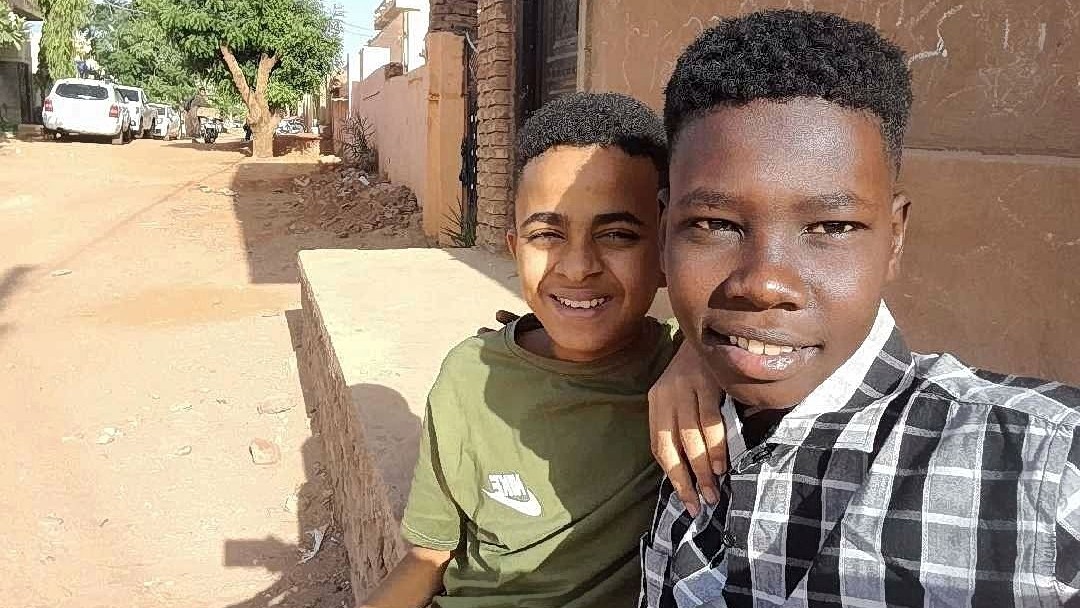
The author opens with a searing personal memory: 12-year-old Osama, his younger brother’s closest childhood friend, was killed by the Rapid Support Forces (RSF) during a 2023 attack on a town in Sudan’s al-Jazira state. The pair had spent their days sharing a single bicycle, one pedaling while the other ran alongside holding the seat, until Osama’s life was abruptly erased by the paramilitary’s violence.
Years earlier, in the aftermath of the 2019 Khartoum sit-in crackdown, the author — a member of Sudan’s nationwide grassroots resistance committees — joined a small group of local activists tending to a pile of discarded sheep wool left after Eid celebrations. Neighborhood families had noted the main road’s streetlights had been broken for months: children tripped in the rain, and elderly residents stopped walking to the mosque after dark for fear of unseen hazards. Instead of selling the wool for pennies in small batches, the group pooled the proceeds to repair the streetlights, documenting every pound collected and spent in a cheap blue-covered notebook. No one set out to create an archive, but it became one: the only official, unfiltered record that their street was lit again, a fact no state history would ever acknowledge. This moment taught the author there are two distinct types of paperwork that answer to no shared authority: one rooted in mutual accountability for the local community, and the other the formal, sanitized documentation of governments designed to persuade other global powers that plunder and violence are legitimate, ordinary business, often framed as “purely humanitarian.”
The author traces how this second, deceptive ledger paved the way for Sudan’s 2023 war. In December 2022, Sudan’s military and civilian political bloc signed a Framework Agreement promising to integrate the RSF — a 2013 paramilitary successor to the Janjaweed militias responsible for hundreds of thousands of deaths in Darfur — into the official Sudanese Armed Forces. Just three weeks later, Chad inaugurated a 3km paved runway in Amdjarass, a town 50km from Sudan’s border, a project 93% complete long before any global actor formally recognized the impending Sudan conflict. No public records name the United Arab Emirates as the runway’s builder, but the strip was purpose-built to accommodate heavy cargo flights departing from Abu Dhabi’s Al Dhafra airbase. Throughout 2022 alone, the UAE extracted nearly 40 tonnes of Sudanese gold worth over $2 billion, none of which passed through any civilian-vetted Sudanese national budget. Weeks before fighting erupted in Khartoum on April 15, 2023, Sudan’s central bank deposited $50 million into RSF-controlled Alkhaleej Bank, a fact later confirmed by the U.S. Treasury. By the first shots of the war, the RSF already held exclusive access to the cross-border Amdjarass airstrip, a fully funded financial institution, a years-long supply chain for military vehicles, and a gold trade larger than the combined budgets of most Sudanese federal ministries. As the author notes, flags and formal government ministries are not real power: power lies in unregulated funds, weapons, and the infrastructure that moves them, all of which had already shifted to RSF control by the end of 2022.
When international scrutiny fell on Amdjarass, the UAE simply rerouted its supply network, using Libya’s Kufra airbase and Ethiopia’s Asosa and Bahir Dar military sites as new nodes in a decentralized, untraceable system to arm the RSF. Emirati officials have repeatedly denied all allegations of interference: former UAE UN ambassador Lana Nusseibeh published a public letter in 2024 claiming her country had supplied no weapons to the RSF, and later lobbied European Parliament members in Strasbourg to remove all references to the UAE from a formal Sudan war resolution. Evidence of the UAE’s involvement continued to mount: in March 2026, Sudanese air defenses recovered a downed Emirati-manufactured drone in North Kordofan, with flight logs tracing its origin to a hangar at Ethiopia’s Bahir Dar airbase. Investigations also uncovered a global private recruitment network run by UAE-linked firm Global Security Services Group (GSSG), directly tied to the office of the UAE’s Presidential Court, which first recruited Sudanese civilians for deceptive “security jobs” in 2020, then expanded to hire Colombian mercenaries five years later, using layered offshore shell companies to obscure payment trails and avoid accountability.
The author contrasts this opaque, dehumanizing global system with the small, tangible acts of local solidarity that once defined their community: the Khartoum tea seller who extended interest-free credit to anyone who could not pay for her drink, a simple, transparent arrangement that relied on mutual trust. The author writes late at night from their current home in Cairo, grappling with the weight of unrecorded deaths and forgotten stories, drawing a direct line between the UK’s historic remote governance of Darfur as an extractive “laboratory” and the modern UAE-led cross-border supply chain that treats Sudan as a disposable site for profit and proxy conflict. Osama, the 12-year-old boy killed by the RSF, never received an official death file, only a 40-second frantic phone call from a neighborhood resident announcing the paramilitary’s arrival. This account, the author says, is Osama’s official record: a deliberate act of refusal to let powerful global actors erase the victims of the unacknowledged war, prioritizing the small, community-led archive of the blue wool notebook over all the sanitized, deceptive state paperwork that frames mass atrocity as legitimate business.