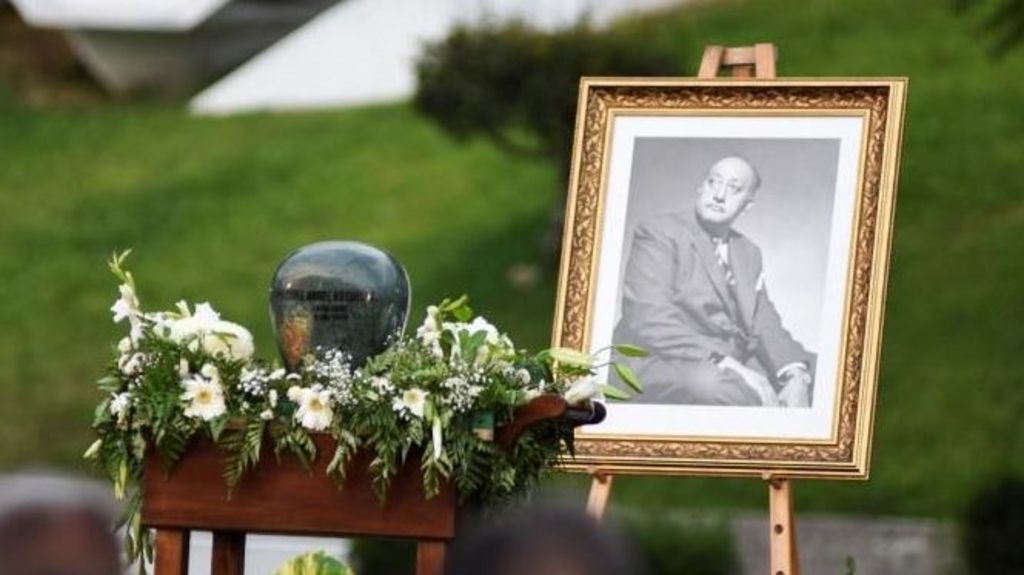
In a deeply emotional, long-awaited national ceremony held on Sunday, the ashes of iconic Guatemalan writer, diplomat and 1967 Nobel Prize in Literature winner Miguel Ángel Asturias were formally interred in his homeland, 52 years after he passed away in forced overseas exile. The urn holding his cremated remains was laid to rest atop a bed of soil collected from diverse regions across Guatemala, hosted at the cultural centre in Guatemala City that bears his name.
Asturias died of cancer in Madrid, Spain, in 1974 after decades of displacement, having spent his final years residing in Paris. His remains had been interred at Paris’ famous Père Lachaise Cemetery for half a century, until the family secured agreement to repatriate them following the 2023 election of progressive Guatemalan President Bernardo Arévalo. The family noted that prior political conditions in the country had made it impossible to fulfill the author’s lifelong wish to return to his native soil for burial.
A towering figure in 20th century Latin American literature, Asturias first moved to Paris in the 1920s to study ethnology, where he came under the influence of surrealist creative circles and penned his breakthrough major work *Legends of Guatemala*, a vivid retelling of ancient Maya origin myths and traditional folk tales. His subsequent landmark works, including the 1946 political novel *The President*, his searing Banana Trilogy, and his 1949 magnum opus *Men of Maize*, unflinchingly denounced the brutal violence of authoritarian regimes across Latin America, the systemic exploitation of Indigenous agricultural workers on corporate banana plantations, and the existential struggles of Maya and Indigenous communities navigating rapid, disruptive modernization.
During Guatemala’s progressive 1944-1954 period widely known as the “10 Years of Spring”, Asturias held a series of diplomatic postings across Central and South America while continuing his prolific literary output. His life of exile began abruptly in 1954, when the democratically elected government of President Jacobo Árbenz Guzmán was overthrown in a CIA-backed military coup. The new authoritarian regime revoked Asturias’ Guatemalan citizenship, banned all of his published works, and forced him to flee the country for decades.
Sunday’s repatriation ceremony drew prominent national figures, including Nobel Peace Prize laureate Rigoberta Menchú. Addressing the gathering, the author’s son, who shares his father’s full name Miguel Ángel Asturias, spoke directly to his late father: “I can tell you, old man, that you are with us, you are in your homeland, you will sleep beneath your own skies.” President Bernardo Arévalo, whose father Juan José Arévalo first appointed Asturias to the diplomatic service during the 10 Years of Spring era, paid tribute to the late writer as Guatemala’s global literary ambassador. “He deserved to rest in the land he named and reinvented in his pages,” Arévalo remarked during the interment event.
Ashes of exiled Nobel Laureate Miguel Ángel Asturias returned to Guatemala