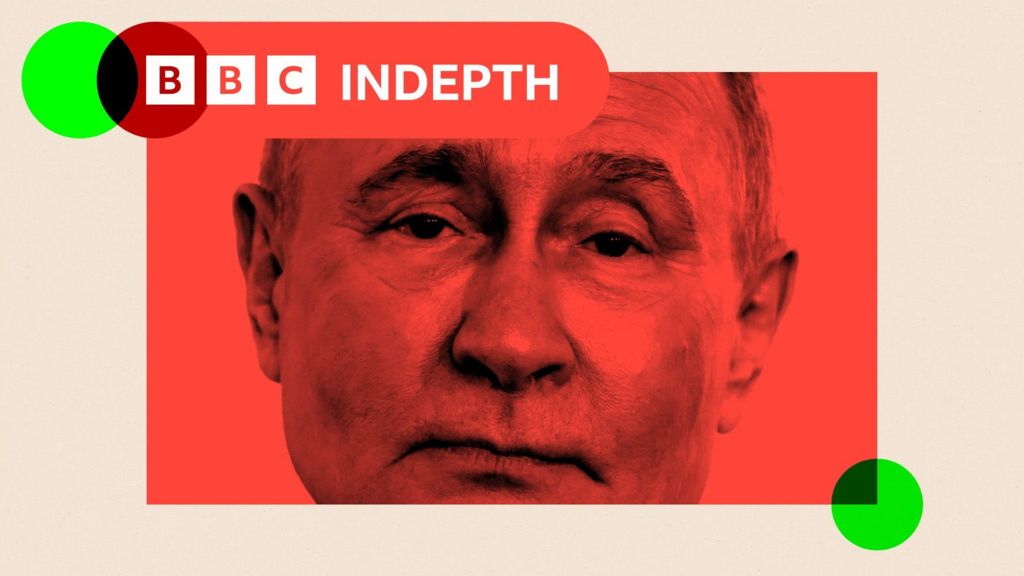
On 24 February 2022, mere hours after Vladimir Putin ordered Russia’s full-scale military invasion of Ukraine, three dozen of the nation’s wealthiest business figures were summoned to the sprawling, gilded Yekaterininsky Hall in the Kremlin. Still masked amid lingering COVID-19 restrictions, the billionaires huddled nervously along one edge of the vast chamber, pale and visibly exhausted, as one local reporter observed. Putin, unmasked as was his custom, positioned himself at the far opposite end of the room, leaving a wide, uncrossable physical and symbolic chasm between himself and the assembled elite. In characteristically oblique, coded remarks, he called on the group to demonstrate “understanding of what is going on” and collaborate with the state to prop up industrial output, stabilize the economy, and preserve jobs. Not a single one of the invited tycoons uttered a word during the entire official meeting, a silence that has become a defining hallmark of Russia’s ultra-rich across Putin’s 25 years in power.
This culture of enforced quiet has a well-documented warning at its core: 2003, when then Russia’s wealthiest man, oil magnate Mikhail Khodorkovsky, publicly accused Putin of enabling systemic state corruption and funded opposition political groups, he was arrested and imprisoned for a decade on charges of tax evasion, fraud, and embezzlement that he consistently denied. The high-profile jailing sent an unambiguous message to other business leaders: public dissent carried catastrophic personal and financial costs.
While the vast majority of the oligarch class has continued to avoid open criticism of the war or Putin’s rule, subtle undercurrents of discontent have begun to emerge, as multiple well-connected analysts and Kremlin watchers confirm. A growing cohort of these once untouchable tycoons is now quietly speculating about what Russia might look like in the era after Putin leaves office, whether through death or voluntary resignation, with many nostalgic for the freewheeling 1990s, when the billionaire class wielded outsized political clout alongside their vast fortunes, or even hoping for a more open, democratic political settlement.
The origins of Russia’s oligarch class stretch back to the immediate aftermath of the 1991 collapse of the Soviet Union, when enterprising, well-connected individuals snapped up formerly state-owned industrial assets for a fraction of their true value, amassing unprecedented wealth almost overnight. Named for the Ancient Greek term for “the few who rule,” these so-called “new Russians” operated in a chaotic landscape rife with cronyism, widespread corruption, and targeted contract killings, where money directly translated to unchallenged political power. That era came to an abrupt halt almost immediately after Putin’s first election to the presidency in 2000: buoyed by a resurgent national economy and a newly strengthened central government, he systematically subjugated the entire billionaire class, stripping them of independent political influence and demanding total personal loyalty in exchange for permission to keep their fortunes.
Bill Browder, once the largest foreign investor in Russia before he was expelled in 2005 for leading anti-corruption campaigns, recalls witnessing the dramatic shift in the oligarchs’ public behavior at pre-war Davos economic forums. “I watched these men walk around like they owned the entire world, brash, arrogant, unapologetically self-confident, the most alpha figures you could imagine,” he told the BBC. “The second Putin walked into the room, every single one of them transformed into meek, desperate schoolchildren, completely subordinate, too afraid to even make eye contact.”
Since the 2022 invasion of Ukraine, the Kremlin has enforced compliance among the business elite with a brutal, unforgiving carrot-and-stick strategy: overt critics have seen their entire domestic assets seized without warning, while loyalists have been awarded highly lucrative state military contracts. Per 2024 Forbes data, this policy has pushed the total number of Russian billionaires to an all-time high of 155, with their combined collective wealth surging to a record $700 billion. But even the most loyal, state-favored tycoons are growing restless. Their billions no longer grant them any meaningful political influence at home, as exiled former Kremlin adviser and opposition analyst Dmitry Nekrasov explains: “They have no leverage, no bargaining chips. Their wealth exists only because they are connected to Putin, not the other way around.” Abroad, meanwhile, sweeping Western sanctions imposed in response to the war have turned them into global pariahs: their private jets are barred from most European airspace, their luxury superyachts cannot dock at exclusive Mediterranean marinas, and they are largely unwelcome in the Western social and business circles they once dominated. As Browder puts it, “They are treated like common low-level criminals, and it is deeply humiliating for people who were once among the most celebrated ultra-rich on the planet.”
While there is no current indication that the 74-year-old Putin, who has now led Russia for a quarter of a century, is in poor health or preparing to step down, every political observer in Moscow recognizes that his eventual departure is inevitable. When asked last year by Reuters if he intended to serve out his full term until 2036, he famously replied, “Only God knows if we have enough health.” Under the Russian constitution, Prime Minister Mikhail Mishustin would automatically assume power if Putin left office prematurely, but Mishustin has shown no public signs of independent presidential ambition — a key reason he was appointed to the post in the first place, leaving a significant potential power vacuum in the immediate aftermath of Putin’s exit.
Analysts and Russia watchers outline three plausible scenarios for a post-Putin state. The first, a transition to full functioning democracy, is widely deemed the least likely: decades of authoritarian rule under Putin have eroded or demolished nearly all independent democratic institutions, and as exiled Russian journalist Alexandra Prokopenko notes, “Russia has become so accustomed to resolving conflicts through violence that the population has forgotten how standard democratic procedures even work.” The second scenario is the rise of a new strongman autocrat to continue Putin’s repressive governing framework, though most experts agree any immediate successor would lack Putin’s decades of consolidated power and personal authority, resulting in a weaker, more fragile authoritarian state. The third, and most eagerly anticipated scenario among large segments of the oligarch class, is a return to the 1990s-style oligarchic system, where a small coalition of powerful business clans allied with state security officials effectively governs the country.
Prokopenko, who has spent hundreds of hours interviewing Russia’s ultra-rich, confirms this is the outcome most tycoons privately crave: “They want to return to an era where their voices were heard, where they could not arbitrarily lose their assets overnight, and where the rules of the political game were clear and predictable.” Already, many of the wealthiest figures are quietly positioning themselves, cultivating relationships with senior security officials and cabinet ministers to jockey for future influence, though Nekrasov notes that any more overt political organizing remains far too dangerous under current surveillance conditions. Tycoons with large reserves of liquid cash are far more willing to take small risks to prepare for a post-Putin landscape, he explains, while those whose fortunes are entirely tied to state contracts are too terrified of losing everything to make any move.
Even the language the oligarchs use to refer to Putin has shifted in recent years, Prokopenko reports. Where they once used reverent nicknames like “Nachalnik” (The Boss), “Perviy” (The First), or his initials “VV” to signal deep respect, many now refer to him privately as “Ded” — “Old Man” or “Grandpa” — a term laced with quiet, unmistakeable contempt. Some of the elite now openly express a desire for a more open political system with less repression, greater freedom of speech, and genuine multi-party competition, though pervasive state surveillance leaves them too terrified to act. Prokopenko recounts one recent interview with a major tycoon who sat physically on his mobile phone for the entire duration of their conversation, in a futile effort to block state eavesdropping devices embedded in the device, a level of fear she describes as “starkly Stalinist, almost entirely irrational.”
Earlier this year, one of Russia’s most prominent billionaires, fertiliser magnate Andrey Melnichenko — the country’s 8th richest man — broke with the unspoken rules of silence to give a rare extended interview and published essay in The Economist, a publication the Kremlin classifies as part of an “unfriendly” Western state. While he repeated some standard Kremlin talking points framing the war in Ukraine as a proxy conflict between Russia and the West, he also made a remarkable, unprecedented public argument that Russia must move away from one-man autocratic rule and re-engage with the global community. Though no other oligarch publicly rallied to his position, Arkady Ostrovsky, the veteran Economist Kremlin watcher who conducted the interview, confirms Melnichenko was not speaking only for himself, but acting as a quiet representative for a wider cohort of tycoons who share his views. Most analysts believe the interview could only have happened with implicit, unspoken Kremlin approval, possibly as a deliberate signal to demonstrate that limited pluralism still exists within the Russian system.
For now, however, the oligarchs remain far too afraid to make any open move against Putin. As Bill Browder notes, “Every single one of them knows that any attempt to challenge Putin directly would result in him having them killed. He is an exceptionally paranoid leader, and no one is willing to risk their life and their entire multi-billion dollar fortune for a hypothetical future that may never come.” American financier Mike Calvey, who spent decades as a leading investor in Russia, agrees: “People sitting safely in London often ask why they don’t all stand up together. The reality is that if they did, every single one of them would end up in prison and lose every penny they own. That is not a choice any rational person would make.”
For a generation that once pulled the strings of Russian political power from behind the scenes, the oligarchs are biding their time, waiting for the day Putin exits the stage to claw back the influence they lost when he first took power 25 years ago. The only remaining open question, as analysts note, is whether the remaining loyalist factions of the current regime will allow them to reclaim that power, or move to block their return to the driver’s seat of Russian politics.