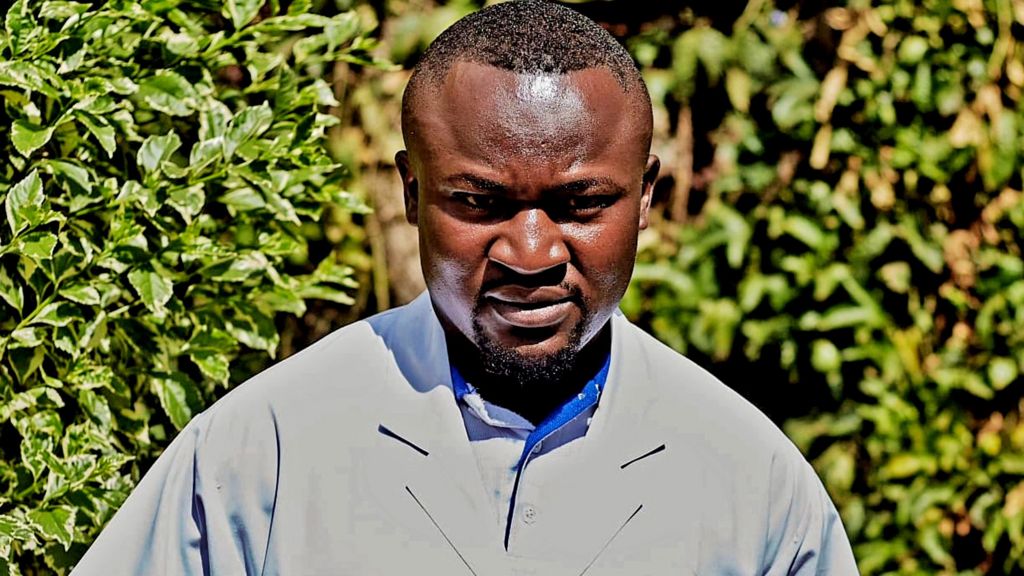
Thirty-year-old Dr Raymond Kasereka Kamwanga, a medic at Butembo’s Katwa Hospital in eastern Democratic Republic of Congo, faced unthinkable pushback from his family in July 2019 when he disclosed he suspected he had contracted Ebola and intended to seek care at the city’s dedicated Ebola treatment centre. His 50-year-old mother Masika Ndungo, alongside his sisters, broke down in tears, begging him not to enter the facility that local residents widely labeled a “death house”, where few patients admitted at advanced stages of the illness walked out alive. “Why are you choosing to die at the Ebola treatment centre?” Ndungo pleaded, unaware her son’s deliberate choice would turn him into one of the outbreak’s most vital frontline advocates. At the time, the World Health Organization had already classified the North Kivu Ebola crisis a Public Health Emergency of International Concern two months prior, and the outbreak would go on to become the second-most lethal in recorded history, claiming 5,400 lives and infecting 11,000 people, per official Congolese health ministry data. North Kivu’s Butembo, the outbreak’s confirmed epicentre, lacked rapid Ebola testing capacity at the time: all diagnostic samples had to be transported 54 kilometres north to Beni, a journey that could take 48 to 72 hours due to the region’s dilapidated road networks, worsened by decades of armed conflict and systemic underdevelopment. Kamwanga, who believes he contracted the Bundibugyo Ebola strain via unprotected contact with an infected patient amid frequent shortages of personal protective equipment at his hospital, first noticed mild, non-specific symptoms: a persistent bitter taste in his mouth, splitting headaches, and widespread bodily malaise. After initial consultations and preliminary tests at home, his condition deteriorated sharply over four days, progressing to extreme weakness, muscle pain, severe vomiting, and diarrhoea. Rather than entering the treatment centre via the main entrance, he walked the short distance on foot and called his colleagues to suit up in full PPE before approaching him, to avoid any risk of transmitting the virus via infected bodily fluids to others. The Bundibugyo strain circulating in the outbreak has no approved targeted vaccine or curative treatment, meaning clinical staff could only administer symptomatic care, managing his life-threatening fluid loss to prevent the organ failure and internal and external bleeding that kills a large share of patients. For 13 days, Kamwanga fought for his life on a treatment ward where he watched fellow patients die daily, clinging to hope by watching films, reading, and scrolling TikTok on his mobile phone to keep his spirits high. When he finally received his official Ebola-free discharge certificate, he expected a warm welcome, but his family still feared residual transmission: 18 people, including children and conflict-displaced relatives, shared their crowded home, so he isolated in a separate section for the full 21-day Ebola incubation period, only collecting his meals from a distance as loved ones kept their distance. Even neighbours who prayed for his recovery hesitated to approach him upon his return. Today, Kamwanga is one of just 3,031 confirmed survivors of the outbreak, and he has dedicated himself full-time to dismantling pervasive community misinformation that denies Ebola’s very existence. Just one week after discharge, he began drafting his memoir *The Price of Saving Lives*, using the unfinished manuscript alongside photos of himself during his acute illness to convince sceptical residents the virus is not a hoax. But his advocacy work carries severe, life-threatening risks. Deep-seated community mistrust, stoked by decades of armed conflict trauma, widespread poverty, and documented corruption, leads many local residents to believe Ebola response campaigns are a scheme for humanitarian organisations and government officials to siphon off donor funds. Some go so far as to claim Ebola was invented by authorities to finish off populations the long-running regional war failed to kill. Kamwanga regularly receives death threats via his mobile phone, with residents accusing him of being paid to spread “false” information about the virus, and he confirms that other outreach workers have been physically attacked during community awareness sessions. He publicly echoes a recent Médecins Sans Frontières report that large sums of Ebola response funding have been misappropriated by government officials, leaving frontline medics critically short of life-saving PPE, and slams the national government for treating the crisis with unacceptable complacency. Despite the constant intimidation, limited resources, and systemic barriers, Kamwanga remains unwavering in his mission to end the outbreak, continuing his outreach work even as he calls on global and national authorities to root out corruption, improve local testing infrastructure, and rebuild community trust to halt the spread of Ebola in eastern DR Congo.
My mother told me I would die if I sought treatment for Ebola – I am proof you can survive