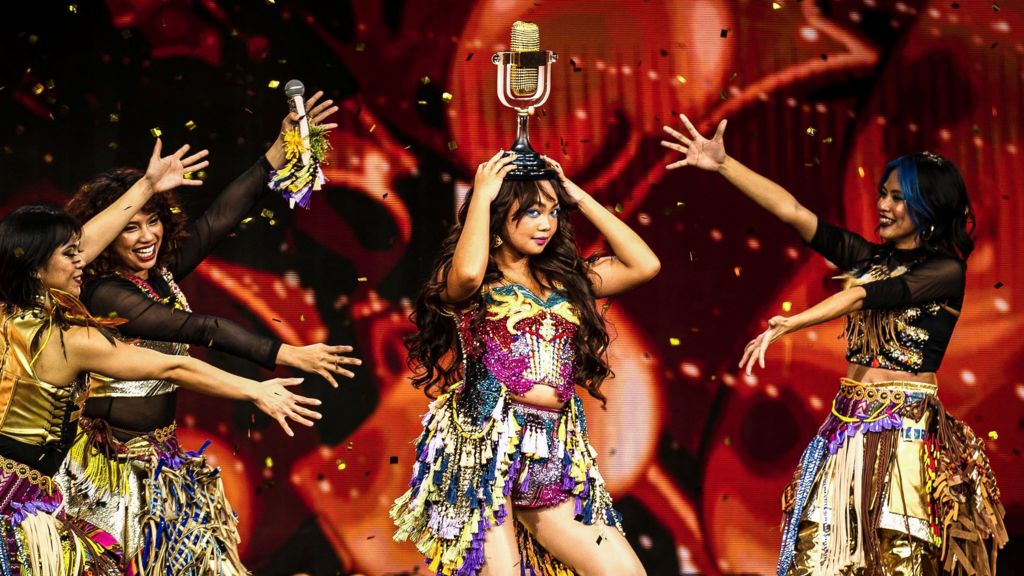
Against a backdrop of months of long-awaited anticipation for a regional spin-off of the iconic global Eurovision franchise, the very first Eurovision Song Contest Asia wrapped up in a burst of confetti and deafening cheers at Bangkok’s One Bangkok Arena, with 11 participating Asian nations competing for the landmark title. The top prize was awarded to 19-year-old Filipina vocalist Carmelle, the youngest contestant in the entire lineup, whose vibrant, rap-infused women’s empowerment anthem *Sobra-Sobra* emerged as a runaway crowd and jury favorite from the earliest stages of the competition.
The final scoring breakdown mirrored the longstanding Eurovision voting framework, with 50% of total points allocated to 11 independent national juries, 50% to public regional votes, plus supplementary points from a global rest-of-world voter pool. Carmelle amassed a commanding total of 211 points: 93 from the jury panel and 118 from the public, a substantial lead over home country contenders MANG x DAOU of Thailand, whose soulful duet *Aroma* earned thunderous local audience support and secured 170 points for second place. Vietnam’s Toc Tien rounded out the top three with 164 points, followed by Malaysia at 152, Laos at 139, Bhutan at 126, the Republic of Korea at 113, Mongolia at 94, Nepal at 69, Cambodia at 61, and Bangladesh’s innovative all-vocal beatbox collective Beatmosphere finishing at 35 points.
The inaugural showcase was packed with memorable, culturally distinct performances: Laos’s representative Thinla delivered a fan-favorite rendition of her upbeat track *Bae* adorned in a vibrant traditional Lao hilltribe ensemble, even after an unexpected technical glitch accidentally replayed her performance’s music video as the final broadcast segment right before voting opened. Bangladesh’s Beatmosphere made a bold creative choice to forgo pre-recorded backing tracks entirely, using only their vocal range to layer live drum beats and basslines for their set. The star-studded broadcast also featured guest appearances from 2026 Eurovision winner Dara of Bulgaria, who performed her chart-topping contest entry *Bangaranga* alongside new single *Bad Idea*, and Thai pop superstar Jeff Satur, who wowed attendees with a soaring vocal performance of his hit *Black Tie*.
Decades of unfulfilled plans and multiple false starts had long left Eurovision fans wondering if a dedicated Asian iteration of the beloved song contest would ever come to fruition, and the debut event drew a global cohort of diehard Eurovision superfans who traveled across continents to attend, including a trio of UK-based enthusiasts: Zelie Pereira from Scotland, and Michael Peters and Scarlett Massie from England. The group praised the uniformly high caliber of performances, elaborate stage sets, and thoughtful cultural costume design, and even proposed rebranding the annual event to the catchy nickname “Asia Vision” for future editions, voicing overwhelming enthusiasm for the contest to return next year.
While the post-victory celebration was electric, with the arena’s remaining attendees cheering Carmelle as she lifted the custom trophy, the venue was not sold out, and crowds began dispersing shortly after the winner was announced. Questions remain about long-term operational support, as it is yet unconfirmed whether regional participating broadcasters will commit the resources needed to sustain the contest and expand its lineup beyond the initial 11 participating nations for future iterations.