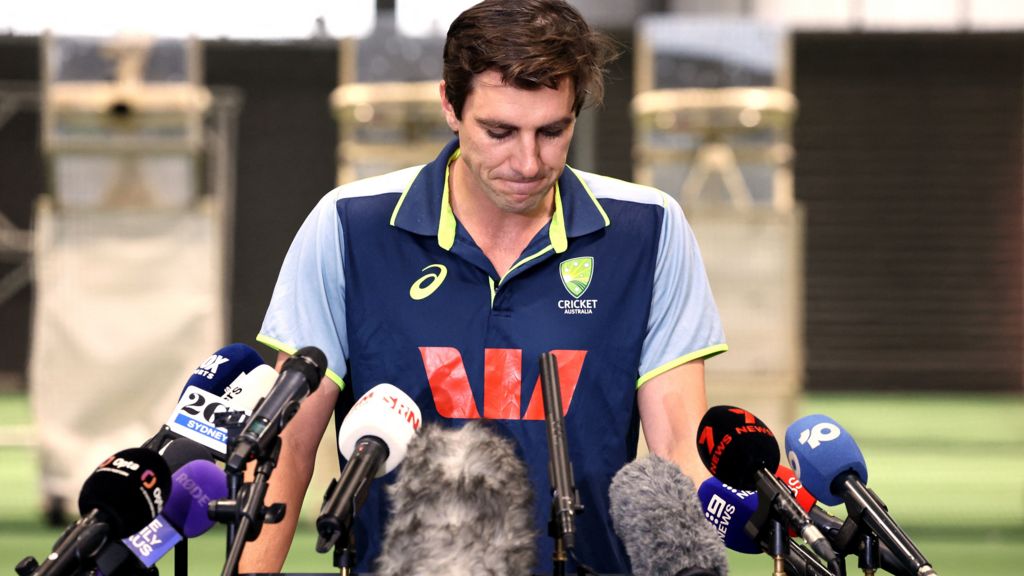
Sydney, Australia – Australian men’s cricket team skipper Pat Cummins dedicated more than an hour to a grueling media scrum at the Cricket Central training nets on Friday, in a bid to definitively quash renewed speculation linking him to the infamous 2018 Cape Town ball-tampering scandal, widely dubbed “sandpapergate”. The tense indoor briefing space occasionally echoed with faint, distant cheers, as a top-tier domestic Sheffield Shield fixture unfolded just outside, a competition Cummins repeatedly made clear he wished the entire sporting conversation was centered on instead.
The firestorm was reignited last week with the release of a memoir by Usman Khawaja, Cummins’ former international teammate and close friend, who retired from competitive cricket earlier this year. Khawaja’s explosive claim that the entire 2018 Australian Test squad was aware of the plot to use sandpaper to alter the condition of the match ball during the third Test against South Africa has ripped open long-healed wounds across Australia’s cricketing ecosystem, eight years after three players – David Warner, Steve Smith, and Cameron Bancroft – admitted their involvement and accepted multi-year playing bans.
The resurfaced controversy has split public opinion among cricket fans across the country. Many casual supporters interviewed at the Sheffield Shield match expressed frustration that the decades-old scandal was derailing the start of a highly anticipated summer of international cricket, particularly after the Australian men’s side delivered a underwhelming performance during their recent return tour of South Africa, their first trip back to the country since the 2018 incident. Multiple fans noted a pervasive sense of unfairness that the Australian team remains uniquely haunted by the incident, with many arguing that boundary-pushing ball tampering tactics were widespread across international cricket during that era. “It’s a total stitch-up,” said 21-year-old cricket fan James, echoing a common sentiment that the 2018 trio were singled out for punishment while other nations engaged in similar practices.
The furore has also sparked bitter divisions among current and former players and coaching staff. David Warner, who received the harshest individual penalty for his role in the 2018 incident, publicly backed Khawaja’s account and accused Cummins’ public denials of “throwing him under the bus”. Former Test skipper Steve Smith, who was serving as captain at the time of the 2018 scandal, has remained silent on the new allegations while travelling overseas, and Cameron Bancroft – the player caught on camera carrying the sandpaper onto the pitch in Cape Town – has also declined to comment for the time being, despite previously suggesting members of the team’s bowling unit had prior knowledge of the scheme. A large cohort of Australian cricket’s former elite players and ex-coaches have waded into the public debate, with many weighing in on both sides of the dispute.
Calls have grown across the cricketing community for Cricket Australia to launch a full, fresh investigation into the 2018 incident, a move the organization’s chief executive Tod Greenberg has already explicitly ruled out. University of Western Sydney sports sociologist Professor David Rowe explained to the BBC that the enduring pain of the scandal for the Australian public stems from the nation’s long-held self-identity as “a nation of good sports”, where athletic success is supposed to be paired with unwavering fair play. “Many Australians see themselves as above cheating – that’s the sort of underhanded behaviour other teams engage in, not us,” Rowe noted, adding that the Khawaja memoir revelations delivered a “nasty shock” that inflicted collective national shame. He warned that Cricket Australia’s refusal to revisit the case would only fuel unsubstantiated conspiracy theories and ensure the scandal refuses to fade from public view.
During his unprecedentedly lengthy press briefing, which multiple veteran reporters described as the longest media appearance by an active Australian athlete in sporting history, Cummins was deliberate and cautious, pausing repeatedly to carefully frame his responses to every question posed by the dozens of assembled journalists. The star fast bowler was openly frank in his rejection of Khawaja’s claims, admitting he had spent days grappling with frustration that a close friend would make public statements that put his personal reputation at risk. “Friends don’t casually mess with each other’s lives and reputations,” he told reporters. Cummins concluded his remarks by gesturing toward the ongoing domestic match outside, and referencing the upcoming one-day international against England in Perth (where he and other top players are being rested) as examples of the actual cricket action the public should be focusing on. “It’s been eight years. I’m hoping today we draw a line under this, we’re done with it, and we can all move on to far more enjoyable topics – like actual cricket.”
Few observers, however, expect the saga to resolve that cleanly. As fan James summed up: “It’s going to be almost impossible to move on, when there are two completely conflicting sides to this story, and neither side looks ready to back down. No one can say for sure how this is all going to end.”