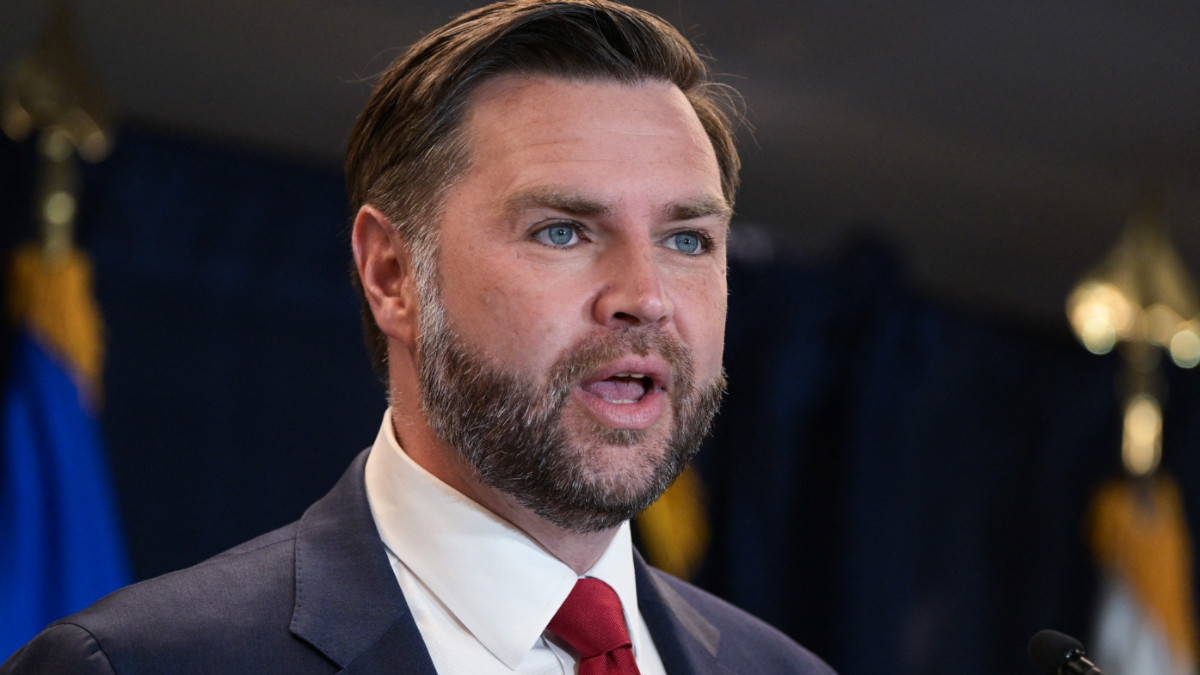
In a sharp public policy reversal announced Thursday, U.S. President Donald Trump confirmed that his administration is abandoning all efforts to pursue diplomatic negotiations with Iran, sidelining Vice President JD Vance who had positioned himself as the lead mediator for a potential Middle East political settlement in recent weeks.
Trump laid out his new stance in a post on social media, stating explicitly that the era of pursuing a formal agreement with Tehran is long over. “We don’t need a deal with Iran. Those days have long since passed…We’ve got their money, Hundreds of Billions of Dollars, and we’ve got their Strait!” he wrote, referencing the strategically critical Strait of Hormuz, the chokepoint for roughly a fifth of global oil supply. The announcement marks a complete about-face from comments Trump made earlier that same week, where he claimed there was tangible “momentum” for a political resolution with Iran and that active diplomatic talks were already underway.
The president also formally reallocated Vance’s portfolio, reassigning the vice president away from foreign policy duties to lead a new domestic initiative focused on investigating what Trump described as the “corrupt disasters” plaguing Democrat-governed U.S. cities and states. “I have asked the Vice President to focus his complete and total attention on the Massive Corruption and Crime taking place,” Trump added in his social media statement.
The abrupt demotion caps weeks of high-profile diplomatic maneuvering by Vance, who had placed himself at the center of efforts to restart talks with Iran in the aftermath of the Democratic Party’s historic landslide victory in the November 3 U.S. midterm elections. Vance had publicly pinned the Republican Party’s poor midterm performance on U.S. association with Israel and the ongoing Middle East conflict, writing in a post on X that “The reason we lost is the war. The president himself said so last night.”
Earlier reporting from Middle East Eye, citing Turkish intelligence chief Ibrahim Kalin at a press briefing, had revealed that Qatar was set to host a planned meeting between Vance and senior Iranian national security official Mohsen Rezaei. While Iranian officials publicly denied that any formal talks were scheduled, backchannel diplomatic efforts confirmed the U.S. had been pushing to arrange the sit-down. A separate Wednesday report from The Wall Street Journal further corroborated that Vance had personally initiated outreach to Rezaei to request the meeting, and that Trump had initially signed off on the diplomatic overture.
The sudden decision to scrap negotiations and sideline Vance points to deep, unresolved rifts within the president’s inner circle of national security advisors. U.S. Secretary of State Marco Rubio echoed the new hardline position Thursday, stating that the U.S. sees no urgency to strike a deal with Iran because it holds a strategic upper hand in the Strait of Hormuz, where Iranian and U.S. forces have been operating competing blockades for months.
The last-minute policy shift has already sent ripples of anxiety across U.S. regional allies, whose economies have been strained for months by the persistent ambiguity of U.S. Middle East policy. Anwar Gargash, diplomatic advisor to UAE President Mohamed bin Zayed, warned that the move would usher in a prolonged period of instability for the region. “We should… prepare for a long period of uncertainty in which neither a decisive resolution nor stable regional order can be taken for granted,” Gargash noted. Other U.S. aligned regional figures have pushed back against the hardline shift, calling for renewed diplomatic engagement. Speaking at a conference in Sulaymaniyah, Iraq, Bafel Talabani, leader of the U.S.-aligned Patriotic Union of Kurdistan, urged Washington to restart direct dialogue with Tehran. “We don’t find it difficult talking to the Iranians… As an ally of Mr Trump and, strangely, an ally of the Iranians, [I say] the mighty US can do it,” Talabani stated.
Trump sidelines Vance from Iran talks, says no need to negotiate