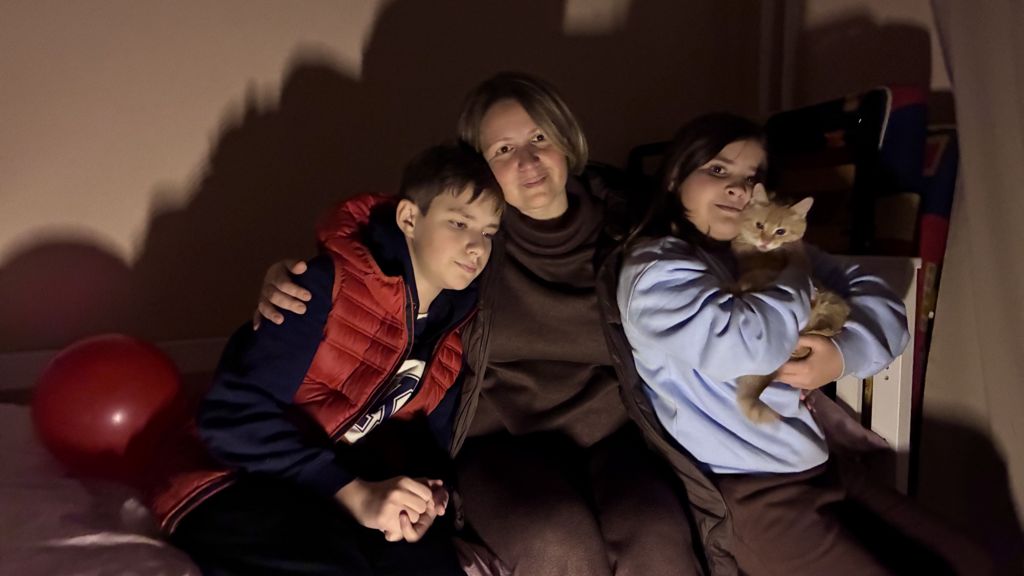
In a seventh-floor Kyiv apartment, single mother Daryna Kulchytska struggles daily to maintain a semblance of normalcy for her two children, 12-year-old Kyryll and young daughter Olena, amid unpredictable, rolling power outages that have stretched on for months. Since Russia escalated targeted assaults on Ukraine’s energy grid last October, households across the country have been subjected to erratic electricity access: recent weeks have seen some Kyiv families endure up to 20 consecutive hours without power, far harsher than the outages recorded during the previous winter. For Daryna, every extended window of available power becomes a frantic race to cook meals, complete remote work assignments, help her children finish schoolwork, and stock up on basic supplies before the lights cut out unexpectedly. On one recent evening, power lasted an hour longer than the official schedule projected, but the reprieve was fleeting: shortly after 7:30 pm, the entire apartment plunged into total darkness that would last until dawn, disabling the building’s elevator, cutting off running water (which requires electric pumps to reach upper floors), and leaving the family huddled in thick winter coats indoors as temperatures steadily drop. With no electricity for heat or entertainment, the trio gathers by the glow of LED candles to play Uno, a small comfort amid widespread disruption. Kyryll, who spent two years living in the United States and speaks fluent English, does not mince words about the toll of constant blackouts: “There’s no light, no water, no heat, no electricity. And no fun. All the fun got sucked out with the electricity.” He notes the family’s full shelf of board games has been played dozens of times over, and daily life is punctuated by jarring, unplanned interruptions: returning home from school exhausted, only to face air raid sirens, sudden blackouts, and piles of unfinished schoolwork that is impossible to complete without light. Daryna describes walking through a once-bustling Kyiv neighborhood at night to find total darkness, the entire cityscape smothered in shadow with no streetlights to illuminate the roads. The capital’s public transit systems, including metro lines and trolleybuses, have been repeatedly brought to a standstill by widespread outages, and hundreds of thousands of residents across the country have lost consistent power access in recent weeks. A visit to one of Ukraine’s largest, un-named power stations (the location is withheld for operational security) lays bare the scale of the damage: the facility was hit by a devastating ballistic missile strike, the most powerful attack on Ukraine’s energy infrastructure to date, leaving twisted heaps of metal, shattered pipes, and buried turbines that have taken the plant entirely offline. Volodymyr Kovalenko, a 25-year veteran employee who followed in his parents’ footsteps to work at the station, was on duty in the control room when the missiles struck at 3 a.m. “It was a very powerful attack. We’d never experienced anything like it. We’d had strikes before – part of the roof had collapsed, it was pretty grim. But this time it was particularly severe,” he recalled. Recovery teams led by Vadym Bobyr, who has spent half his life working at the plant, face nearly insurmountable obstacles: air raid sirens blare every 15 to 30 minutes, forcing workers to drop their tools and seek shelter in chimney foundations or thick reinforced walls, as incoming drones and missiles are regularly intercepted just kilometers from the site. During a four-hour media visit, seven separate air raid alerts were triggered, and workers were limited to barely one or two productive hours of repair time each day. Since August, near-daily assaults on energy facilities have killed several workers every week, and the plant’s management confirms it will not be operational again before the end of the current winter, with full reconstruction projected to take until next summer. Maxim Timchenko, CEO of Ukraine’s largest private energy provider DTEK, warns that the scale and intensity of this winter’s attacks far exceed last year’s campaign, with Russian forces deploying new “waiter drones” that cling undetected to power pylons and cables until remotely detonated. While President Volodymyr Zelensky has stated Ukraine still retains enough total generating capacity to meet public demand, widespread damage to transmission lines and substations has made it nearly impossible to deliver that power to households, and overstretched air defences cannot shield every piece of critical energy infrastructure. Millions of Ukrainians now face the prospect of life becoming completely unsustainable if they cannot access a minimum of four hours of power per day, a threshold many Kyiv families are already failing to meet. Many residents have chosen to flee the capital, or the country entirely, to escape the coming months of freezing, unheated darkness. Daryna admits she is torn between her desire to stay close to friends and family in her lifelong home, and the growing fear that the unrelenting strain will permanently harm her children: Olena now suffers frequent nightmares, and the constant stress has taken a heavy toll on her own mental health. Even so, she remains unshaken in her resolve to remain in Ukraine, despite the daily hardships. “I don’t want to live without light. But actually people in Ukraine say, OK, without light, but without Russians. Yes, we’re scared, we’re scared a lot. But better for us to be without power, but [also] without Russians.”
Ukraine’s power supply close to critical as Russian strikes bring darkness and cold