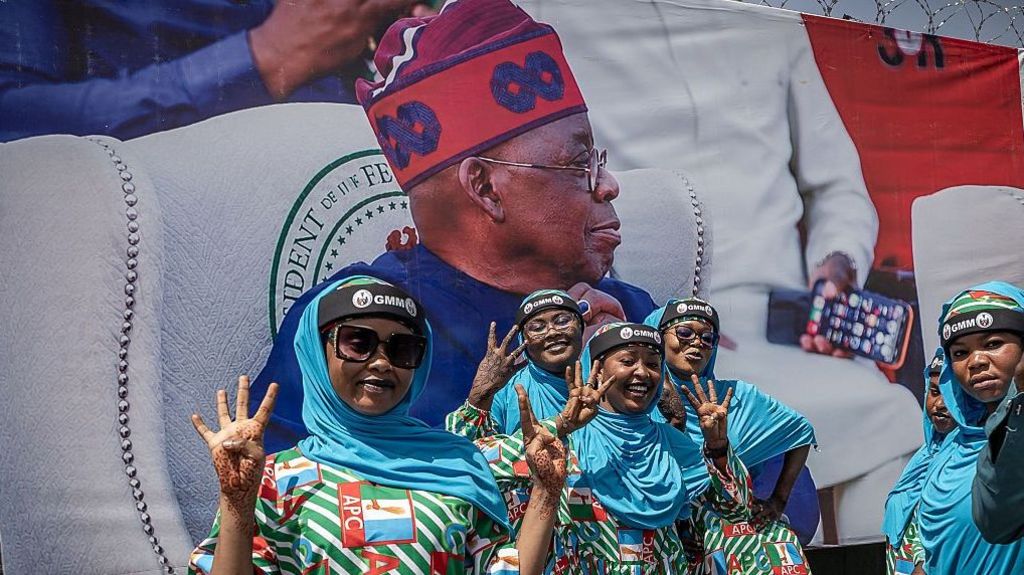
Two months out from Nigeria’s January 2027 general election, incumbent President Bola Ahmed Tinubu and his ruling All Progressives Congress (APC) have formally launched their re-election manifesto, titled *From Reform to Prosperity*, a policy blueprint that builds on the sweeping, divisive economic overhauls Tinubu rolled out after taking office in 2023. The document lays out ambitious targets: 6% annual gross domestic product growth by 2031, the recruitment of 78,000 additional security personnel to tackle widespread insecurity, and the construction of 200,000 new affordable housing units to ease the country’s crippling residential supply gap.
Tinubu’s first term was defined by bold, internationally lauded reforms including the full removal of long-standing fuel subsidies, the unification of Nigeria’s long-segregated official and parallel foreign exchange markets, and sweeping overhauls to the national tax system. Backed by the World Bank and International Monetary Fund, these policies have delivered tangible macroeconomic gains: headline inflation dropped from a peak of 34% in 2024 to 14% as of September 2026, the gap between official and black market naira exchange rates has narrowed sharply, and a widely tracked SBM Intelligence Jollof Rice Index recorded an 11.5% drop in the cost of preparing the iconic national dish between June and September 2026, the steepest decline in the metric’s 10-year history.
Yet for millions of ordinary Nigerians, the pain of the transition has far outstripped these early macroeconomic wins. Data from Nigeria’s International Centre for Investigative Reporting shows the price of imported rice surged 184% between Tinubu’s inauguration in May 2023 and October 2025, with every other core staple from beans to garri (cassava flour) to bread seeing similarly drastic price hikes. A 2026 survey from BudgIT Foundation’s Tracka platform found most Nigerian households cannot cover basic daily needs on 10,000 naira, equivalent to roughly $7.40. SBM Intelligence research head Ikenna Okonkwo notes that Nigerians are now diverting an ever-larger share of their incomes to essential goods, leaving little room for discretionary spending even after recent modest price dips.
Facing widespread public frustration, the Tinubu administration has rolled out targeted relief measures including a 125 billion naira intervention package for small businesses, offering direct grants to micro-enterprises and low-interest loans to manufacturing firms, while the president has publicly committed to bringing down fuel costs for households. But analysts warn the ruling party faces a steep uphill battle to win back voter trust, as cost-of-living pain and pervasive insecurity top the list of voter priorities ahead of polling day. “These kinds of economic hardships can get punished heavily at the polls,” Okonkwo cautioned.
Tinubu’s two leading challengers are familiar faces from the 2023 election cycle: former vice president Atiku Abubakar, and Nigeria Democratic Congress (NDC) flagbearer Peter Obi, who built a massive youth support base during his 2023 third-place run. Atiku has publicly committed to reinstating the scrapped fuel subsidy if elected, a promise that analysts including Tracka’s Joshua Osiyemi warn is fiscally unfeasible: 2026’s 68.32 trillion naira national budget already allocates 15.8 trillion naira exclusively to debt servicing, leaving almost no fiscal headroom for a return to costly fuel subsidy spending that siphoned billions from critical public services for decades. Obi, who launched his own 2027 governance agenda on the same day as the APC manifesto under the slogan “A New Nigeria is Possible,” has centered national unity and aggressive counter-insurgency operations at the top of his policy platform, vowing to hunt down criminal gangs that carry out mass school kidnaps and rural raids across the country.
All three leading candidates face major structural hurdles to delivering on their campaign pledges. Tinubu’s promise to hit 6% annual GDP growth and halve youth unemployment hinges on major expansions to agricultural and oil output, but most of Nigeria’s farmland is concentrated in the restive north, where ongoing attacks by jihadist cells, kidnapping gangs, and herder-farmer communal clashes have left millions of farmers too afraid to return to their fields. His pledge to add 78,000 new security personnel, meanwhile, is dismissed by analysts as an insufficient fix for a multi-faceted security crisis that cannot be resolved by manpower increases alone. The manifesto’s promise to expand national electricity generation to 10,000 MW also lacks clear funding pathways: decades of underinvestment have left Nigeria with 13,625 MW of installed capacity that only produces an average of 4,223 MW annually, and privatized distribution firms have struggled to upgrade infrastructure due to low profit margins that deter private investors. Unreliable grid power forces most households and small businesses to rely on expensive diesel generators, further driving up the cost of living and operation. The 200,000 new affordable homes the APC has promised also represent less than 1.4% of the 14.9 million unit national housing deficit documented by Nigeria’s housing ministry in 2025.
Looking ahead to the January 2027 vote, analysts note the race bears striking parallels to the 2023 contest, where Tinubu secured victory amid widespread economic discontent by benefiting from a split opposition vote between Obi and Atiku, who each drew strong regional support bases rather than building national, cross-regional coalitions. Okonkwo argues the APC is positioned as the stronger incumbent party heading into the vote, as much of the grassroots momentum Obi built among young voters in 2023 has faded, though the ruling party’s path to victory still hinges on convincing skeptical voters that its painful reforms will eventually deliver shared prosperity. “The single biggest task for the APC if they win is regaining the trust of the Nigerian people,” Okonkwo said.