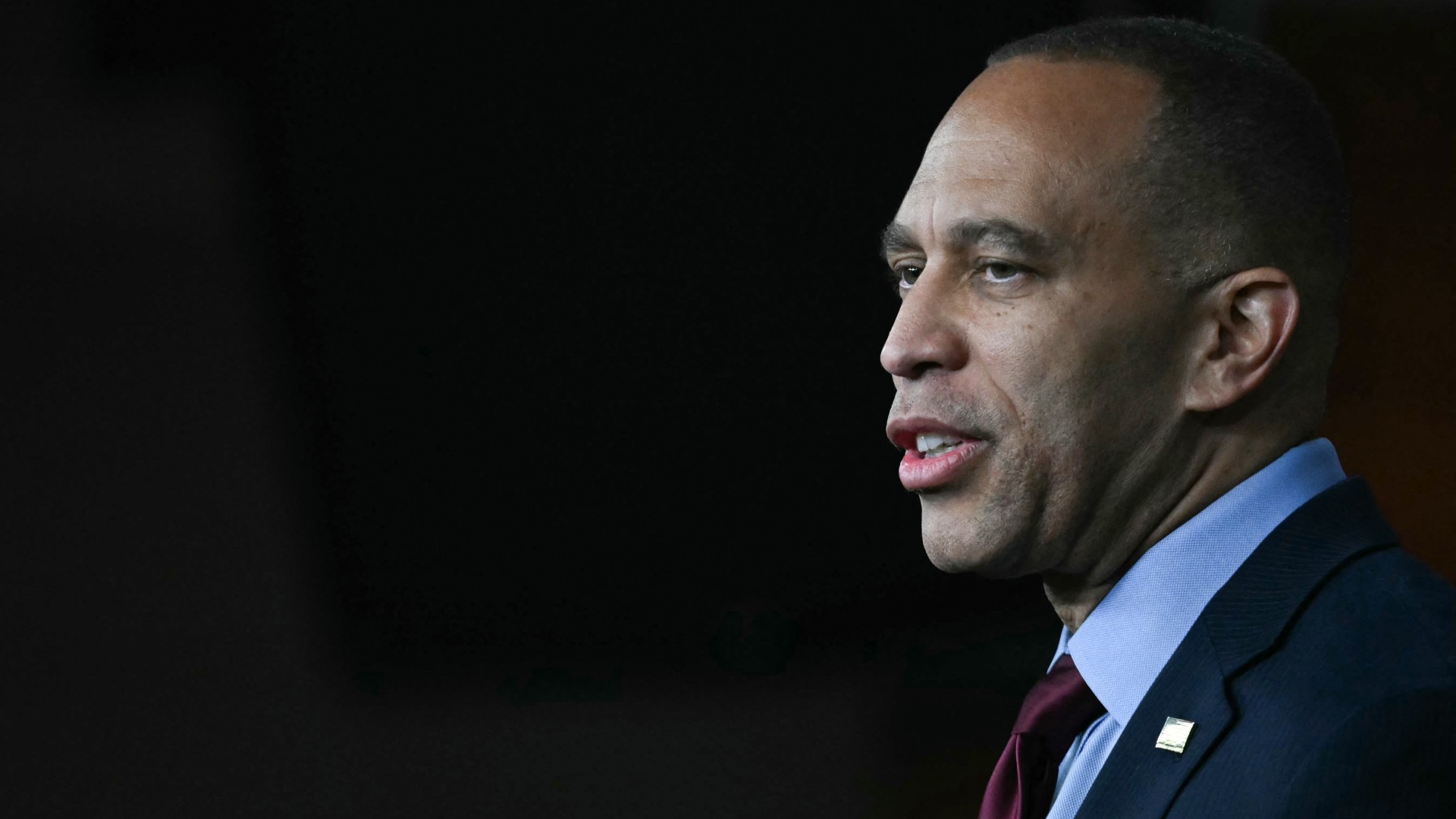
A groundswell of grassroots opposition is unfolding against House Democratic leader Hakeem Jeffries’ expected historic ascent to the U.S. House Speakership ahead of the new Congress’s January swearing-in, with a petition now boasting more than 1 million signatures urging Democratic lawmakers to reject his candidacy. The pushback comes even as Jeffries, who would make history as the first Black U.S. House Speaker if confirmed, ran unopposed for the Democratic caucus nomination in the wake of the party’s decisive November 3 midterm election victories. While no fellow Democratic legislator has formally launched a competing bid for the top House role, a growing cohort of newly elected Democratic representatives has publicly aired unaddressed reservations about Jeffries’ policy priorities, raising questions about whether he can lock in full caucus endorsement ahead of the party’s internal leadership vote later this month. The campaign to challenge Jeffries’ candidacy was ignited by social media influencer Nicole Whitted, whose widely circulated petition argues that the top House Democratic role should prioritize representing ordinary Democratic voters rather than the party’s longstanding Washington establishment. The petition calls on all Democratic House members to conduct a full public review of Jeffries’ legislative track record, stated policy positions, campaign donor disclosures, and past leadership decisions before casting their leadership votes. The movement has gained rapid viral traction across social media platforms, with dozens of high-engagement short-form videos instructing viewers to contact their elected representatives directly and add their names to the anti-Jeffries petition. Public polling data underscores the headwinds Jeffries faces: a recent Economist/YouGov survey pegged his approval rating among all registered voters at just 26%. A core driver of his plummeting public standing is his long-documented staunch support for Israel, a position that has fallen out of step with shifting U.S. public sentiment. Data from the Chicago Council on Global Affairs confirms that U.S. public favorability toward Israel has dropped to its lowest level since 1978 in recent years. Transparent campaign finance tracking from Track AIPAC shows Jeffries has received more than $1.5 million in direct and indirect contributions from the American Israel Public Affairs Committee (AIPAC), one of his top career campaign donors, with the pro-Israel lobbying group publicly congratulating Jeffries on his midterm election wins on social media platform X. A resurfaced video clip of Jeffries speaking at a United Jewish Appeal event, where he declared “Israel today, Israel tomorrow, Israel forever,” has circulated widely across social media in recent weeks, further galvanizing grassroots opposition. On a recent Monday, grassroots advocacy groups Brooklyn For Peace and the National Iranian American Council (NIAC) organized a public rally outside Jeffries’ Brooklyn, New York district office, drawing dozens of demonstrators carrying signs reading “Stop weapons to Israel” and chanting “hey hey, ho ho, this genocide has got to go” in reference to the ongoing Gaza conflict that has left more than 74,500 Palestinians dead to date. Organizers delivered a formal list of demands to a member of Jeffries’ local staff, calling on the congressman to oppose all future U.S. funding for potential military conflict with Iran, block all arms transfers to Israel, roll back the Trump-era inflated Pentagon war budget, and abolish the U.S. Immigration and Customs Enforcement (ICE) agency, among other policy priorities. Brooklyn For Peace chair Charlotte Phillips emphasized that Jeffries has a fundamental responsibility to prioritize his local constituents over outside lobbying interests. “We need you to stand up and take action to protect us and our children from what’s happening now, which is of such tremendous harm to us, future generations and to our entire community,” Phillips said. NIAC executive director Etan Mabourakh noted that Jeffries’ unwavering foreign policy stances have made him increasingly out of touch with the priorities of the voters he represents. “Anyone seeking to lead not just the Democratic Party but the American people must back broadly popular and urgent positions: defunding the illegal war on Iran, blocking weapons used in war crimes by the Israeli government, blocking the proposed merger of the US and Israeli militaries, and welcoming immigrants and abolishing ICE,” Mabourakh stated, adding that Jeffries’ past rhetorical criticism of potential war with Iran as illegal and unconstitutional is not sufficient action. “It’s not enough to criticise the war; we need to defund it,” he stressed. New York resident and rally attendee Mitty Owens argued that Jeffries now prioritizes corporate and foreign lobbying interests over the needs of his constituents. “He represents profit over people and Israel over the US,” Owens said, adding that he believes Jeffries “has lost his way” and is acting as “Netanyahu’s puppet.” Owens pointed to AIPAC’s massive campaign contributions as the core driver of Jeffries’ policy alignment, noting that leading Holocaust scholars have publicly characterized the ongoing civilian casualties in Gaza as genocide, and that no additional unconditioned U.S. taxpayer dollars should be allocated to Israel’s military campaign. The unfolding internal party tension marks a rare public rupture between longstanding Democratic establishment leadership and the party’s increasingly progressive grassroots base over foreign policy priorities in the new congressional session.
Petition opposing Hakeem Jeffries as US House Speaker passes one million signatures