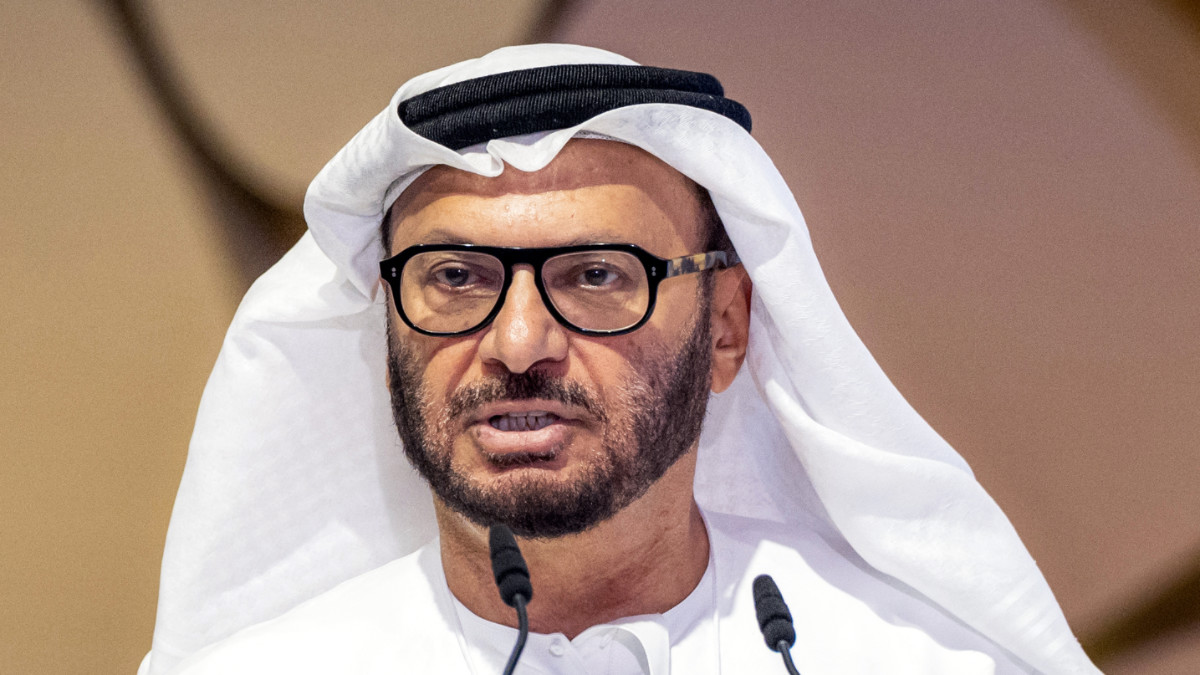
During a public forum hosted in Abu Dhabi on Monday, Anwar Gargash, diplomatic advisor to UAE President Mohamed bin Zayed, laid out a stark, pragmatic assessment for Gulf regional stakeholders: the Arab Gulf states must proactively prepare for a prolonged stretch of geopolitical limbo, where neither a definitive diplomatic resolution to the ongoing US-Iran conflict nor the establishment of a stable, predictable regional order can be assumed as a given.
Gargash’s carefully timed remarks land at a moment of deep confusion across Middle East capitals, as policymakers and analysts scramble to gauge whether US President Donald Trump will authorize a new wave of direct military strikes against Iranian targets. Speculation of an imminent new offensive reached a fever pitch in the weeks leading up to the 3 November US midterm elections, where the Democratic Party secured a sweeping, unexpected victory. Trump and Vice President JD Vance explicitly pinned that electoral defeat on widespread public backlash against the US-Israeli military campaign targeting Iran.
In a Monday interview with CNN, Trump claimed that a new strike was “highly unlikely” so long as diplomatic negotiations with Tehran remain active – a statement that carries notable contextual weight, given two well-documented precedents: US and Israeli forces carried out coordinated attacks on Iranian territory in February while diplomatic talks were already underway, and a separate US strike targeting Iranian nuclear facilities followed in June 2025, also in the middle of active negotiation processes. At present, the US has deployed three full aircraft carrier strike groups to the Middle East theatre, and Trump confirmed to CNN that his administration has already mapped out a network of 38 civilian critical infrastructure bridges across the region that US forces could disable in less than 60 minutes if ordered.
Even in the scenario where a full new round of open war is avoided, Gargash’s public comments lay bare the pervasive uncertainty that will hang over Gulf governing capitals for months, if not years, to come. The current status quo already carries significant frictions: the US has enforced an aggressive naval blockade on Iranian commercial shipping, while Iran has carried out repeated targeted attacks on civilian and commercial vessels transiting the strategic Strait of Hormuz. Neighbouring Saudi Arabia, meanwhile, faces persistent cross-border missile and drone assaults from the Iran-aligned Houthi movement based in Yemen.
This ambiguous “no war, no peace” holding pattern creates severe, cascading challenges for Gulf Cooperation Council states, many of which have spent years running aggressive campaigns to attract global foreign direct investment and restore their energy export volumes to pre-conflict levels. Every Gulf state that hosts permanent US military installations was targeted by Iranian retaliatory strikes in the aftermath of the 28 February joint US-Israeli attack on Iran.
For the UAE in particular, the stakes are uniquely high: unlike many of its Gulf neighbours that rely almost exclusively on hydrocarbon exports, the UAE has spent decades building a highly diversified national economy anchored by foreign investment in real estate, international tourism, and global maritime trade – all three sectors face severe, sustained risk in an environment of prolonged regional instability. The UAE initially opposed the February joint US-Israeli military operation against Iran, before shifting to emerge as the most hawkish Gulf state advocating for a sustained military campaign, even deploying its own air force to carry out strikes on Iranian targets and pulling a $3.5 billion pledged loan to Pakistan in a deliberate bid to pressure Islamabad to abandon its efforts to mediate between Tehran and Washington.
That hawkish posture came at a steep cost: as the closest formal Arab partner of Israel, the UAE bore the brunt of Iranian retaliatory fire, with more than 3,000 missiles and drones launched against its territory. As Reuters previously documented, UAE and other Gulf authorities deliberately downplayed the scale of these incoming strikes to avoid spooking international investors, but one particularly sophisticated Iranian assault targeted critical infrastructure in the port of Fujairah, disrupting the network of pipelines that move crude oil and refined petroleum products from onshore terminals to offshore shipping berths.
By September of this year, the UAE had pivoted back to a more conciliatory stance toward Iran, with Gargash calling for a “new mindset” across the region that centred inclusive negotiations to end the war, including a formal Iranian-Arab diplomatic track separate from US-led talks. The UAE has also led regional efforts to build new overland energy pipelines that bypass the Strait of Hormuz entirely, but repeated Houthi attacks on Saudi Arabia’s flagship East-West Pipeline have demonstrated that even these alternative transit routes remain far from invulnerable. In his latest Abu Dhabi forum remarks, Gargash confirmed the UAE will ramp up long-term investments in advanced defensive military capabilities, maintain a credible strategic deterrence posture, and deepen security partnerships with key international allies to navigate the extended period of uncertainty ahead.
Senior UAE official says Gulf faces ‘prolonged uncertainty’ with no settlement to Iran war