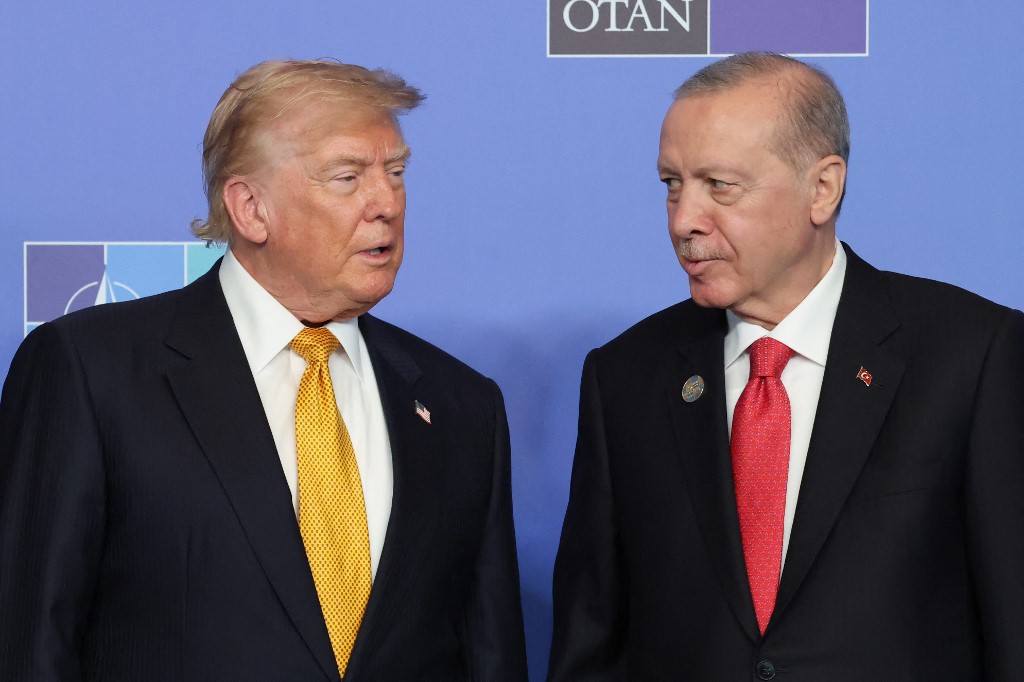
Top Turkish intelligence official Ibrahim Kalin revealed on Monday during a public conference in Ankara that Turkish President Recep Tayyip Erdogan directly appealed to U.S. President Donald Trump in a weekend Saturday phone call to refrain from launching a new wave of military strikes against Iran, as a coalition of regional diplomatic actors races to de-escalate spiraling tensions across the Middle East. Kalin warned that any unprovoked U.S. offensive against Iranian territory would ignite a self-perpetuating cycle of widespread regional violence, with even a minor unplanned incident capable of dragging the entire area into a devastating new phase of conflict.
Kalin outlined a carefully structured seven-point diplomatic framework that Turkey and other unnamed regional mediators have been advancing, which he characterized as an equitable, mutually beneficial arrangement for all parties involved. The core terms of the proposed deal would see the U.S. and its partners roll back longstanding punitive sanctions on Iran and unlock Tehran’s access to billions of dollars in frozen overseas financial assets. In reciprocal commitments, Iran would formally reaffirm its pledge to never pursue or develop nuclear weapons, consent to renewed full cooperation with the International Atomic Energy Agency to launch dedicated standalone nuclear negotiations, and reopen the strategic Strait of Hormuz to unimpeded global maritime traffic. Kalin noted that the primary remaining sticking point at this stage is agreeing on the exact sequential order of reciprocal actions, with all sides haggling over which party will make the first tangible move to demonstrate good faith.
Kalin stressed that the window to lock in this agreement is extremely narrow: if the framework can be finalized in the coming days, the planned U.S. strikes on Iran will be averted entirely, but if negotiations stall, new U.S. military attacks could be launched within as little as 72 hours. He also publicly called on Iranian negotiators to demonstrate greater operational flexibility to break remaining deadlocks and push the diplomatic process across the finish line. Two upcoming high-profile international gatherings are positioned as critical inflection points for the talks: Erdogan is scheduled to host a gathering of regional heads of state on the margins of the COP31 climate summit in Antalya, while Qatar will host a face-to-face meeting next week between U.S. Vice President JD Vance and senior Iranian national security official Mohsen Rezaei, a sit-down Kalin framed as a high-stakes opportunity to unlock a major diplomatic breakthrough.
However, a senior Iranian source with direct knowledge of the negotiation proceedings painted a far grimmer outlook in comments to Middle East Eye, stating that Tehran sees almost no credible indication that Washington is prepared to follow through on its commitments under the seven-point deal. The source warned that Iran is bracing for an imminent new wave of U.S. military escalation, and that Tehran will deliver a forceful, targeted retaliatory strike against all U.S. military bases across the region and potentially further afield in response. The source emphasized that the Trump administration only responds to tangible, measurable costs, so Iran will make any further unprovoked attacks on Iranian territory extraordinarily costly for the U.S. government. Recent Iranian state media footage released over the weekend that appeared to hint at potential strikes on U.S. military installations located in Europe has already sparked internal debate within Turkey, a NATO member state, over how Ankara would be required to respond if such an attack triggers the alliance’s collective defense clause. The Iranian source went on to accuse European governments of actively exacerbating U.S.-Iran tensions rather than acting as neutral de-escalators, and clarified that Tehran has no intention of targeting European military bases, only U.S.-operated facilities that have been used to launch prior attacks on Iranian soil. The source added that European military capabilities do not outstrip those of the U.S., and that European NATO members have no reason to fear retaliation as long as they do not allow their territory to be used for U.S. offensive operations against Iran.