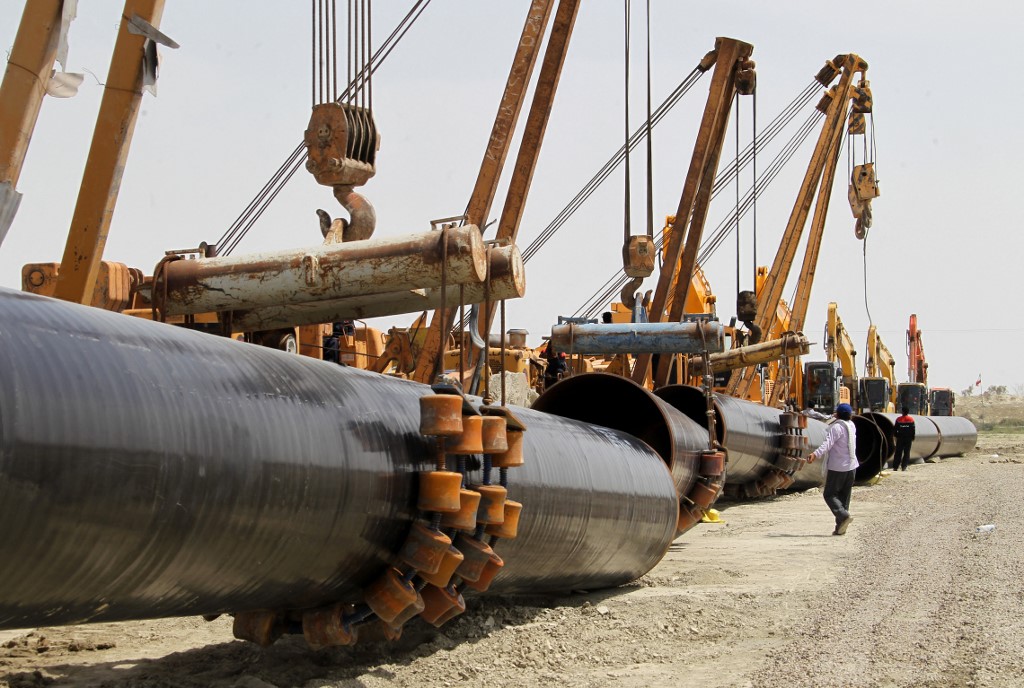
Turkey’s Energy Minister Alparslan Bayraktar disclosed to reporters during a Thursday press briefing that Ankara was forced to suspend its planned natural gas imports from Turkmenistan routed through Iranian territory, a disruption driven by escalating U.S. regulatory pressure tied to the ongoing U.S.-Iran conflict that erupted in February 2025.
The cross-border supply arrangement, which first launched in March 2025, was structured to deliver 1.3 billion cubic meters of Turkmen natural gas to Turkey every year, leveraging existing Iranian pipeline infrastructure. Turkish state energy importer Botas had secured a formal import license for the scheme that was set to remain valid through 2033, creating a long-term legal framework for the energy partnership. However, Ashgabat unilaterally halted gas flows to Ankara as early as October 2025, initially citing the short-term nature of the underlying supply contract, and noting that no updated agreement on pricing or delivery volumes had been finalized to extend deliveries beyond the initial trial phase.
Prior to this week’s briefing, Bayraktar had publicly referenced Ankara’s ongoing efforts to restart the Turkmen gas imports via Iranian transit routes earlier this year, but those efforts never came to fruition, with the full context of the U.S. role undisclosed until now. “The core barrier was the involvement of the U.S. Office of Foreign Assets Control, OFAC, in this supply chain,” Bayraktar explained during the press conference. “Even though we were not directing any payments for the gas transit to Iranian entities at all, the rapid escalation of open conflict between the U.S. and Iran created an unmanageable risk of running afoul of U.S. secondary sanctions, and that pressure has continued to intensify in recent months.”
Against this backdrop, Bayraktar outlined that Turkey’s Trans-Anatolian Gas Pipeline holds significant unused spare capacity, enough to immediately double the volume of natural gas that Turkey can transit and export to European markets. He also flagged long-term structural concerns for the regional energy market, noting that Azerbaijan’s proven natural gas reserves are gradually being depleted, making Turkmenistan’s vast, untapped gas reserves a highly viable alternative resource to meet growing demand both for Turkey’s domestic market and for its European trade partners.
However, major logistical and geopolitical hurdles stand in the way of unlocking that Turkmen supply at scale. Long-running disputes over exclusive economic zone boundaries in the Caspian Sea have stalled progress on constructing a direct trans-Caspian gas pipeline that would connect Turkmenistan’s reserves directly to Azerbaijan’s pipeline network, removing the need for Iranian transit entirely. Adding further complexity, Turkey’s own existing long-term natural gas supply contracts directly with Iran are set to expire in November of this year, and Ankara has not yet confirmed whether it will move forward with renewal talks, amid the sweeping U.S. sanctions targeting Iranian energy firms and financial institutions that were tightened dramatically earlier in 2025, forcing nearly all regional economies to adjust their trade and financial operations to avoid U.S. penalties.
Turkey halts Turkmen gas imports via Iran under US pressure