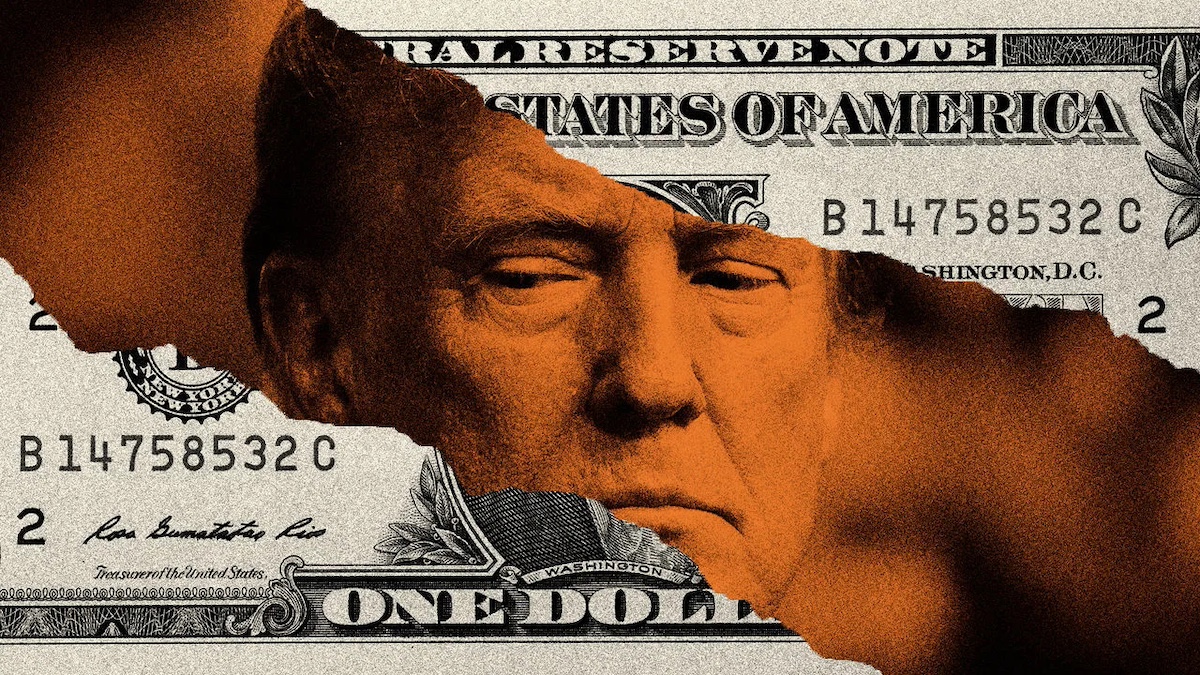
TOKYO — The US dollar’s recent rally to a 17-month peak reflects far more than the relative strength of the American economy: it is a magnet drawing global capital chasing elevated yields and the high-flying, AI-fueled US growth narrative, creating cascading risks across emerging Asian markets even as the 2026 US midterm elections delivered a historic, sweeping victory for Democratic candidates that secured majorities in both the House of Representatives and the Senate. The full scale of the Democratic rout of Donald Trump’s Republican Party remained unconfirmed for days after polling day, though Trump initially appeared to concede the lopsided defeat in public press interviews, defying widespread fears that he would attempt to interfere with vote counting as he did after the 2021 presidential election.
Global financial markets swung sharply in the immediate aftermath of the results, as investors priced in potential policy pivots from a newly empowered Democratic legislature spanning fiscal spending, AI regulation, responses to the ongoing Iran conflict, and formal oversight investigations into the Trump White House. Broad US equity benchmarks trended upward in early post-election trading, while the dollar saw modest, temporary dips against the Japanese yen, British pound and euro. Even so, the broader market consensus points to another extended, seemingly gravity-defying run of dollar strength as the political dust settles.
Analysts at MUFG Bank note that the Democratic sweep will likely deliver modest upside for Asian currencies, as the resulting legislative gridlock curbs expectations of unfettered new US government spending, easing pressure on Treasury yields and blunting some of the dollar’s upward momentum. Manulife Investment Management’s global head of asset allocation Nathan Thooft echoed that divided government will introduce a degree of policy stability that reduces near-term market volatility, but cautioned against overstating election outcomes as a long-term currency driver: foreign exchange movements are far more closely tied to cross-border differentials in growth, inflation, interest rates and capital flows than short-term political shifts. J.P. Morgan Asset Management’s Asia chief strategist Tai Hui added that Trump retains significant unilateral policy levers even with Democratic majorities in Congress, including authority over trade tariffs, foreign policy direction and existing regulatory frameworks, noting that Democrats would need a two-thirds supermajority in both chambers to override any presidential veto.
A sustained dollar surge poses acute risks for Asian economies: it will push regional currencies lower, tighten global credit conditions at a moment when governments across the Asia-Pacific are already navigating economic headwinds from the Middle East conflict and the threat of new US tariff hikes. The region has painful historical precedent for this dynamic: the 1997-98 Asian Financial Crisis traced its origins to the US Federal Reserve’s 1994-95 tightening cycle under Chair Alan Greenspan, which doubled interest rates in 12 months, triggered a Mexican currency collapse, and drove a dollar rally that made the region’s long-standing currency pegs unsustainable. Thailand was the first to devalue, followed by Indonesia and South Korea, which collectively secured $118 billion in IMF-led bailout packages, while Malaysia and the Philippines teetered on the edge of collapse without requesting external support. Emerging markets have remained wary of Fed tightening cycles ever since, a risk that was clearly visible during the 2013 “taper tantrum” selloff in global assets.
Today, the ongoing Iran war has reawakened the dollar’s historic potential to act as a destabilizing “wrecking ball” for regional markets. The Indonesian rupiah has fallen 8.8% in 2026 to hit all-time lows, the Philippine peso is down 7.7%, and both the Thai baht and South Korean won have dropped 7% — all despite persistent structural pressures on the US economy including record national debt, elevated inflation, protectionist tariffs, sweeping tax cuts and massive federal spending packages.
A key, underappreciated factor driving the current dynamic is the performance of the Federal Reserve under Chair Kevin Warsh, who took office in May 2026 and has run the US central bank far more hawkishly than Trump anticipated when he appointed him. While Warsh could still pivot to cut rates to align with the president’s priorities, US inflation remains anchored at 3.7% — a key factor cited by analysts for the Republican Party’s heavy midterm losses — and the US labor market has proven far more resilient than forecast, leaving Warsh with a highly complex policy balancing act.
This stance has thrown the Bank of Japan into extreme policy disarray. Markets are already pricing in additional Fed rate hikes before the end of 2026, a dynamic that pulls capital away from Japanese assets and into higher-yielding US Treasuries, threatening to derail the Nikkei’s multi-year bull run. The weak yen that previously boosted Japanese corporate profits has now left the country exposed to skyrocketing import costs and renewed inflationary pressure, as Japan teeters on the edge of stagflation: 2026 growth is tracking at just 0.7% while inflation hovers around 2%. The Bank of Japan’s September rate hike to 1% — a 31-year high — is widely expected to be the last tightening move for the foreseeable future, leaving a policy gap between a hold-harsh BOJ and a tightening Fed that sets the stage for renewed sharp yen depreciation.
No market participants can reliably forecast the Fed’s policy path six months from now, nor how Trump — who previously attempted to fire and prosecute former Fed Chair Jerome Powell — will react if his hand-picked Fed leader refuses to deliver the rate cuts he has long demanded. A surging dollar amid a new Fed tightening cycle was nowhere on Asian policymakers’ 2027 risk outlook, but it has now emerged as a top-tier threat. HSBC chief Asia economist Frederic Neumann notes that regional monetary authorities will have to remain on high alert for the foreseeable future: “A bouncy US dollar means there is little reprieve for now, and a sharp rally threatens to suffocate Asian currencies and leave governments across the region scrambling to sandbag their financial systems.”
Despite the prevailing bullish sentiment on the dollar, there are seven distinct, well-documented reasons to believe that current optimism over the currency may be misplaced. First, US political instability persists: the American political system has never fully recovered from Trump’s 2021 attempt to overturn his presidential election loss, and lingering chaos from the 2026 midterms is likely to cloud policy clarity for months. Second, oil and Middle East geopolitics remain a dominant wild card: CIBC head of foreign exchange strategy Sarah Ying notes that oil prices are the most important near-term driver of dollar movements, and any sharp shift in energy markets will easily outweigh midterm election impacts, adding that her team is positioned for dollar downside given the Trump administration’s recent more conciliatory tone toward Iran. Third, the Fed may prove far less aggressive than markets currently price in: Warsh could eventually argue for rate cuts to stabilize the US economy, a move that would narrow US-yield differentials with peer economies and push capital flows toward Europe, Japan and emerging markets. Fourth, US economic growth is likely to lag the rest of the world in 2027, weighed down by tighter Fed policy and Trump’s tariff regime, even if the country avoids a formal recession: as China’s economy stabilizes, Europe’s industrial recovery gains traction, the Bank of Japan slows its hiking cycle and emerging market fundamentals hold steady, global investors will have clear incentives to rotate capital away from US assets. Fifth, the AI investment boom that has driven most recent US capital inflows carries significant downside risk: total debt held by major US tech firms has swelled 90% in six months to $3.2 trillion, and if AI investment returns disappoint and valuations correct sharply, the dollar will lose its core fundamental support. Deutsche Bank’s global head of FX research George Saravelos adds that the AI dynamic cuts both ways: foreign purchases of US stocks currently fully fund the entire US current account deficit, but roughly 90% of the $20+ trillion in US equities held by overseas investors reflects price appreciation rather than new net inflows, leaving the market highly vulnerable to sudden outflows.
Sixth, America’s twin fiscal and current account deficits are reaching unprecedented levels, with total national debt now exceeding $40 trillion. The US has long benefited from the “exorbitant privilege” of issuing the world’s dominant reserve currency, a term coined by 1960s French Finance Minister Valéry Giscard d’Estaing, but that status relies entirely on global investor confidence. If that confidence erodes, the dollar could face downward pressure not seen since the 1970s, and Treasury yields could surge past levels last recorded in the early 2000s. Seventh, cross-market wildcards could upend current trends: the dollar could extend its rally further if AI bubble fears prove overblown, or if Trump de-escalates the Iran conflict or rolls back tariffs, while Japan represents a major countervailing force: after decades of exporting capital in search of higher overseas yields, Japanese institutional investors could begin repatriating funds as the Bank of Japan shrinks its balance sheet and domestic JGB yields rise. Standard Chartered’s global head of FX research Steve Englander argues that higher Japanese government bond yields will make the yen far more attractive, and its low market beta, undervalued pricing and newly restored yield advantage will drive sharp appreciation if global markets shift into risk-off mode unrelated to oil price shocks.
Massive regional holdings of US Treasuries add another layer of systemic risk: Japan holds nearly $1.1 trillion in US government debt, China roughly $620 billion, and the broader Asia-Pacific region holds more than $2.5 trillion in total. Even a small hint of coordinated selling from Tokyo or Beijing to defend their domestic currencies could trigger panic among other major US creditors including the UK, Canada, the Cayman Islands, Luxembourg and Taiwan. This dynamic explains why US Treasury Secretary Scott Bessent joined Japan’s Ministry of Finance in coordinated yen buying operations starting in July 2026, a move Trump publicly framed as a gesture of “friendship” that in reality reflected deep mutual fear: a disorderly yen selloff would send shockwaves across global markets, and Tokyo could retaliate by selling US Treasuries to support its currency, sending US yields spiraling higher. Notably, Bessent funded the intervention with euro reserves rather than newly printed dollars, a deliberate choice to avoid expanding the US money supply.
If US efforts to deliberately weaken the dollar backfire, policymakers in the Bessent Treasury could end up facing far higher Treasury yields than they currently project. The dollar’s decades-long strength rests entirely on global credibility and the widespread belief that US officials will not manipulate its value for short-term political gains, and recent ambiguous signals from the Treasury have reopened a deeply unpopular question on Wall Street: is Washington actively trying to push the dollar lower?
Asian governments face a cascade of additional policy risks in the post-midterm landscape. A wounded, lame-duck Trump White House could unleash a new wave of punitive tariffs, lash out at China for refusing to agree to a proposed “grand bargain” trade deal, pressure Japanese Prime Minister Sanae Takaichi to accept a $550 billion “signing bonus” to secure a bilateral trade agreement and increase annual payments for hosting US military bases, use Taiwan’s political status as a bargaining chip in negotiations with Beijing, or hold an unplanned high-profile summit with North Korean leader Kim Jong Un that upends regional security arrangements.
As 2026 draws to a close, the surging US dollar has once again upended Asia’s economic development plans for the coming year. The world’s most powerful capital magnet is siphoning away the liquidity Asian economies need to fund fiscal deficits, stabilize domestic bond markets and support buoyant equity valuations, and widespread uncertainty over the long-term direction of Warsh’s Fed policy is amplifying regional anxiety. For Asia, the core risk is no longer simply that the dollar keeps rising: it is that the world’s dominant reserve currency is evolving into the single most destabilizing force threatening regional financial stability for years to come.