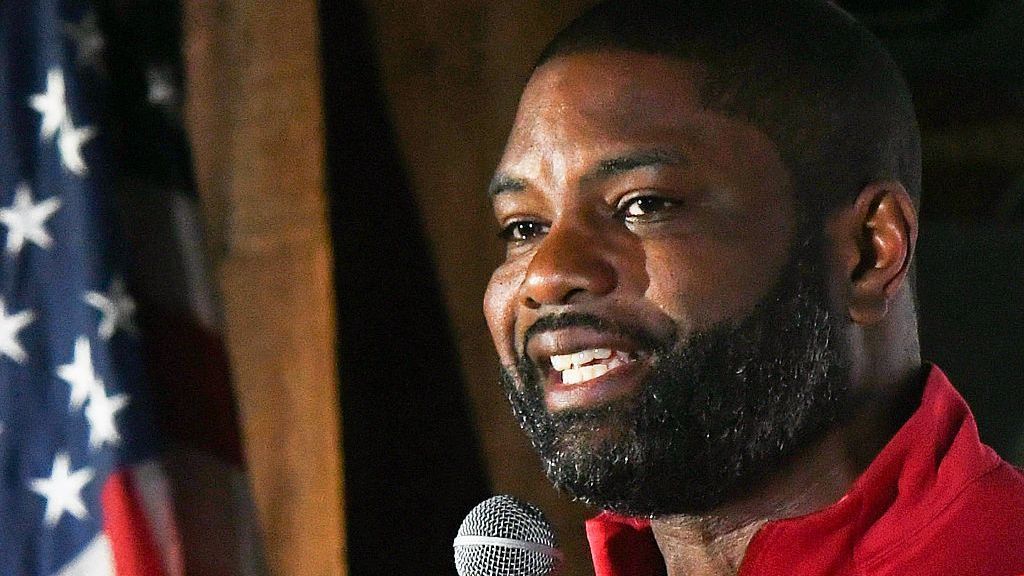
The 2026 United States midterm election cycle delivered a series of landmark, unexpected outcomes across Florida, where Republican candidates fended off high-profile Democratic challengers even as the Sunshine State made history by electing its first Black governor. Long a rising star in conservative political circles, former US Representative Byron Donalds – a vocal, loyal ally of former President Donald Trump who was once shortlisted as Trump’s 2024 vice-presidential running mate – was officially projected to claim Florida’s top executive office, succeeding term-limited two-term Republican Governor Ron DeSantis. A Brooklyn native who relocated to Florida for higher education before embedding himself in local community and political organizing, Donalds served three consecutive terms in the US House of Representatives starting in 2021 before launching his gubernatorial bid. Parallel to Donalds’ historic win, incumbent Republican Ashley Moody was projected to retain her hold on the US Senate seat previously vacated by long-serving Senator Marco Rubio, in a high-stakes special election that pitted her against Democratic nominee Angie Nixon. Nixon, a progressive local representative, had pulled off a shocking upset in the Democratic primary to secure the party’s nomination, but ultimately could not close the significant fundraising gap that separated her well-funded campaign from Moody’s established, state-wide political operation. These two defensive Republican victories in Florida played out against a far larger national electoral wave that delivered unprecedented, historic gains for the Democratic Party, granting the party full, unbroken control of both the US House of Representatives and the US Senate for the final two years of Donald Trump’s presidential term. Even in Florida, where state Republican leaders led a controversial 2025 redistricting push to redraw House voting maps explicitly designed to tilt three select districts in the GOP’s favor, Democratic candidates defied expectations by successfully defending all three of those strategically altered seats, denying the GOP the easy pickups they had mapped out in their national redistricting strategy. The night’s mixed outcomes in Florida underscored the deep, shifting partisan tensions across the US electorate in 2026, as voters weighed national policy priorities, Trump’s political influence, and local candidate records at the ballot box.
Florida Republicans fend off Democrats as state elects first black governor