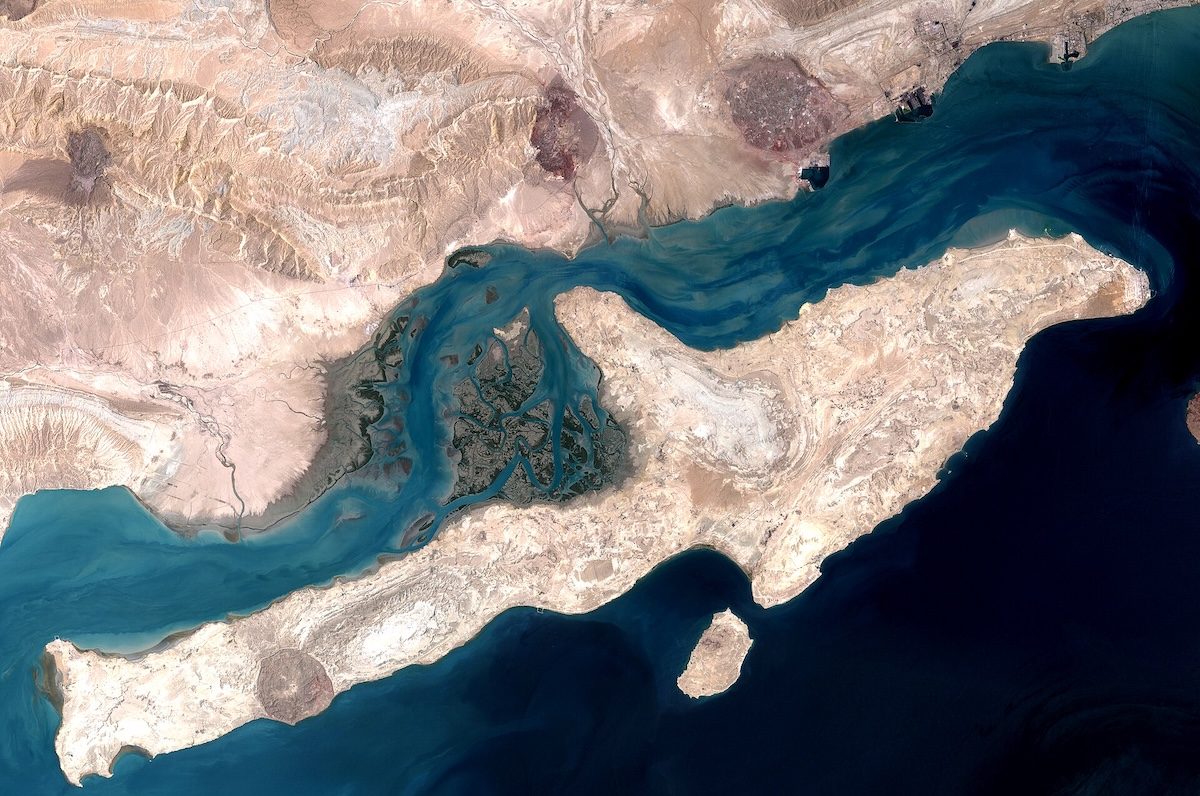
Hours before American voters cast their ballots in the 2026 midterm elections, the Trump administration carried out a previously unannounced targeted aerial strike on Iran’s Qeshm Island, a strategic territory situated in the critical Strait of Hormuz, according to an exclusive initial report from the Wall Street Journal. The operation, which the U.S. military chose not to publicly acknowledge, was framed by an anonymous U.S. official as a purely defensive response to recent Iranian surface-to-air missile deployments targeting American forces that have been engaged in hostilities against Iran since February of that year. Per the Journal’s corroborated reporting, the immediate trigger for the Monday night strike came when a unit of Iran’s Islamic Revolutionary Guard Corps launched a surface-to-air missile at a patrolling U.S. fighter jet, prompting the aircraft to return fire in self-defense before the broader targeted operation on Qeshm Island was executed. The administration has deliberately kept its recent string of limited, small-scale strikes on Iranian territory under wraps, the Journal confirmed, in a deliberate effort to avoid signaling to domestic and international audiences that it intended to restart large-scale, open combat operations against the Iranian state. This development directly contradicts public assurances made by former President Trump just one month prior, when he publicly pledged that the United States would not launch any attacks on Iran in the lead-up to the midterms, and claimed that bilateral talks between the two nations were producing “productive discussions.” Vice President JD Vance also echoed this tone of cautious optimism just hours before the strike was publicly revealed, stating that both he and Trump held positive outlooks for reaching a negotiated diplomatic settlement to end the widely unpopular, devastating ongoing conflict with Iran. The revelation of the unreported strike has sparked immediate alarm among policymakers and advocacy groups focused on Iranian-American relations. Kazem Gharibabadi, Iran’s deputy foreign minister, issued a stern public statement on Tuesday affirming that Tehran is fully prepared for any potential scenario, and that the nation retains its inherent right to legitimate self-defense until all acts of foreign military aggression against its territory are fully and permanently halted. Jamal Abdi, president of the National Iranian American Council (NIAC), noted that prior to the strike reports, many observers had held cautious hope that after eight months of an unauthorized, illegal war, a diplomatic end to the conflict was finally within reach. “These deeply alarming revelations suggest we may be heading in precisely the opposite direction,” Abdi warned, emphasizing that every day Congress fails to intervene, the Trump administration is granted leeway to wage unapproved military campaigns, conceal its operations from the public, and gamble with the lives of millions of people across the region. Abdi called on Congress to immediately demand full transparency from the administration, reject any further unauthorized military action, and leverage its legislative power to cut off all funding for the unapproved Iran war, adding that the window to prevent a catastrophic wider escalation is rapidly closing. The confirmed Qeshm Island strike follows closely on public warnings from Democratic Connecticut Senator Chris Murphy, who shared details from a closed classified congressional briefing to alert the public that the Trump administration was weighing an “insane” plan to roll out large-scale renewed attacks on Iran in the immediate aftermath of the midterm elections. Murphy cautioned that if such a plan moves forward, it would trigger devastating regional escalation and effectively shatter longstanding U.S. commitments to global rule of law principles. While Murphy did not explicitly state that the administration was considering deploying nuclear weapons against Iran, public anxiety over a worst-case scenario spiked over the weekend after prominent conservative commentator Tucker Carlson, a vocal critic of the Iran war, claimed that the Trump administration could be mere days away from launching a nuclear strike on Iranian soil. In an official response, NIAC stated that regardless of whether such reports reflect formal military planning or reckless political posturing, the very existence of a credible possibility of a U.S. nuclear attack on Iran represents an unconscionable, unacceptable horror that demands immediate congressional oversight and public pushback.