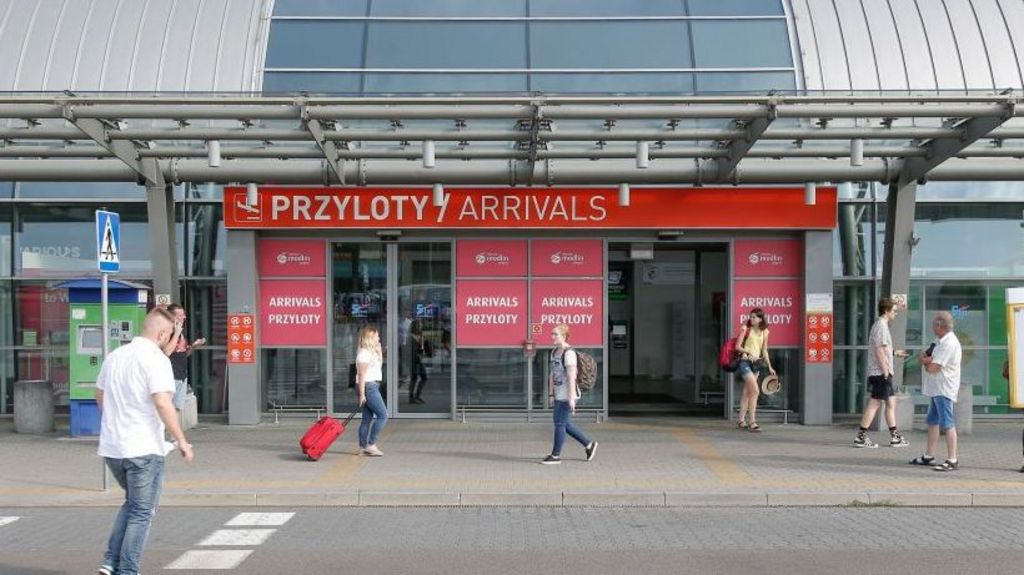
A coordinated string of alleged bomb threats targeting commercial passenger flights triggered widespread security responses across multiple European countries on Wednesday, prompting emergency landings, targeted specialist inspections and temporary disruptions to regular airport operations across Poland, Spain and Hungary. The spate of security scares began the preceding evening, when a Wizz Air service travelling from London Luton to a Polish destination was diverted to Budapest, with Hungarian Air Force fighter jets scrambled to escort the aircraft safely to the Hungarian capital. All 190 passengers and crew on board were evacuated for thorough security sweeps, and Wizz Air later confirmed that no explosive devices or suspicious materials were uncovered during full inspections of the plane. On the following day, the wave of threats continued to unfold across three separate incidents across two nations. The first incident involved a regular British Airways service departing London Heathrow, bound for Warsaw’s primary Chopin Airport carrying 181 total passengers and crew. Mid-flight, flight crews received a verified bomb threat notification, prompting air traffic control to divert the aircraft to Warsaw-Modlin, the Polish capital’s secondary low-cost carrier-focused airfield, at 10:01 local time (09:01 GMT). The Boeing 737 Max aircraft was immediately isolated on a dedicated remote apron, while counter-terrorism security specialists swept the entire plane for hazardous materials. All on board were safely evacuated, and airport authorities confirmed that normal takeoff and landing operations resumed fully within two hours of the unscheduled arrival, even as the formal inspection of the targeted aircraft remained ongoing. A second inbound flight to Chopin Airport, a service originating in Copenhagen, Denmark, also received a separate bomb threat notification mid-flight, according to reports from leading Danish local media outlets. The flight’s command crew elected to proceed directly to a routine, uneventful landing at Chopin Airport, where the aircraft was immediately pulled aside for mandatory security screening. Airport management at Chopin confirmed that a small section of the airport’s apron was temporarily cordoned off for the inspection, but that all scheduled commercial operations suffered only minimal, negligible delays with no widespread cascading cancellations. Thousands of kilometres south, a separate Ryanair flight travelling from Manchester, United Kingdom, to Murcia-Corvera Airport in southeastern Spain also reported a credible bomb threat while in transit. Francisco Lucas, the official Spanish government delegate for the Murcia autonomous region, confirmed that 121 passengers and crew members were on board the aircraft when it made a planned emergency landing. Local emergency services, including the regional fire brigade, were pre-deployed to the airport’s dedicated security response zone to support the full activation of national aviation emergency protocols, with specialist bomb disposal units conducting a full sweep of the narrow-body passenger jet. As of the latest official updates, no suspicious items have been found on any of the four targeted aircraft across all three countries, and national aviation security agencies across the European Union have launched a joint coordinated investigation to trace the origin of the coordinated hoax threats, which are believed to have been transmitted via encrypted anonymous communication channels to multiple airline operation centres simultaneously.