A decades-old UN peacekeeping presence in the contested North African territory of Western Sahara formally entered a liquidation phase on November 1, after a rare double veto and vote failure in the UN Security Council left no viable path to renew the mandate of the UN Mission for the Referendum in Western Sahara (MINURSO).
The unprecedented diplomatic impasse unfolded on a Friday in late October, when a US-drafted resolution that would have extended MINURSO’s mandate for 12 months, stripped the word “referendum” from the mission’s official name, and enshrined Morocco’s longstanding autonomy proposal as the sole legal basis for future negotiations secured 11 votes in favor but was blocked by a Russian veto. A subsequent Russian counter-proposal to extend the mission’s original 1991 mandate terms without amendments garnered just two supporting votes, falling far short of the required threshold. MINURSO’s mandate expired at midnight on October 31, triggering a UN-managed drawdown of its 155 military personnel and the transfer of its $62 million annual operational assets out of the territory.
The collapse of the 33-year peacekeeping mission marks a seismic turning point in Africa’s longest-running unresolved territorial conflict, which traces its roots back to the end of Spanish colonial rule in 1975. When Madrid announced plans to withdraw from its phosphate-rich, Atlantic coastal colony, both Morocco and Mauritania laid competing territorial claims, prompting the International Court of Justice to issue a landmark ruling that recognized informal historical tribal allegiances between Sahrawi populations and neighboring states but reaffirmed the Sahrawi people’s inalienable right to full self-determination, including the option of full independence.
In response, Morocco’s late King Hassan II orchestrated the historic Green March, a mass mobilization of 350,000 unarmed Moroccan civilians who crossed into Western Sahara to assert Rabat’s territorial claim. Days later, Spain signed the Madrid Accords, splitting administrative control of the territory: Morocco assumed jurisdiction over the resource-rich northern two-thirds, while Mauritania took control of the sparsely populated southern third. The agreement deliberately avoided any formal resolution of sovereignty, a gap that immediately sparked armed resistance from the Polisario Front, the Sahrawi independence movement founded two years earlier in 1973. Mauritania formally renounced all its territorial claims in 1979, leaving Morocco as the sole occupying power fighting the Polisario, which received full military, logistical, and diplomatic backing from neighboring Algeria. Algiers hosts more than 100,000 Sahrawi refugees in camps outside the city of Tindouf, and has formally recognized the Polisario-declared Sahrawi Arab Democratic Republic (SADR) as a sovereign state.
16 years of brutal civil conflict ended in 1991 with a UN-brokered ceasefire that split Western Sahara via a 2,700-kilometer sand berm, or defensive wall, separating Moroccan-controlled territory from Polisario-held areas. MINURSO was established to monitor the ceasefire and organize a long-promised independence referendum scheduled for 1992. That vote never materialized, as the two sides remained deadlocked for decades over disputes about voter eligibility, with Morocco pushing to include hundreds of thousands of Moroccan settlers who had moved into the territory, and the Polisario insisting that only native Sahrawis listed in 1974 Spanish colonial census be allowed to cast ballots.
In 2007, Morocco tabled a formal autonomy proposal that would grant Sahrawis full authority over local internal governance, while leaving Rabat in exclusive control of national defense, foreign policy, and cross-border resource management. The Polisario and Algeria immediately rejected the framework, demanding a binding referendum that guaranteed independence as a valid ballot option. More than 15 years of UN-mediated negotiations failed to yield any compromise, and the decades-long ceasefire collapsed entirely in November 2020, when the Polisario announced it was resuming full armed struggle after Moroccan forces moved to clear a protest blockade on a key southern border road.
Morocco has spent the last decade pursuing an aggressive global diplomatic campaign to win international recognition for its territorial claim over Western Sahara, with notable breakthroughs coming in recent years: the Trump administration formally recognized Moroccan sovereignty over the entire territory in 2020 as part of a US-brokered Abraham Accords normalization deal between Rabat and Tel Aviv, France officially endorsed Morocco’s autonomy plan as the only feasible conflict resolution framework in 2024, and the UN Security Council passed a 2025 resolution labeling the autonomy proposal as the most pragmatic path to peace. More than 10 African Union member states have opened formal diplomatic consulates in Moroccan-controlled Western Sahara, after Morocco rejoined the AU in 2017 following a 33-year boycott sparked by the organization’s decision to grant the SADR full membership.
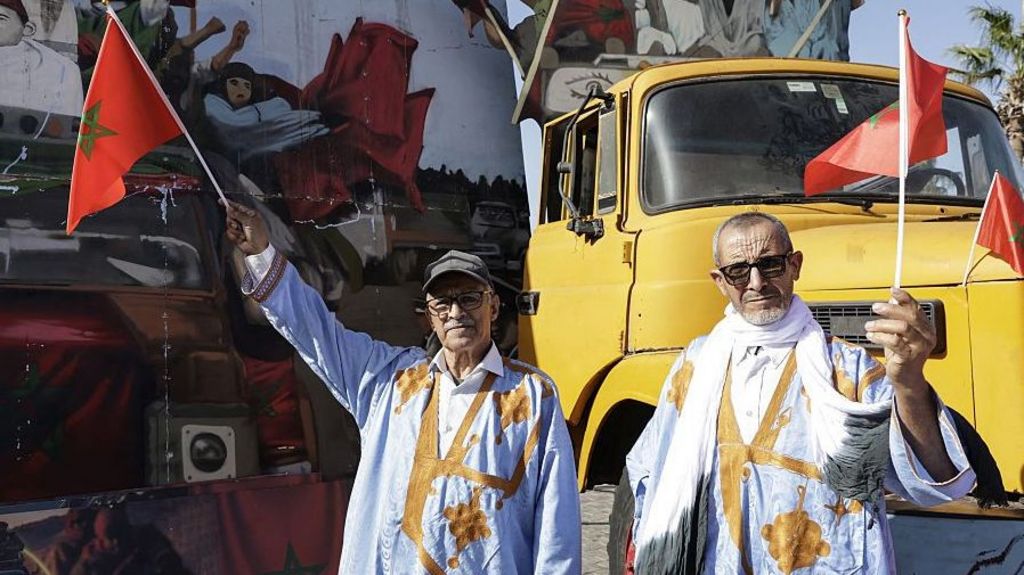
Across Morocco, the Security Council’s failure to renew MINURSO’s mandate was greeted as a landmark diplomatic victory. Crowds flooded the streets of Laayoune, Western Sahara’s largest urban center, waving Moroccan national flags and holding aloft portraits of King Mohammed VI. Senior Moroccan political leaders, including House of Representatives Speaker Ahmed Touizi, framed the mission’s dissolution as an opportunity to shift from decades of conflict management to full implementation of the autonomy plan, with accelerated national development projects planned across the territory. Leading Moroccan international relations analyst Issam Laaroussi noted that the mandate collapse would give Rabat far greater leverage to reframe global negotiations around its autonomy proposal, rather than the long-stalled independence referendum.
Yet the landmark development has done nothing to alter Western Sahara’s formal legal status under international law: the territory remains listed as a UN-designated non-self-governing territory, and no formal global recognition of Moroccan full sovereignty has been granted. UN Secretary-General Antonio Guterres issued a stark public warning following the Security Council vote, emphasizing that the Sahrawi people’s right to self-determination remains legally binding, and cautioning that the removal of MINURSO’s longstanding ceasefire monitoring infrastructure creates a critical security gap that drastically raises the risk of renewed large-scale hostilities. The Polisario Front publicly condemned the now-defunct US-drafted resolution, thanking Russia for its veto and arguing that the proposed changes would have completely dismantled 30 years of UN peace process foundations, threatening regional and global security. International aid organization Oxfam also issued a public alert, noting that MINURSO’s departure eliminates the only neutral third-party de-escalation mechanism in the territory, putting tens of thousands of vulnerable Sahrawi civilians at direct risk of harm.
Current data from the Stockholm International Peace Research Institute shows that both Algeria and Morocco have sharply accelerated military spending in the past 12 months, with Algiers allocating $25.4 billion to its defense budget – more than four times Morocco’s $6.3 billion allocation – a trend SIPRI explicitly attributes to the unresolved Western Sahara territorial dispute. While Moroccan Foreign Minister Nasser Bourita has publicly reaffirmed Rabat’s commitment to upholding the 1991 ceasefire, Polisario leadership has not issued any formal public statement outlining its next strategic moves, raising widespread fears that any new outbreak of armed conflict could quickly escalate to draw in Algeria, reigniting a wider regional proxy conflict that could destabilize the entire North African coastal region.
Why a US-Russia showdown left Morocco celebrating