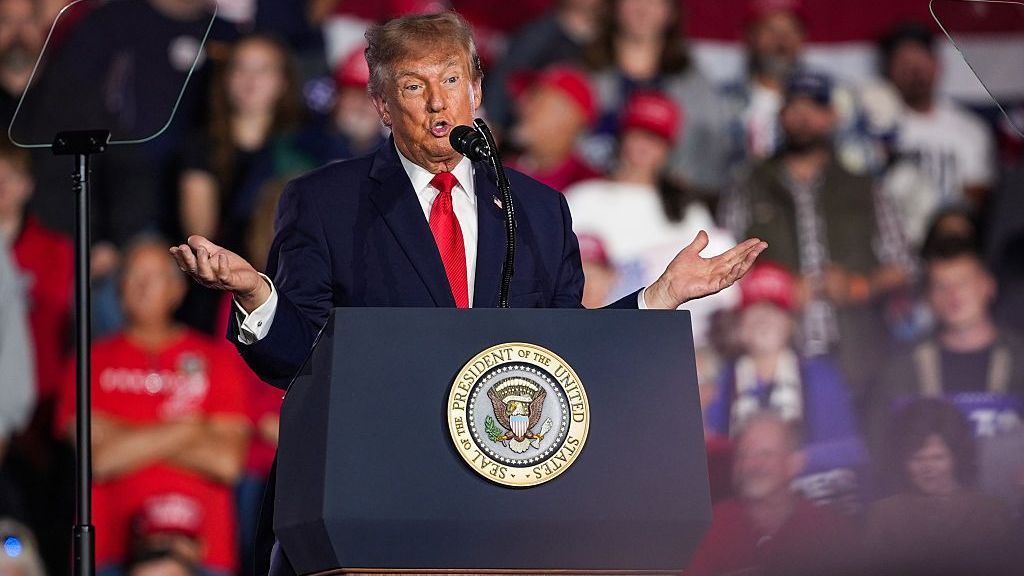
In the critical 48 hours preceding the 2026 U.S. midterm elections, former President Donald Trump launched a relentless cross-country campaign blitz to rally Republican voters and stave off Democratic efforts to seize control of both chambers of Congress. Trump headlined in-person rallies in Florida, Iowa, and Kansas — three states he carried decisively in prior electoral cycles — a visible signal that once reliably red strongholds have become fiercely competitive battlegrounds where the GOP is now playing defense to protect its razor-thin congressional majorities.
Against a backdrop of widespread voter frustration over surging costs for fuel, groceries, and healthcare, which have spiked sharply over the eight months since the onset of the Iran conflict, Trump structured his final campaign messaging to redirect public anger away from economic headwinds and toward Democratic leadership. He painted the Biden-aligned Democratic Party as a threat to household stability, delivering fiery claims that Democratic electoral victories would “bankrupt working families, open the southern border unconditionally, strip law-abiding citizens of their Second Amendment rights, and implement harmful policies targeting transgender youth.” Rallies featured curated video montages highlighting Democratic lawmakers’ criticisms of U.S. Immigration and Customs Enforcement and their advocacy for expanded transgender rights, drawing raucous cheers from assembled loyalist crowds, even as moderate factions within the GOP voiced quiet concern that Trump’s incendiary rhetoric could alienate independent swing voters.
Beyond his in-person stops, Trump hosted virtual tele-rallies for down-ballot Republican candidates in high-stakes swing states including Michigan, Ohio, and Pennsylvania, framing his administration’s first term as a “golden age of American prosperity” that Democrats had derailed by returning the nation to a “dark age of economic stagnation.”
As the final campaign stretch unfolded, multiple independent forecasts pointed to a strong Democratic edge: a Harvard University election forecasting model that aggregates dozens of public polls and decades of historical electoral data calculated a 96% probability of Democrats flipping the U.S. House of Representatives, alongside a 76% chance of securing a Senate majority. A weekend NBC News national survey echoed that trend, showing registered voters favoring a Democratic-controlled Congress by a seven-point margin, at 52% to 45%. Democratic House Leader Hakeem Jeffries struck a confident tone over the weekend, stating his party was on track to secure a House majority, while former President Barack Obama also deployed his own last-minute voter outreach efforts to mobilize Democratic bases.
The final campaign weekend also delivered two unforeseen, high-profile twists in key Senate races. In Michigan, Democratic U.S. Representative Haley Stevens — who had previously lost her party’s 2024 Senate nomination to progressive candidate Abdul El-Sayed — announced her endorsement of Republican Senate hopeful Mike Rogers, a move that sparked widespread condemnation across Democratic circles while drawing public praise from Trump, who called Stevens “very brave” for breaking with partisan ranks. In Alaska, a state judge dismissed a last-minute lawsuit filed by the Trump administration that had sought to delay certification of the state’s Senate election results over a procedural quirk that placed two candidates named Dan Sullivan on the ballot.
The flurry of eleventh-hour developments unfolded against the broader context of persistent, unsubstantiated claims from Trump and his allied circles that widespread voter fraud was endemic to U.S. elections, despite decades of empirical data showing electoral fraud in the country is extraordinarily rare. The U.S. Department of Justice, during Trump’s prior term, had launched multiple targeted investigations and pushed for ballot set-asides across a handful of states based on these unproven assertions.
The midterms represent a defining electoral referendum on Trump’s governing tenure, aligning with longstanding historical trends that typically see the party occupying the White House lose congressional seats in midterm cycles. Republicans currently hold narrow majorities in both the House and Senate, and losing even a handful of seats would strip them of the ability to advance their legislative agenda and shape federal policy for the coming two years. A Democratic takeover, by contrast, would grant the party sweeping oversight powers to launch formal investigations into Trump’s prior administration, block Republican policy proposals, and lay the groundwork to showcase their own policy platform ahead of the 2028 presidential election. For ordinary American voters, the outcome will directly shape tangible daily realities, from inflationary pressures on household goods and gas prices, to access to reproductive healthcare, immigration enforcement rules, and tax rates at local, state, and federal levels.
Trump makes fevered campaign push in final weekend before election