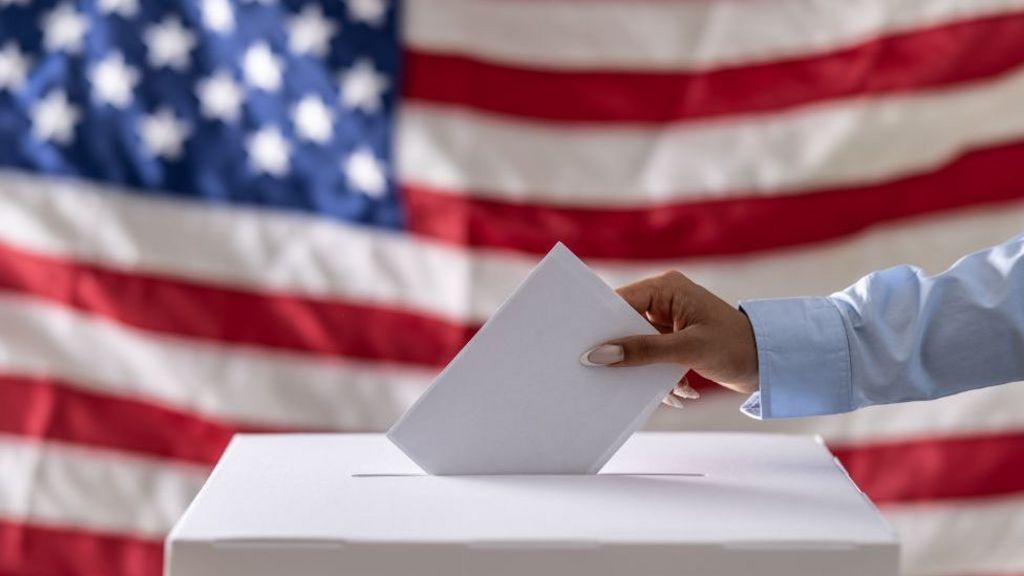
Heading into the high-stakes 2026 United States midterm elections, Democratic Party strategists and supporters have anchored their campaign hopes on a seemingly favorable confluence of factors: historically low public approval ratings for incumbent Republican President Donald Trump, widespread voter frustration over surging grocery costs and household utility bills, and months of public polling that positions the party within striking distance of seizing congressional control. Aggregate survey data shows Democratic candidates leading by comfortable margins in enough House of Representatives districts to clear the 218-seat threshold required to flip the lower chamber, while they hold narrow ties or slight advantages in nearly all competitive Senate battlegrounds. A recent New York Times survey even flagged the traditionally deep-red state of South Carolina, which Trump carried by an 18-point margin in the 2024 presidential contest, as a dead heat in its Senate race, while separate CNN polling found Democratic candidates with modest leads in reliably conservative Texas, Kansas, and Maine.
Yet a growing chorus of political analysts and veteran pollsters are sounding a note of caution, pointing to a decades-long track record of high-profile polling misfires in recent U.S. electoral history that could upend these optimistic projections. Trump outperformed nearly all mainstream pre-election surveys en route to surprise presidential victories in 2016 and 2024, and his narrow 2020 loss to Democrat Joe Biden came after most major polls had projected a far wider margin for Biden. This year’s primary elections offered even more stark examples of polling failures: political neophyte Abdul El-Sayed was widely projected to win Michigan’s Democratic Senate primary by double digits, but ultimately prevailed by a razor-thin 1% margin, while a Wisconsin Democratic gubernatorial candidate who held a nearly 20-point polling lead going into primary day lost the contest by a fraction of a percentage point.
Clifford Young, president of leading global public opinion research firm Ipsos Public Affairs, explained that modern polling faces unprecedented structural headwinds that have eroded data accuracy over the past decade. The steady decline of landline telephone usage, widespread call screening by U.S. households, and plummeting willingness among the public to participate in survey interviews have made it far more difficult to build statistically representative voter samples. The most pronounced gap, Young noted, lies with far-right conservative voters, who are deeply anti-establishment, deeply distrustful of institutional systems including polling firms, and far less likely to respond to survey outreach. This systematic undercount of Republican-leaning respondents, if not properly accounted for in weighting and turnout models, can skew final polling results to overstate Democratic support.
These dynamics help explain the persistent gap between pre-election projections and final vote tallies in recent cycles, even as most reputable polls maintain a standard statistical margin of error of 2 to 3 percentage points — a gap that is more than enough to swing the outcome of the dozens of competitive midterm races that are separated by single-digit margins this cycle. Analysts note that midterm elections historically have produced more accurate polling than presidential contests, particularly in 2022, when surveys correctly predicted that Democrats would avoid a predicted electoral landslide under then-President Biden, narrowly lose control of the House, and retain their majority in the Senate. Young emphasized that the lopsided primary polling misses earlier this year are not a reliable indicator of general election inaccuracy, as primary electorates are far smaller, more ideologically extreme, and far more likely to make last-minute voting decisions than general election voters.
Historical precedent also works against Democratic hopes of a sweeping midterm victory. The party holding the White House almost always suffers significant losses in midterm contests, most notably in 2010, when Republicans flipped more than 60 House seats and made substantial Senate gains during Barack Obama’s first term, amid widespread voter anger over a slow post-financial crash economic recovery and the rollout of the Affordable Care Act. This cycle, however, the partisan roles are fully reversed: Democrats are the out-of-power party, running amid widespread economic anxiety, but four key structural factors are blunting their expected electoral advantage. First, nearly all of the competitive battleground districts this cycle are located in states and districts that Trump won handily in the 2024 presidential election, giving Republicans a natural partisan home-field advantage. Second, recent decennial redistricting cycles have drawn heavily gerrymandered House districts that reduce the number of competitive swing seats available to flip. Third, decades of rising political polarization have left the U.S. electorate largely ideologically calcified, with a rapidly shrinking pool of independent swing voters who can shift partisan outcomes. Fourth, Republican super PACs have built a massive multi-hundred-million-dollar cash advantage over Democratic opponents, which they have deployed to flood battleground airwaves with negative attack ads in the final weeks of the campaign.
Despite these headwinds, analysts caution that polling errors are not inherently biased to favor Republican outcomes. In 2025’s round of state special elections, Democratic voters turned out at unexpectedly high rates that outperformed nearly all pre-election survey projections, resulting in upset wins for the party. Trump’s decision to hold last-minute campaign rallies in states he won by double digits in 2024 has also fueled Democratic optimism that internal Republican campaign polling is showing their candidates in far more competitive trouble than public surveys indicate. Even with these positive signs for Democrats, pollsters acknowledge that a persistent layer of uncertainty will remain right up until election day: undecided late-breaking voters can break uniformly for one party in the final 72 hours of a race, and shifting voter sentiment in the final campaign days can upend even the most carefully calibrated survey models. “We are getting better at accounting for these structural challenges, but at the end of the day we are studying human behavior, and humans are never fully predictable,” Young noted.
[Image credits: Getty Images; first image showing midterm campaign voters at a polling station, second image showing former President Barack Obama addressing the press the day after the 2010 historic midterm losses]