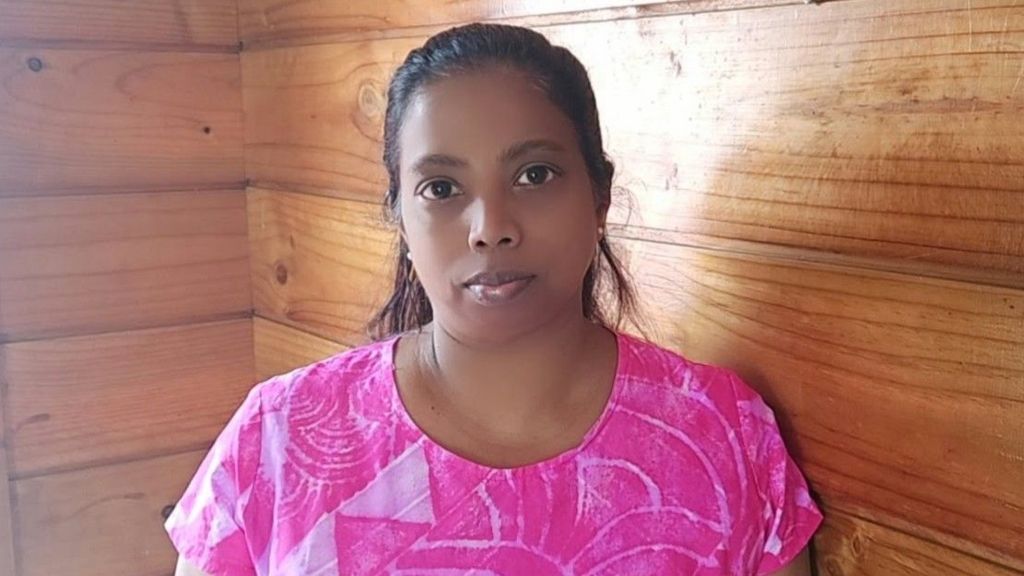
When 50-year-old Ruchira Ranasingha departed her native Sri Lanka in 2018, she never anticipated her path would lead to indefinite, involuntary residence on the postcard-perfect South Pacific archipelago of the Cook Islands, a destination most know for its powdery white beaches and jagged volcanic peaks. A former small-business owner who was forced to shut down her T-shirt factory amid crippling financial losses, Ranasingha fled mounting loan pressure after her husband, a long-time drug addict, died roughly seven years prior. She first relocated to Hong Kong to work as a domestic caregiver for elderly and child dependents, before travelling to New Zealand on a two-month visitor visa in December 2022 with hopes of building a stable new life.
As her visitor visa neared expiration, Ranasingha filed for asylum, citing threats from unpaid lenders back in Sri Lanka, and was granted an open work visa tied to her pending asylum claim. She secured a role at a local restaurant that agreed to sponsor her for a longer-term employment visa, but New Zealand’s immigration rules barred asylum seekers from applying for alternate visa classifications while their refugee claims remained under review, leading to that sponsorship bid being rejected. Seeking a path around this restriction, Ranasingha retained services from a local firm called Immigration & Secretarial Services, whose manager Sylviane Gallant advised her that she could file for a fresh work visa from an offshore location, and instructed her to exit New Zealand to complete the process.
Acting on that guidance, Ranasingha booked a short stay in the Cook Islands, a self-governing nation in free association with New Zealand, only to face a cascading series of catastrophic setbacks. Her offshore work visa application was immediately rejected, and her choice to leave New Zealand automatically voided the terms of her existing asylum-linked work authorization. New Zealand immigration authorities notified her she would no longer be eligible for any future visas to enter or even transit through their territory, a barrier that would quickly prove insurmountable.
With no valid travel documentation to return home, Ranasingha soon learned that every feasible international exit route from the Cook Islands was blocked. All direct commercial flights from the archipelago only connect to New Zealand, Hawaii in the United States, or Tahiti in French Polynesia. Both Hawaii and Tahiti require in-person biometric data submission for visa processing, a step that can only be completed inside New Zealand, which had already barred her from entry. Three separate transit visa applications to New Zealand were rejected, with officials stating they could not verify she had no intent to overstay, and four subsequent Australian transit visa bids were also denied on similar grounds. Even her dramatic public offer to travel back to Sri Lanka “handcuffed, bound and gagged” under official escort was dismissed, as New Zealand’s immigration minister’s office noted that physical restraints would not prevent a person from lodging a new asylum claim upon arrival in their territory.
Now stranded for more than three years, Ranasingha survives thanks to extraordinary acts of local goodwill: a Cook Islands hotel allowed her to move into free staff accommodation, local residents regularly donate food and clothing, and one hotel director gifted her a sewing machine that lets her generate a modest income making custom garments. She tells the BBC that her mother, who frequently reminds her that this outpouring of kindness must be a reward for past good deeds, is now in and out of hospital from chronic stress over her daughter’s prolonged disappearance, and her only son is set to get married in November, an event she is desperate to attend.
Immigration law specialist Alastair McClymont, based in Auckland, confirmed that Ranasingha received deeply negligent, unprofessional guidance from unregulated immigration consultants, who charged her thousands of New Zealand dollars in fees without disclosing the catastrophic risks of exiting New Zealand mid-asylum claim. He explained that New Zealand, Australia, the United States and France have aligned border security protocols that make it extremely unlikely any of those nations will approve transit for her, as all share intelligence that she previously filed an asylum claim stating her life was at risk in Sri Lanka, creating a presumption that she would attempt to overstay if allowed entry. The BBC attempted to reach Gallant for comment but received no response.
Ranasingha’s family has exhausted all domestic advocacy channels in Sri Lanka to secure her release, and the Sri Lankan Ministry of Foreign Affairs confirmed that its High Commission in Wellington is working in close coordination with New Zealand authorities to explore all possible pathways for her repatriation, but no concrete resolution has been reached to date. The prolonged trauma has taken a severe toll on Ranasingha’s mental and physical health; in one recent emotional call to her brother, she expressed despair that if officials would not allow her to return home alive, they might at least agree to repatriate her remains after she dies. The story has drawn widespread public attention to the unregulated immigration consulting industry across the Pacific, which preys on vulnerable migrant applicants with misleading promises of simplified visa pathways.
I’ve been stuck on a tiny Pacific island for years and can’t get a transit visa to fly home