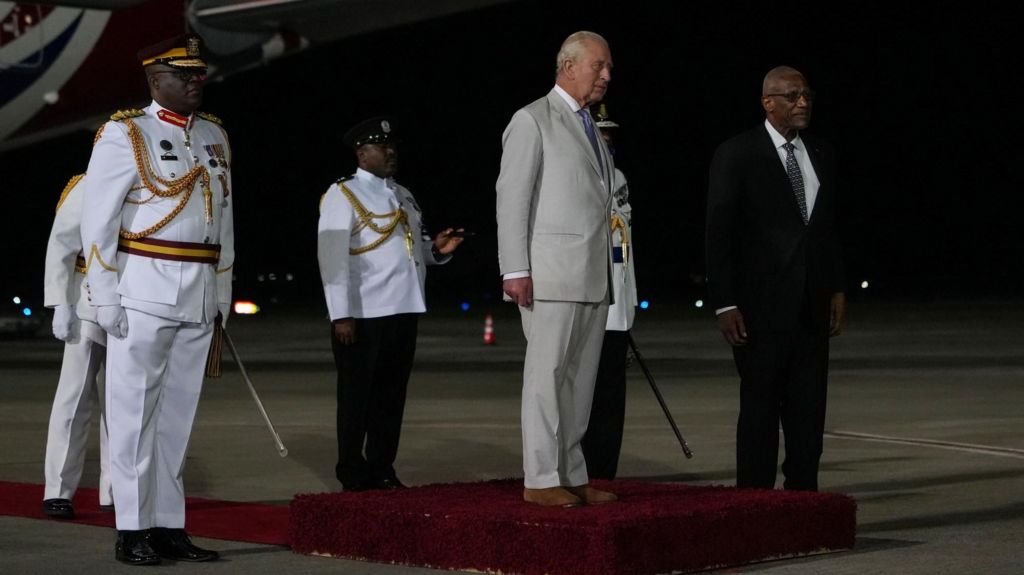
Arriving in Antigua late Friday evening to wrap up his nine-day official Caribbean tour, King Charles III is poised to deliver a landmark address at the upcoming Commonwealth Heads of Government Meeting (CHOGM) that will confront the enduring trauma of the transatlantic slave trade with unvarnished candour and genuine remorse, Buckingham Palace confirmed in official briefings. The planned Tuesday speech comes on the heels of a notable policy shift from UK Prime Minister Andy Burnham, who revealed in a Friday evening Guardian op-ed that his administration is open to the possibility of a formal UK apology for the country’s central role in the transatlantic slave trade — a marked departure from the long-held, decades-old government position that has never included a formal apology or consideration of reparations payments. Palace officials confirmed they were given advance notice of Burnham’s remarks, and that the King’s carefully crafted address has not been adjusted in response to the prime minister’s public comments, as decisions related to official government policy positions on apology and reparations fall exclusively under the purview of elected ministers, not the monarchy.
A Palace spokesperson emphasized that King Charles will not shy away from confronting the most shameful chapters of British colonial history during the tour, framing his address as a gesture of sincere respect for the ongoing intergovernmental conversations about historical harm that will unfold at CHOGM and in subsequent global fora. The royal tour has already placed the King at the centre of long-simmering public debates over the UK’s colonial legacy across the Caribbean: during his stop in the Bahamas, he acknowledged the profound “suffering of the past” in a public address, while in Guyana he visited the site of the 1823 Demerara Slave Rebellion, where hundreds of enslaved people were massacred and public executions were carried out in the aftermath of the uprising. That visit, accompanied by Guyana’s culture ministry official Steven Jacobs, was framed by the Palace as a dedicated opportunity for the King to deepen his understanding of enslavement history and acts of Black resistance. Beyond the conversations around colonial harm, the tour has also covered priority policy areas including climate action, youth economic opportunity, and expanded bilateral trade ties between the UK and Caribbean Commonwealth nations.
Royal insiders noted that King Charles is well-practised navigating the delicate diplomatic tightrope inherent to his role as head of the Commonwealth, and views his mandate as advocating collaboratively for the interests of the United Kingdom, its 14 overseas Realms, and the broader 56-nation Commonwealth bloc. A Palace spokesperson highlighted that amid a period of widespread institutional strain across the globe, the Commonwealth’s unique structure — large enough to carry global collective influence, yet small enough to enable close, trusting working relationships between national leaders — makes it a uniquely powerful vehicle for driving tangible, practical change that improves the livelihoods of hundreds of millions of people worldwide. Burnham’s public commitment to strengthening the Commonwealth as a functional, impactful institution is expected to be warmly received by the King, who has long framed the intergovernmental bloc as a core priority of his reign.
Accompanied by Queen Camilla during the final leg of the tour, the royal couple will attend a Sunday morning church service in Antigua before joining official public celebrations to mark the island nation’s Independence Day. The tour unfolds against a backdrop of notable personal and public challenges for the 77-year-old monarch: he is currently undergoing ongoing treatment for cancer, following his diagnosis in early 2024, though Palace officials confirm he remains on a positive, steady recovery trajectory. By the end of the nine-day, 36-official-engagement tour in the region’s sweltering, humid climate, the King will also be just days away from marking his 78th birthday. Recent months have also seen a series of high-profile royal family headlines, including ongoing public scrutiny surrounding his brother Prince Andrew, the publication of a new memoir by his former brother-in-law Earl Spencer, and a surprise August visit to the UK by his son Prince Harry, accompanied by Meghan Markle and their two children. When asked by BBC reporters if the King remains confident that his approach to navigating family matters preserves public trust in the monarchy, a senior royal aide gave a concise, unreserved affirmative response, noting that all of the King’s actions are calibrated to uphold that public mandate. The Palace also declined to comment on recent unsubstantiated public allegations made about Meghan’s father Thomas Markle, stating that the institution does not publicly weigh in on private, personal family matters.