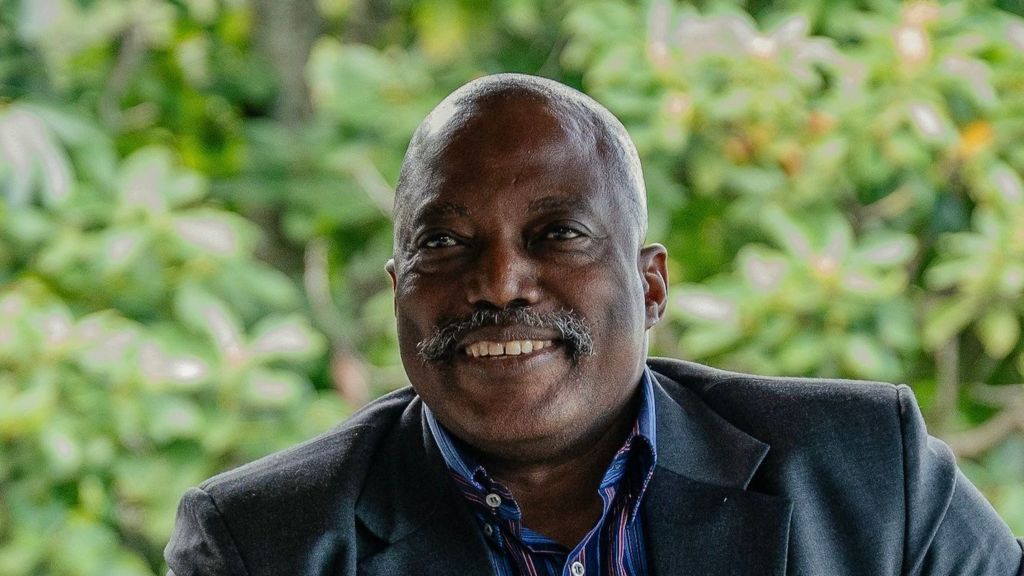
The political landscape of the Democratic Republic of Congo, long defined by fleeting alliances and the persistent threat of armed power grabs, has been upended by a dramatic twist in the country’s decades-long history of shifting leadership. At 55, Joseph Kabila, who first rose to prominence as a rebel commander in the 1997 uprising that installed his father Laurent as head of state, then served 18 years as the country’s president, has reemerged as the leader of the newly formed Front for the Refoundation of the Nation (FRN) – a coalition that includes the M23 rebel group he once fought against during his time in office.
Most notably, the man Kabila has publicly vowed to oust is none other than Félix Tshisekedi, the very politician he handpicked as his successor following the disputed 2018 elections, with whom he formed a power-sharing coalition after stepping down. The long-rumored alignment between Kabila and M23, whose forces seized swathes of eastern DR Congo including key urban hubs Goma and Bukavu in 2024, sent shockwaves across the vast, mineral-rich nation that spans two-thirds the landmass of Western Europe. Home to vast reserves of gold, diamonds, and critical battery and electronics minerals essential to the global clean energy supply chain, the DRC’s political instability carries far-reaching regional and global ripple effects.
The partnership delivers tangible benefits to both parties: for Kabila, it offers a viable pathway to claw back the political clout he lost after splitting from Tshisekedi’s administration in 2020, when the president moved to dismantle Kabila’s parliamentary majority. For M23, a movement whose rapid military gains have never translated to broad national legitimacy, Kabila brings the institutional experience, high-level political networks, and national name recognition of a former head of state. The alliance comes as Kabila faces a litany of personal pressures: he was sentenced to death in absentia for treason, and faces U.S. sanctions over allegations of past support for M23. Independent DRC policy analyst Henry-Pacifique Mayala noted that Kabila almost certainly secured concrete assurances from his new rebel allies before committing to the high-stakes gambit, as the M23’s hardened military strength grants him far greater leverage in any future negotiations with Kinshasa.
While M23’s operations have until now been concentrated 1,500 kilometers from the capital in the country’s eastern provinces, Kabila’s national networks raise the untested possibility that the long-simmering eastern conflict could spread to the rest of the country. That outcome remains far from guaranteed, however: Kabila, who took power in 2001 following his father’s mysterious assassination, was long viewed as an outsider in Kinshasa political circles, far more fluent in Swahili (the lingua franca of the African Great Lakes region) than the Lingala widely spoken in the capital. His father’s 1996 rebel column marched on foot across the entire country from the east to oust longtime autocrat Mobutu Sese Seko after seven months of campaigning, but few analysts suggest Kabila’s FRN is planning to replicate that exact military campaign.
Kabila has framed his campaign against Tshisekedi as a fight to defend the national constitution, invoking Section 64 of the DRC’s legal framework that enshrines citizens’ right to resist leaders who violate constitutional provisions. He has accused Tshisekedi of acting as a tyrant similar to Mobutu, ending the longstanding moratorium on the death penalty that was in place during his own presidency to intimidate political opponents, civilians, and military personnel, and pushing to amend the constitution to allow a third term in office. Notably, the established C64 opposition coalition that also campaigns against Tshisekedi’s rumored third term bid has rejected Kabila’s armed rebellion, announcing it will instead push for inclusive, direct talks with both Kabila and Tshisekedi to resolve the country’s overlapping security and political crises through peaceful dialogue.
Tshisekedi retains significant structural advantages, according to Richard Moncrieff, Great Lakes regional analyst for the International Crisis Group: he has robust U.S. government backing, control over most state financial resources, and command of the formal national political and military systems. Tshisekedi publicly denounced his former ally last week, stating Kabila’s move to lead a rebel group was definitive proof he had never loved the DRC or its people.
The rift between the two former allies stretches back to the aftermath of the 2018 elections: leaked results from Catholic Church election observers widely indicate opposition candidate Martin Fayulu won the vote, but a pre-negotiated power-sharing deal brokered by Kabila installed Tshisekedi as president, with Kabila’s bloc retaining control of parliament. Former national electoral commission head Corneille Nangaa, who officially declared Tshisekedi the winner and now serves as one of Kabila’s top deputies in the FRN, confirmed he helped draft that 2018 power-sharing agreement, though Tshisekedi has consistently maintained he won the election legitimately. The arrangement collapsed in late 2020, prompting Kabila to enter self-imposed exile in South Africa, where his criticism of Tshisekedi’s administration steadily intensified. He returned to DRC territory earlier in 2025, appearing in rebel-held Goma shortly before the treason conviction was handed down.
The emerging alliance also reshapes longstanding regional dynamics, particularly between DRC and Rwanda. For years, Kabila’s presidency saw fluctuating ties with Rwandan President Paul Kagame: Rwanda has long justified its repeated military interventions in eastern DRC by citing the presence of ethnic Hutu militias responsible for the 1994 Rwandan genocide on Congolese soil, and has long been widely accused of backing the M23 movement – allegations Kigali continues to deny despite overwhelming documentary evidence. Analysts note that the current alignment between Kabila and Kagame is one of pure convenience, not deep mutual trust: Kabila is focused on regaining national political power in the DRC, while Kagame prioritizes securing Rwanda’s border security and preserving Kigali’s strategic influence over eastern DRC. The partnership also allows Rwanda to deflect longstanding international criticism that it is meddling in DRC’s internal affairs, by framing M23 as part of a homegrown Congolese political movement led by a former national president.
Even before Kabila’s official appointment as FRN leader, the eastern DRC conflict showed no signs of abating, despite a U.S.-brokered peace deal signed by Tshisekedi and Kagame in Washington D.C. in November 2025. The broader U.S. strategic interest in the DRC’s critical mineral reserves has led Washington to side firmly with Tshisekedi, imposing sweeping sanctions on Rwandan officials and entities accused of prolonging the eastern conflict. National elections are currently scheduled for 2028, but Tshisekedi has repeatedly warned that ongoing fighting in the east could force a delay to the vote. Kabila has openly questioned whether elections alone can resolve the DRC’s deep-rooted political crises, arguing the country needs a full overhaul of its executive and legislative institutions rather than just electoral cycles. Regional security analyst Ovigwe Eguegu notes that ordinary Congolese citizens stand to lose the most from the standoff, as neither Kabila’s rebel movement nor Tshisekedi’s administration has presented a credible, actionable plan to deliver broad economic transformation for the country’s population, or end decades of pervasive instability in eastern provinces.