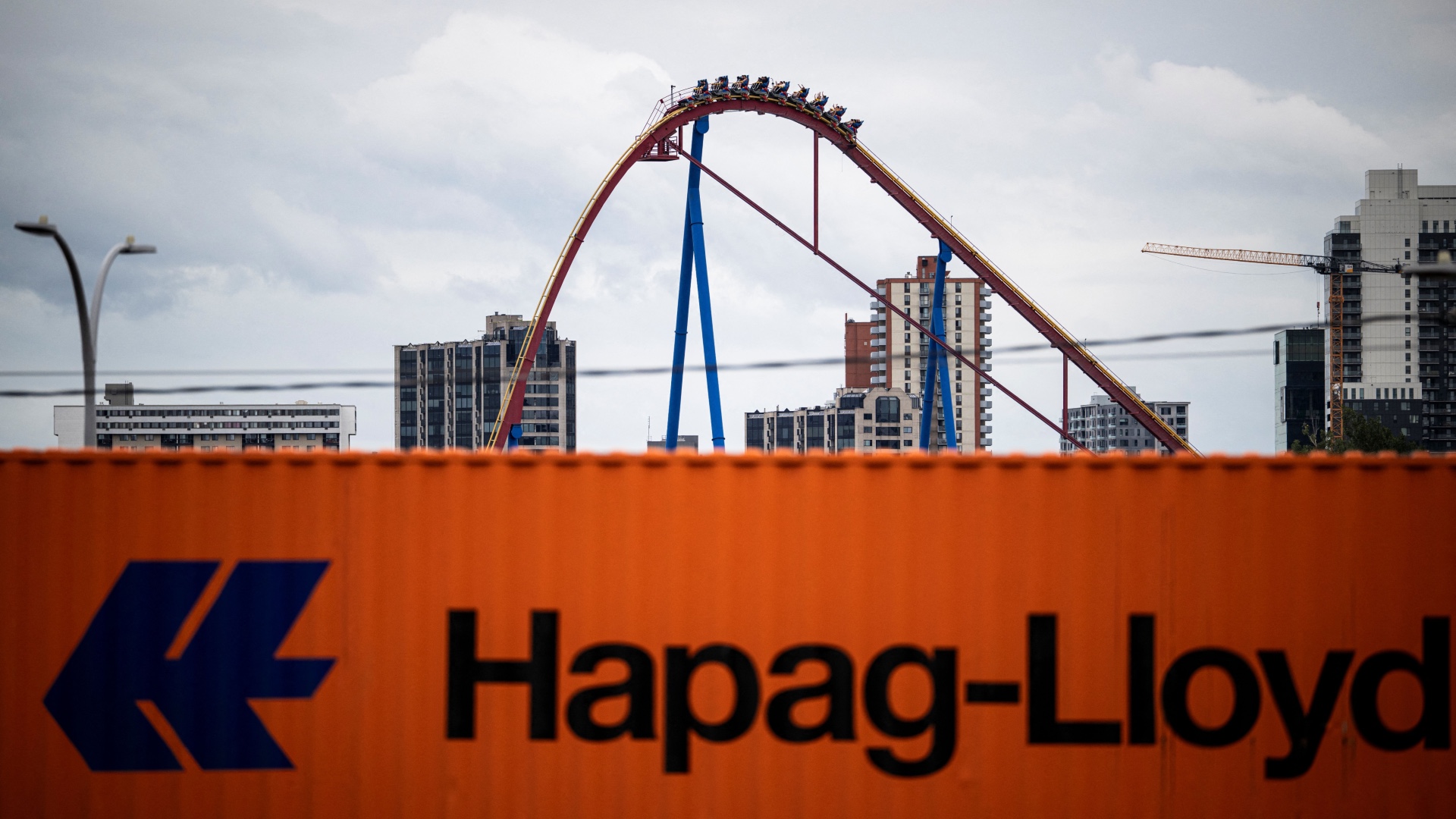
Following a historic membership vote held on Thursday, the Canadian Labour Congress (CLC) — the country’s largest central labour body, representing roughly 3 million workers across every province and territory — has formally adopted a policy directing its affiliated union members to refuse all handling, transport and processing of weapons and military equipment bound for Israel.
In an official public statement, the CLC framed the resolution as a gesture of cross-border solidarity with Palestinian working people and their families, as well as with global communities advocating for a ceasefire, equitable peace, and full adherence to international humanitarian law. The federation also issued a direct, formal demand to the federal Canadian government to match its new policy, by immediately halting all direct and indirect transfers of arms and military hardware to Israeli authorities.
The move comes more than a year after investigative reporting from Middle East Eye first revealed that the Liberal federal government had misled domestic public opinion when it claimed to have paused all new weapons export permits to Israel. Independent volunteer research compiled by a coalition of grassroots groups including the Palestinian Youth Movement, World Beyond War, and Arms Embargo Now later confirmed that military shipments from Canada not only continued after the announced pause, but were in many cases fast-tracked, with some rerouted through third countries including the United States to avoid public scrutiny.
The 58-page collaborative report, titled *Exposing Canadian Military Exports to Israel*, documents more than 390 separate shipments originating from 21 Canadian manufacturers across six major Canadian cities. The tracked cargo included over 420,000 rounds of ammunition, 735 complete firearm cartridge assembly sets, specialized F-35 stealth jet components such as navigation sensors and radar systems, and dual-use technology including high-precision GPS antennas that can be deployed for military operations. The coalition’s analysis concluded that the Liberal government’s public pause announcement was a deliberate political tactic intended to appease a growing share of the Canadian electorate frustrated with Ottawa’s unwavering backing of Israel’s military campaign in Gaza, without actually rolling back longstanding policies of unconditional military support.
The CLC emphasized in its statement that Canadian institutions bear a binding moral and legal obligation to ensure no domestically produced weapons or military equipment are used to harm Palestinian civilians or enable breaches of international humanitarian law. “Canada must uphold international law, protect civilian lives and support a just and lasting peace for Palestinians and Israelis,” the statement read, adding that the Canadian labour movement has a decades-long legacy of advocating for the rights, safety and dignity of working people across the world, and that the resolution explicitly rejects all forms of bigotry including antisemitism, anti-Palestinian racism, and Islamophobia.
The new policy marks a further break in the CLC’s longstanding formal ties with Israel’s national labour federation Histadrut, a relationship that began to gradually deteriorate following the First Intifada, as documented in a 2014 peer-reviewed study published in the *Journal of Labor and Society*. Earlier this May, the CLC had already voted to sever formal institutional ties with Histadrut, though procedural limits prevented a full debate on a broader “hot cargo” resolution that would have barred all handling of Israeli-linked goods, services and institutional partnerships.
Grassroots labour advocacy group Labour for Palestine – Canada, which led years of organizing to advance the arms ban policy, noted that Canadian union workers played a pivotal role in global movements to end apartheid in South Africa, support East Timorese independence, and oppose the 2003 U.S.-led invasion of Iraq. “Now is the time to take a stand for Palestine,” the group stated in response to the vote.
Leading Canadian civil society organizations also praised the historic resolution. Canadians for Justice and Peace in the Middle East called the vote “an important way that workers can prevent Canadian weapons from facilitating genocide” in a public post on X, while activist network Independent Jewish Voices emphasized that the policy “is a clear message: Canadian labourers refuse to be complicit in Israel’s genocide in Gaza and the expansion of illegal settlements in the occupied West Bank.”
Official data published by Global Affairs Canada, the country’s federal foreign affairs department, confirms that Ottawa authorized more than $44 million worth of military goods exports to Israel over the 2023 to 2025 period.
Canada’s central labour union says workers will not handle military cargo going to Israel