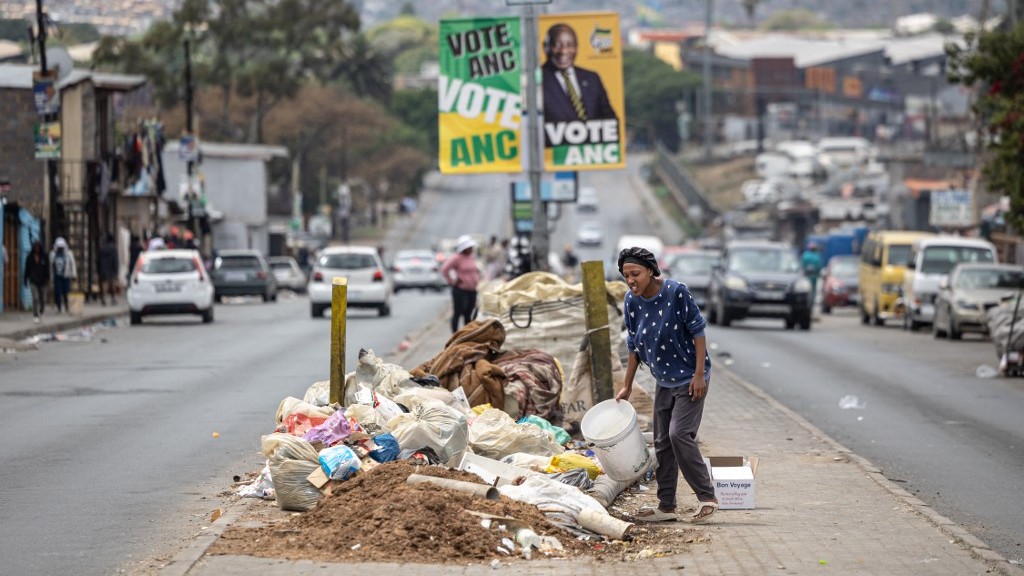
On 4 November 2026, millions of South African voters will cast their ballots to elect local municipal councils, the bodies legally tasked with delivering core public services: maintaining consistent running water, executing regular waste collection, and repairing the network of potholes that riddle urban and suburban roads nationwide. However, as years of underinvestment have left critical public infrastructure crumbling, cost-of-living surges have pushed millions of households into financial precarity, and widespread public frustration with underperforming local administrations continues to mount, the ongoing Israeli military campaign in Gaza, widely labelled a genocide by the South African government, has emerged as an unexpected, deeply divisive priority for many voters ahead of polling day. Back in December 2023, South Africa launched a historic legal case at the International Court of Justice (ICJ), the United Nations’ highest judicial body, accusing Israel of violating the 1948 Genocide Convention through its military actions in the Gaza Strip, where official death tolls now exceed 74,500 people. Yet the national political landscape remains sharply split over this legal action, with not every major party endorsing the case or accepting the formal genocide designation. Most notably, the Democratic Alliance (DA), a major participant in South Africa’s current national unity government alongside the long-ruling African National Congress (ANC), has refused to extend congratulations to renowned South African jurist Navi Pillay on her Nobel Peace Prize, awarded three weeks prior. Senior DA leaders have publicly dismissed Pillay’s work documenting allegations of genocide in Gaza as “divisive”, despite her ongoing tenure as a judge at the International Criminal Court (ICC). The pro-business, staunchly pro-Israel DA was formed in 2000 via a multi-party alliance that included the direct successor to the apartheid-era National Party, the regime that enforced decades of racial segregation across South Africa. This bitter partisan rift has left millions of ordinary voters facing an unprecedented electoral conundrum. Against the backdrop of a sustained national economic downturn, sky-high inflation, and well-documented systemic corruption, voters are forced to choose between long-ruling parties that have repeatedly failed to deliver basic public services, and opposition parties that promise administrative reform but hold widely condemned, weak stances on the ongoing genocide in Gaza. No city embodies this electoral tension more acutely than Johannesburg, South Africa’s bustling economic heart, where residents have faced years of rolling blackouts, water shortages, and crumbling public infrastructure amid successive unstable coalition administrations. Local campaigners have urged voters to “rescue” the city from decades of mismanagement, corruption, and decay by handing control to the DA, which currently governs the Western Cape province including the city of Cape Town. This claim that the DA represents Johannesburg’s best path to functional recovery has ignited fierce debate among academics, activists, and ordinary residents, laying bare deep divisions over how much weight voters should assign to a party’s position on the Gaza crisis when casting their local ballots. Last week, Adam Habib, the London-based vice-chancellor of SOAS University and a prominent South African academic, publicly urged Johannesburg residents to vote for DA mayoral candidate Helen Zille. In a widely shared post on X, Habib wrote that he was stunned by the advanced state of decay he witnessed during a recent visit to his home city, and argued that Zille — who previously served as mayor of Cape Town from 2006 to 2009 and as Western Cape premier from 2009 to 2019 — offered the only credible recovery plan for Johannesburg, even as he personally rejected her party’s stance on Gaza. The DA first took power in Cape Town as part of a coalition government in 2006, before securing an outright majority in 2011, and has administered the city continuously ever since. As dozens of municipalities run by the ANC or unstable rival coalitions have slid deeper into disrepair, Cape Town has cultivated a widespread public reputation for competent, efficient governance. “We are not choosing between saints and sinners. There does not have to be a trade-off, but there is one now. I would prefer my mayor to pronounce on genocide, but if I had a choice between a corrupt mayor and an honest one who cannot pronounce genocide, I will take the honest one,” Habib wrote. “Zille is the only candidate if we want power, water, services and honesty and competence. Zille is the only candidate if Johannesburg is to survive.” Critics of this framing, however, push back hard, arguing that South Africa’s hard-won constitutional values of human dignity and equality are not secondary priorities. “Our hardwon Constitutional values and rights are not middle-class luxuries,” said Irfan Mangera, a leader with the progressive Rise Mzansi political party. Johannesburg, South Africa’s wealthiest city, has cycled through seven different mayors over the past five years as successive fragile coalition governments collapsed amid infighting and corruption scandals. But activists based in both Johannesburg and Cape Town argue that beyond the moral failure of sidelining the Gaza genocide to secure functioning streetlights and paved roads, Cape Town’s reputation as the country’s best-run city is largely a myth, sustained almost exclusively for the benefit of its wealthiest, mostly white residents. They reject Habib’s argument, widely shared among middle- and upper-class South African voters, that a leader who refuses to acknowledge a documented genocide can still be considered a fundamentally honest public servant. “The people of Johannesburg deserve functioning services by honest and capable leadership and leaders whose moral compass does not disappear when confronted with injustice (past, present and future),” Mangera told Middle East Eye. He added that Habib’s remarks “lacked political imagination” and constructed “a false dichotomy between administrative competence and moral conviction as though the two cannot coexist”, noting that demands for reliable public services should never require voters to lower their ethical expectations of local elected leaders. While the DA has faced widespread public backlash for its ostensibly “neutral” stance on the Israel-Palestine conflict, critics also point out that the ANC has frequently weaponised the national government’s ICJ case against Israel to distract voters from its own long track record of administrative incompetence at the local level. Other political observers note that for all the ANC’s public rhetoric about advancing equitable wealth redistribution, its decades-long embrace of neoliberal economic policies — including prioritising privatisation and ceding extensive power to large corporate interests — has severely limited its ability to meet the basic needs of poor South Africans and dismantle the structural economic inequities inherited from the apartheid era. At the southern tip of the African continent, Cape Town is globally marketed as a world-class tourist paradise, with its affluent central business district, tree-lined elite suburbs, and immaculately maintained gardens framed by the dramatic cliffs of Table Mountain overlooking the Atlantic Ocean, regularly ranking it among the most beautiful cities on earth. But this polished public image conceals deep, persistent racial and economic inequalities directly shaped by the legacy of apartheid spatial planning. Beyond the viral, Instagram-perfect shots of Cape Town’s mountain ranges and white-sand beaches lie sprawling, under-resourced townships and informal settlements that house hundreds of thousands of low-wage workers who keep the city’s lucrative tourism and service industries running. For these residents, basic municipal services are either entirely non-existent or priced far out of reach. Elethu Nkala, programme manager at Cape Town-based civil society group the Pivot Collective, told Middle East Eye that labelling Cape Town South Africa’s best-run municipality was “a bold claim” given the brutal living conditions in poor townships and the city’s punitive approach to governing working-class areas deemed “high risk”. “The development policies it pushes are concerning. There is a disconnect between the people and the way the government approaches development,” Nkala explained. In January 2026, the city unveiled a suite of controversial public safety measures including the N2 Edge project, which proposed building a 9-kilometre long physical barrier along a major highway to “improve security”. Local activists immediately drew parallels between the proposed wall and the separation barrier Israel built in the occupied West Bank, and called on the city to address the root causes of violent crime rather than investing in exclusionary infrastructure, while directing public funds to improve quality of life for informal settlement residents. Earlier in 2026, the city also faced widespread public condemnation for deploying heavily armed SWAT teams and military-style armoured vehicles to the Cape Flats residential area to crack down on gang violence. Opposition parties and community activists warned that this heavy-handed approach would only further militarise marginalised neighbourhoods, and failed to address the root drivers of crime, including the fact that Cape Town still has one of the highest measured income inequality rates in the world. “They are neglecting their community development mandate and overemphasising and overfunding their policing mandate,” Brett Herron, the GOOD Party’s Cape Town mayoral candidate, told local media outlets. A spokesperson for Johannesburg’s Palestine Solidarity Campaign went a step further, noting that the city’s turn to “building walls” and “deploying troops” to solve deep-seated social, political and economic inequities bore a striking resemblance to Israeli state tactics. “They are importing Israeli logic into South Africa to reinforce spatial apartheid in Cape Town and then calling it effective governance,” the spokesperson said. A 2023 peer-reviewed study published by South Africa’s Human Sciences Research Council found that nearly 40% of residents in Cape Town’s poorest neighbourhoods could only access running water from shared communal taps outside their homes, while 36% relied on shared public toilets. While Cape Town is generally statistically safer than other major South African cities, the township areas within its municipal boundaries record some of the country’s highest rates of violent crime, including gender-based violence, illicit drug trafficking, gang violence, vigilante attacks, and murder, the report confirmed. The study concluded that sustainably reducing crime would require “building a common commitment across different groups to narrow the gap between neighbourhoods and to expand the economy in an inclusive manner”, and urged the city administration to “rethink its approach to service delivery and collaborate with communities, civil society organisations and the private sector to empower people to rebuild their troubled communities”. On South Africa’s east coast, the coastal city of Durban faces chronic, recurring water cuts, regular sewage spills that contaminate public beaches, and a crippling shortage of affordable housing. Thousands of low-income residents crowd into overcrowded informal settlements where apartheid-era inequities in access to services, public transport, and economic opportunity remain fully intact. Local children are often seen playing in standing rainwater sludge, while rotting piles of uncollected garbage line residential pavements and driveways. Large numbers of young, unemployed men loiter outside small local “spaza” convenience stores and hardware shops, waiting for casual day labour opportunities. In Durban too, debates over municipal service delivery reform have become inextricably tangled up with national conversations about the Gaza genocide. Last week, Hossain Haniff, the DA’s mayoral candidate for Durban, stated during a public election debate that he would be open to inviting Israeli Prime Minister Benjamin Netanyahu to visit the city if the trip could deliver tangible economic benefits for local residents. His remarks sparked immediate widespread outrage among civil society groups and community activists, who argue that it is impossible to separate domestic local governance from international crimes of dispossession, as these repressive state tactics directly shape how municipal governments operate, and whether fundamental human rights are ultimately protected at home. South Africa has faced sustained diplomatic and economic pressure from both the United States and Israel over its pro-Palestine stance, including its decision to bring the ICJ genocide case. In February 2025, then-US President Donald Trump formally cut all foreign aid to South Africa, citing the Gaza genocide case and the country’s land reform policies, while publicly spreading the false, debunked conspiracy theory that the South African government was perpetrating a genocide against white farmers. “These matters are connected. And it’s not some romantic idea of solidarity or morality. There are tangible connections between what is happening in the municipalities in South Africa and what is happening in Palestine,” a spokesperson for the Gauteng branch of the Palestine Solidarity Campaign told Middle East Eye. “Inequality in South Africa is a municipal issue and a national issue, and this issue is also connected directly to the genocide.”