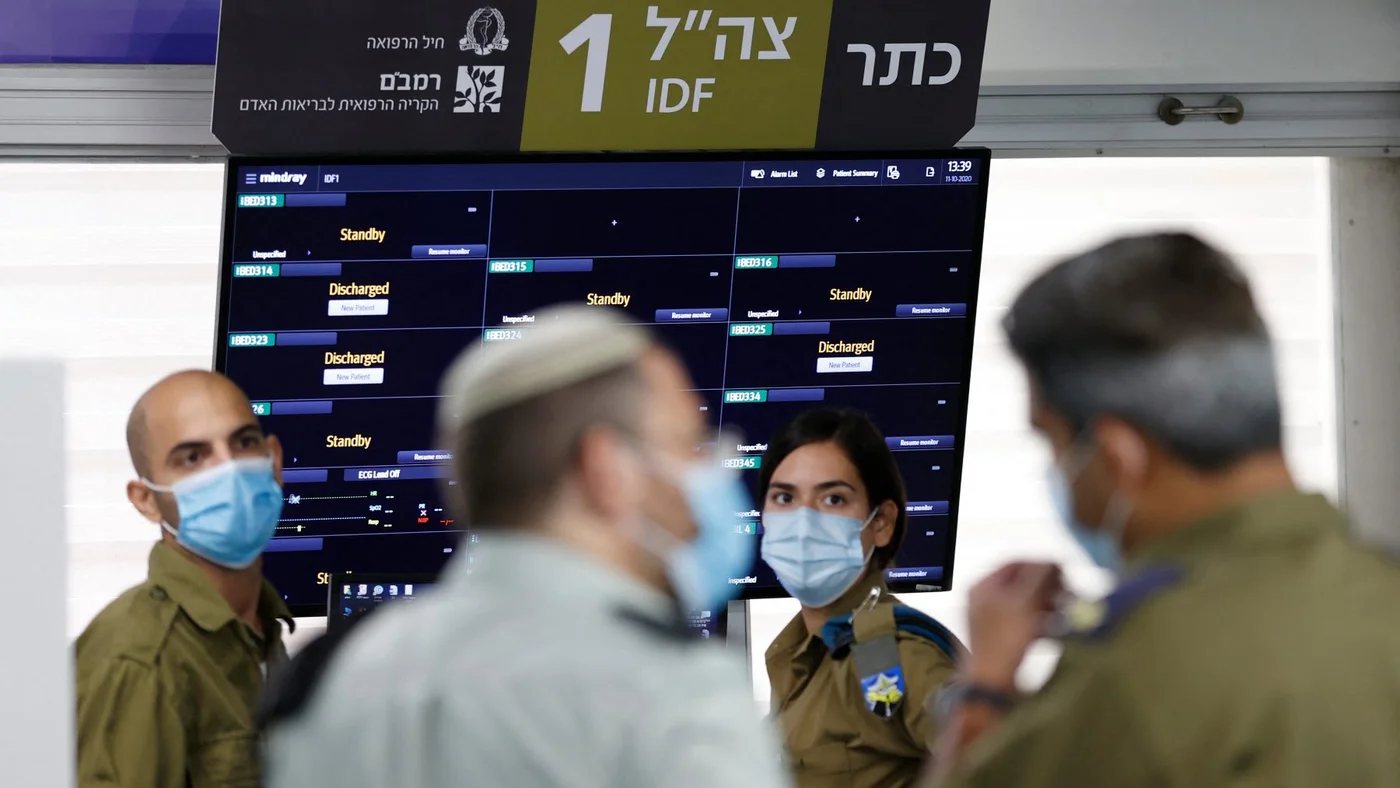
A recent London-based medical recruitment event hosted by Israeli state-affiliated immigration bodies has drawn scrutiny, as officials seek to recruit British physicians to relocate to Israel amid a sustained exodus of local medical professionals. Titled MedEx UK, the Sunday job fair was held at a London Jewish community centre, organized collaboratively by Nefesh B’Nefesh, a group focused on facilitating Jewish immigration to Israel, the Jewish Agency for Israel, and Israel’s Ministry of Aliyah and Integration.
The event falls under the broader umbrella of the 2020-launched International Medical Aliyah Program (IMAP), a government initiative with a stated target of bringing 2,000 foreign doctors to Israel by 2029. The program is designed to reduce critical medical staffing shortages by simplifying Israel’s medical licensing process for new arrivals. Pre-event emails shared with attendees, reviewed by Middle East Eye, advertised direct access to representatives from Israeli hospitals and national health funds, as well as on-site YAEL Hebrew proficiency testing, a mandatory step for securing an Israeli medical license.
However, on-the-ground observers from Jewish Anti-Zionist Action (Jaza), an activist group whose member gained entry to the closed event, revealed that participating medical providers distributed promotional materials highlighting healthcare facilities operating in illegal Israeli settlements across the occupied West Bank. Flyers from urgent care provider Terem, for example, listed operational centres in the settlements of Modiin, Beit Shemesh, Ma’ale Adumim, and Beitar Illit. A verified attendee list included representatives from Leumit Health Services, an organization that advertises medical centres and pharmacies across 30 West Bank settlement communities, alongside the head of obstetrics and gynaecology for the Israeli military. The Jaza activist noted that dozens of leading Israeli medical professors travelled to London specifically for the one-day event before returning to Israel the following day, and that Shivat Zion, an organization previously exposed by Declassified UK for supporting British citizens seeking to move to West Bank settlements, was also in attendance. Multiple attendees reported that representatives from major health fund Clalit repeatedly emphasized flexible placement options across all regions of Israel, with guaranteed accommodation support for relocating medical staff. Middle East Eye reached out to all event organizers and participating health providers for official comment, but received no response prior to publication.
This London recruitment drive is the latest step in a multi-year Israeli government campaign to offset a deepening physician brain drain: data from a recent Israeli Medical Association survey shows 1,369 doctors left the country for postings lasting more than one year between 2023 and 2025. To attract foreign medical talent, policymakers have rolled out a series of financial incentives and regulatory adjustments to lower barriers to Israeli licensing. In 2025, the Israeli Ministry of Health updated rules to reduce the required professional experience threshold for exemption from the national medical licensing exam from 14 years to 10 years. The following year, the government earmarked up to 240 million NIS ($76.7 million) in dedicated funding for international medical recruitment efforts.
These aggressive international hiring measures run parallel to policy changes that have systematically restricted pathways for Palestinian doctors to join Israel’s healthcare system. The 2019 Yatziv Reform revoked official recognition of medical degrees issued by non-OECD nations, including multiple Eastern European countries such as Moldova, Armenia, and Romania, where large numbers of Palestinian students pursue lower-cost medical education, as well as degrees from Palestinian universities operating in the occupied West Bank. Structural barriers and discriminatory admission policies already limit access for Palestinian citizens of Israel to Israeli medical schools, while Palestinians residing in the occupied territories are barred from enrolling entirely in these domestic programs.
Despite these restrictions, the share of Palestinian doctors working in Israel grew steadily over the past 15 years, rising from 8% of all physicians in 2010 to 25% in 2023. That same year, government data showed Arab and Druze new licensees made up nearly 45% of all newly certified medical professionals in Israel, a sharp jump from 18% in 2010. However, this trend is set to reverse dramatically in 2026, as the cohort of Palestinian students who began medical studies in 2019 at now-disqualified non-OECD institutions graduate, and their degrees will no longer be recognized by Israeli regulators. Shani Bar Tuvia, director of the health policy department at Physicians for Human Rights Israel, emphasized that the share of Palestinian students enrolled in Israeli domestic medical schools has fallen to just 9%, a figure far too low to sustain the previous 45% share of new licensees. Bar Tuvia noted that health officials are fully aware the Yatziv Reform will create a major domestic staffing shortfall, and that international recruitment efforts are explicitly designed to fill that gap. The government has also attempted to expand domestic medical training capacity by opening two new university medical programs: one at Ariel University, the only higher education institution located in a West Bank settlement, and another at Reichman University, Israel’s only private university, both of which are largely inaccessible to Palestinian students.
Israel holds recruitment drive for British doctors amid physician brain drain