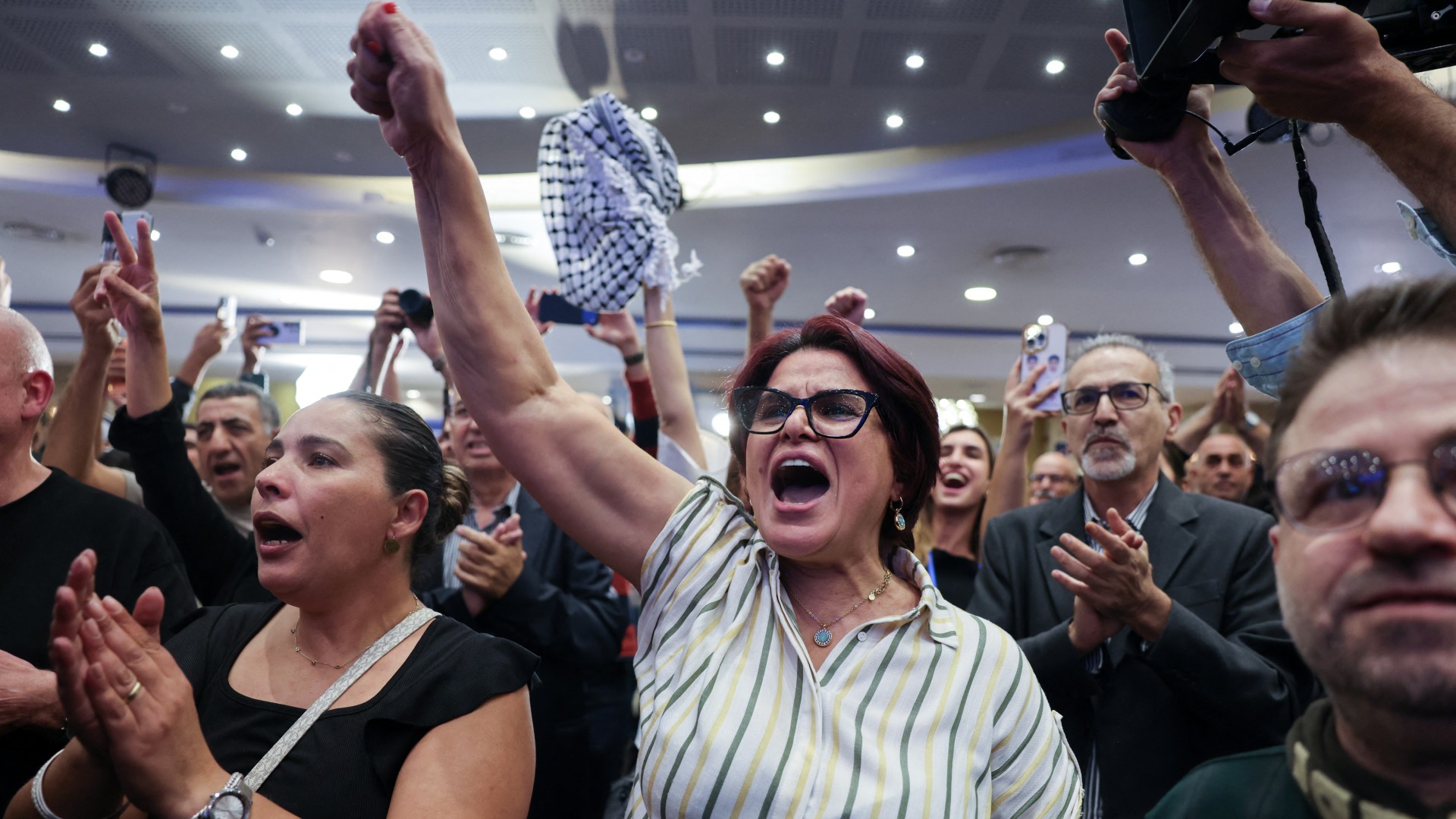
As polling stations across Israel shuttered at 10 p.m. local time on Tuesday, a wave of unprecedented electoral participation from Palestinian citizens of Israel upended longstanding political projections, leaving neither incumbent Prime Minister Benjamin Netanyahu nor his Zionist opposition rivals with the sufficient Knesset seats needed to secure a ruling majority, according to cross-broadcaster exit poll data.
Israeli Channel 13’s post-vote survey calculated that Netanyahu’s longstanding right-wing parliamentary bloc is on track to claim just 50 seats, while the centrist and centre-left opposition coalition led by former Israel Defense Forces chief of staff Gabi Eisenkot is projected to take 53 seats. Both totals fall well short of the 61-seat threshold required to form a stable governing majority in the 120-seat Knesset. The dramatic gap in both blocs’ expected seat counts can be directly traced to historic turnout among Palestinian citizens, who make up roughly 20% of Israel’s total population. Two electoral slates representing this demographic, the Joint List and Ra’am, are projected to capture a combined 17 seats, marking the highest number of Arab representatives ever to hold seats in Israel’s parliament.
Election observers noted elevated turnout across Palestinian-majority districts from the opening of polling stations, a trend widely attributed to widespread public anger among this 20% minority over the devastating 2023 Gaza conflict, ongoing settler violence in the occupied West Bank, and years of rising state-sanctioned discriminatory policies targeting Arab communities across Israel and the Palestinian territories. For decades, the parties representing Palestinian citizens of Israel have been systematically excluded from formal governing coalitions, a status quo that appeared to crumble in the immediate post-election period.
While the three major Israeli broadcast networks released slightly varying seat projections, all three confirmed that the surge in Palestinian voter support had effectively blocked Netanyahu and his far-right, Jewish supremacist allied factions from cobbling together the 61 seats they had targeted to return to power with an unchallenged majority. The opposition bloc led by Eisenkot, however, now faces a similarly intractable barrier to forming a government: none of its component factions hold enough seats to reach a majority on their own, and nearly all of Eisenkot’s campaign partners explicitly ruled out any form of partnership with Arab electoral slates in the lead-up to voting day.
Under longstanding Israeli parliamentary procedure, the president will first extend a formal mandate to the leader of the single largest party in the Knesset to begin coalition negotiations. Exit poll data confirms Netanyahu’s Likud party is on track to retain its status as the biggest single faction in parliament, meaning the sitting prime minister will be given the first opportunity to assemble a ruling government, even as his bloc falls far short of a majority. Netanyahu remains in the post of caretaker prime minister throughout the mandatory coalition negotiation window.
Eisenkot framed the preliminary exit poll results as a clear public repudiation of the incumbent leader’s years in power. “These numbers reflect a widespread lack of public confidence in Netanyahu’s leadership,” he told assembled supporters late Tuesday. Yair Lapid, the former prime minister and senior opposition figure, went further, describing the preliminary results as a “crushing defeat” for Netanyahu’s long-running political project.
Election officials note that final verified results will not be available for several days, as roughly 500,000 outstanding ballots cast by Israeli military service members are scheduled to be tallied over the remainder of the week. Electoral analysts warn that small shifts in final vote counts could still alter the final seat distribution by one or two seats, though the core dynamic of a hung parliament driven by record Palestinian voter participation is not expected to change. This story remains in active development as official vote counting proceeds.