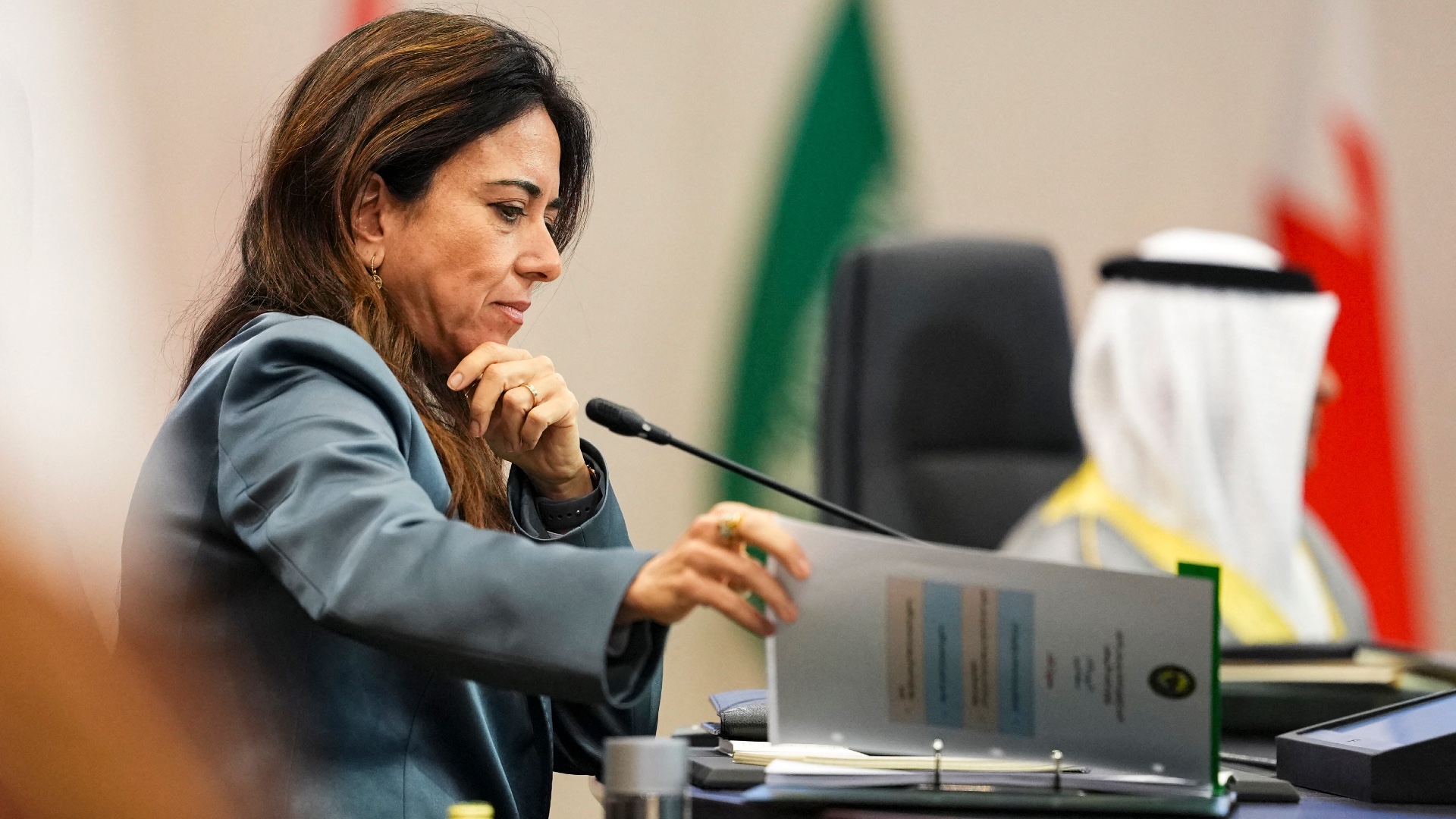
A coalition of leading human rights advocacy organizations publicly called on all United Nations member states Tuesday to reject the recently submitted candidacy of Emirati senior diplomat Lana Nusseibeh for the top post of UN Secretary-General, warning that her long-documented pattern of denying her home government’s alleged material support for genocidal campaigns in Sudan and Gaza poses an existential threat to the foundational norms of the international multilateral system. The formal nomination of Nusseibeh, the UAE’s former long-serving UN ambassador and current Minister of State for Foreign Affairs, was announced just last week, inserting a surprise late entrant into the otherwise deadlocked race to succeed outgoing Secretary-General Antonio Guterres. The bid carries unprecedented historic context: no woman, nor any public figure with Palestinian familial roots from a prominent Jerusalem-based clan, has ever led the 79-year-old global governance body. Yet the nomination immediately sparked widespread backlash from human rights circles, which point to well-documented allegations that the UAE has provided sustained military, logistical, and financial backing to Sudan’s rogue Rapid Support Forces (RSF) paramilitary, a group formally designated by the U.S. government in February 2025 as having perpetrated genocide against marginalized ethnic communities in Darfur, alongside unwavering diplomatic and material support for Israeli military operations in Gaza that multiple independent global bodies have labeled genocidal. Despite these concerns, the candidacy has garnered notable high-profile backing from a cohort of former senior Biden administration officials and ex-U.S. diplomats, who have publicly praised Nusseibeh’s qualifications on social media. Multiple diplomatic sources confirmed to Middle East Eye this week that the United Kingdom is leaning toward formally endorsing her bid, while the UAE’s longstanding close strategic and economic alignment with Washington is widely viewed as a major advantage for her campaign. During a joint virtual press panel hosted Tuesday by a collective of human rights organizations, former Human Rights Watch executive director Kenneth Roth emphasized the unprecedented danger of installing Nusseibeh at the UN’s helm. “We simply cannot afford to have the United Nations led by a documented genocide denier, representing a government that is actively aiding and abetting genocidal campaigns, and is demonstrably criminally complicit in those atrocities – with Nusseibeh herself serving as a leading public figure tasked with covering up that complicity,” Roth stated. “This represents the complete opposite of the moral authority and unwavering human rights leadership that the global community demands from a UN Secretary-General.” Kate Ferguson, Co-Executive Director of UK-based nonprofit Protection Approaches, framed the nomination as a deliberate power grab: “This is nothing less than a calculated attempt at autocratic capture of our most critical multilateral institution. No person on this planet is made safer by a captured United Nations – while the harms will fall unequally on marginalized communities, every single global citizen will grow less secure if this candidacy is allowed to advance unchallenged. I have seen no credible evidence that this candidate can act independently of her home government, and we cannot afford to be naive about what this is: a coordinated, U.S.-backed effort to seize control of the UN and redirect its institutional assets for narrow autocratic interests.” The calls for rejection coincide with the one-year anniversary of the RSF’s brutal seizure of El Fasher, the capital of Sudan’s North Darfur region. Humanitarian records show more than one million displaced people had sought safety in the city prior to the takeover; today, only 70,000 civilians remain, with widespread reports of unlawful extrajudicial killings, arbitrary detention, systematic torture, and pervasive state surveillance documented in new survivor testimonies published by Amnesty International. Ibrahim Alduma, a native of El Fasher and co-founder of Sudan Action Hub, detailed the tangible links between UAE policy and ongoing atrocities: “The U.S. formally confirmed the RSF had committed genocide in February 2025, and imposed sanctions on seven companies backing the paramilitary, all of which are either based in the UAE or directly tied to Emirati state interests. Immediately after that designation, the U.S. finalized a $6.4 billion bilateral international trade deal with the UAE, and the U.S. has delivered more than $2 billion in military hardware to Abu Dhabi since January 2025, per data from the Center for International Policy. The UAE also cannot advance its aggressive AI development agenda without access to U.S.-manufactured advanced semiconductors. Last month, U.S. AI firm Anthropic publicly disclosed it had disrupted a UAE-directed global influence operation using its own AI tools, which was designed to manipulate global public perception of the Emirates’ role in Sudan’s civil war. Nusseibeh has personally blocked every viable international justice pathway for survivors in El Fasher and across Sudan, and the UAE’s support for the RSF forms a fully closed, unbroken loop: it is not just military aid enabling genocide, but a coordinated global public relations and diplomatic campaign to cover up those crimes.” The UAE has repeatedly denied any involvement in Sudan’s civil war, despite overwhelming corroborating evidence from independent human rights groups, UN investigators, and on-the-ground reporting from Middle East Eye correspondents. Nathaniel Raymond, Executive Director of the Humanitarian Research Lab at the Yale School of Public Health, presented new forensic data from his team’s months-long investigation that traced direct technical military support from the UAE to the RSF that directly enabled the El Fasher takeover. Since the civil war erupted in April 2023, the conflict has killed an estimated 150,000 Sudanese civilians and displaced more than 12 million people across the country. Raymond confirmed the RSF’s explicitly stated operational objective in El Fasher was not just to defeat opposing Sudanese Armed Forces units, but to systematically hunt and exterminate members of the Fur and Zaghawa ethnic communities, two of the groups targeted for mass violence during the Darfur genocide. “The UAE provided the RSF with the exact technical capabilities to effectively trap and kill civilian populations,” Raymond explained. “They supplied reconnaissance drones equipped with intelligence sensors that the RSF used to map out hiding spots for displaced civilians. The RSF also deployed UAE-supplied electronic jamming tools to block all mobile phone and internet communications, preventing civilians from calling for rescue or sharing evidence of atrocities with the outside world. In the final 72 hours of the El Fasher takeover, there was a full communications blackout deliberately triggered by drone-mounted jammers, right as thousands of people were attempting to flee the advancing paramilitary forces.” Raymond also documented a dramatic, otherwise unexplained upgrade in the RSF’s armaments over the past two years: a group that originated as the Janjaweed militia two decades ago, armed almost exclusively with horses, camels, pickup trucks, and basic outdated rifles, now operates a de facto air force, advanced electronic warfare systems, and precision AH4 lightweight howitzers capable of firing two rounds per minute continuously – weapons that could only have been supplied directly by the UAE. Amnesty International last week renewed its years-long campaign for an immediate nationwide ceasefire in Sudan, the urgent deployment of a dedicated international civilian protection force, and a global mandatory arms embargo on all parties to the conflict, with specific provisions barring weapons transfers to the UAE until it ends all material support for the RSF in violation of the existing UN Darfur arms embargo. Despite early signals from the Trump administration’s African affairs envoy Massad Boulos indicating a push for a negotiated diplomatic solution to the Sudan conflict earlier this year, no meaningful progress on that front has been publicly reported for months.
‘Autocratic capture’: Rights groups say UAE diplomat Lana Nusseibeh too dangerous to lead UN