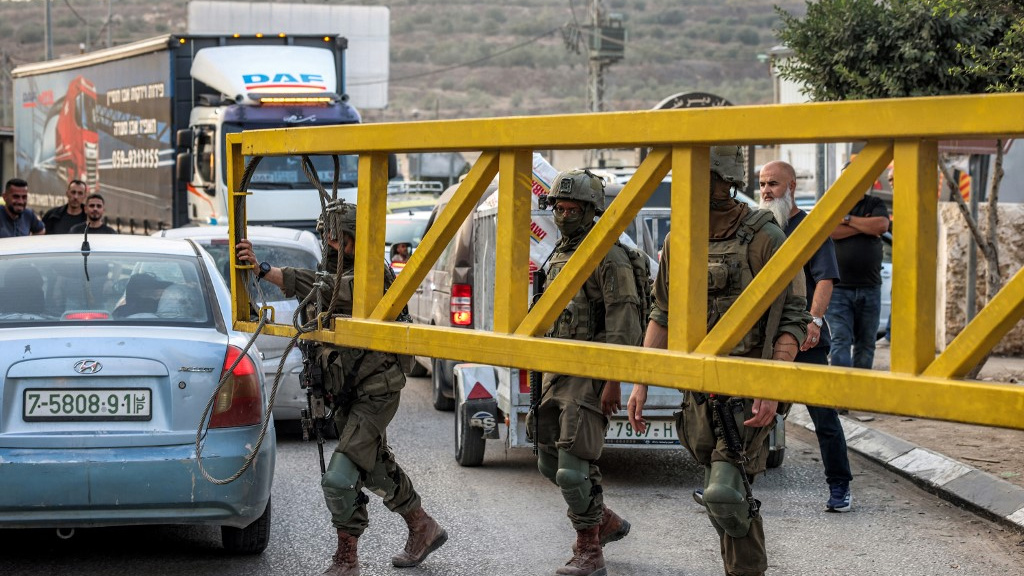
A 23-member international delegation comprising elected officials from across Europe and North America was denied entry to the Israeli-occupied West Bank earlier this week, after being held and interrogated for up to nine hours by Israeli security personnel at the King Hussein Bridge border crossing with Jordan. The group, which included sitting and former legislators from the United Kingdom, as well as representatives from the United States, France, Spain, Switzerland and Ireland, had traveled to the region to attend Progressive International’s Second Ramallah Congress, a gathering that brings together Palestinian academics, student leaders and grassroots civil society organizers to advocate against Israel’s long-running occupation of the territory. The delegation’s planned itinerary also included coordinated visits to Palestinian farming communities, many of which face sustained harassment and violence from Israeli military forces and illegal settler groups, particularly during the annual olive harvest, a culturally and economically critical season for thousands of Palestinian households. Among the blocked delegates were UK Labour MP Clive Lewis, Scottish National Party MP Lara Bird, Scottish Green Party Member of the Scottish Parliament Kate Nevens, and former Labour MP Sam Tarry. In a statement to The Guardian, Lewis detailed the hostile treatment the group faced during their extended detention at the border, noting that Israeli security officials subjected delegates to shouted questioning about their motives for traveling to the West Bank and their pre-existing views on the Israeli occupation, describing the entire experience as deeply distressing and unprofessional. Sharing her account on social media platform X, Lara Bird confirmed the group was held for eight hours before being formally barred from crossing, with no official justification provided for the entry refusal. She emphasized that the delegation’s core goal had been to stand in solidarity with Palestinian families facing violent disruption while harvesting olives on land that is legally recognized as their own, and condemned the move as a deliberate attempt to block international witnesses from documenting widespread abuses against West Bank residents. Bird went on to highlight that routine blockades, home demolitions and unprovoked violent raids by the Israeli Defense Forces (IDF) and extremist settler communities have become normalized for Palestinian populations across the occupied territory, and that the international community’s ability to observe these conditions in person is more critical now than ever. The incident comes just one month after Israeli authorities banned 11 British legislators from entering Israel in retaliation for the UK government’s decision to impose formal sanctions on entities linked to illegal Israeli settlements built on seized Palestinian land, though none of the delegates turned away this week were part of that earlier blacklist. As of press time, the British government has not issued any public statement addressing the delegation’s detention and expulsion. Layla Hazaineh, political coordinator for Progressive International, pushed back against the entry ban in a public statement, noting that the delegation had remained fully committed to crossing into the West Bank to participate in the olive harvest and collaborate directly with local communities even amid surging regional violence, and that every attempt to block international solidarity efforts would only deepen the group’s resolve to support Palestinian self-determination. The entry denial is also unfolding against the backdrop of a series of new restrictive movement measures announced by the IDF, which confirmed it would shut down all land crossings into and out of the occupied West Bank on Tuesday to accommodate logistical arrangements for Israel’s upcoming general election. The military also announced a separate order barring Palestinian workers from accessing most zones of the West Bank between Sunday and Monday of the same week. These new restrictions come on the heels of a sweeping IDF military operation in the city of Hebron, which has included mass home raids, mass arbitrary arrests, widespread home demolitions and a city-wide lockdown that has displaced thousands of local residents. Hebron’s mayor Yousef al-Jabari confirmed that 488 families have been forced to evacuate their homes amid the offensive, totaling more than 3,100 displaced people. Local crisis response records from Hebron’s Support and Relief Committee note that the displaced population includes more than 1,000 children, dozens of elderly residents, pregnant and breastfeeding people, and large numbers of people living with disabilities and chronic health conditions. United Nations Secretary-General Antonio Guterres issued a public statement on Monday expressing profound alarm over the accelerating pace of Israeli settler expansion and unrelenting targeted violence against Palestinian civilians across the West Bank, warning that the rapidly deteriorating coercive environment in the territory carries a growing, tangible risk of ethnic cleansing for long-term Palestinian communities.
‘Detained and interrogated’: Israel blocks British MPs from entering occupied West Bank to meet Palestinians