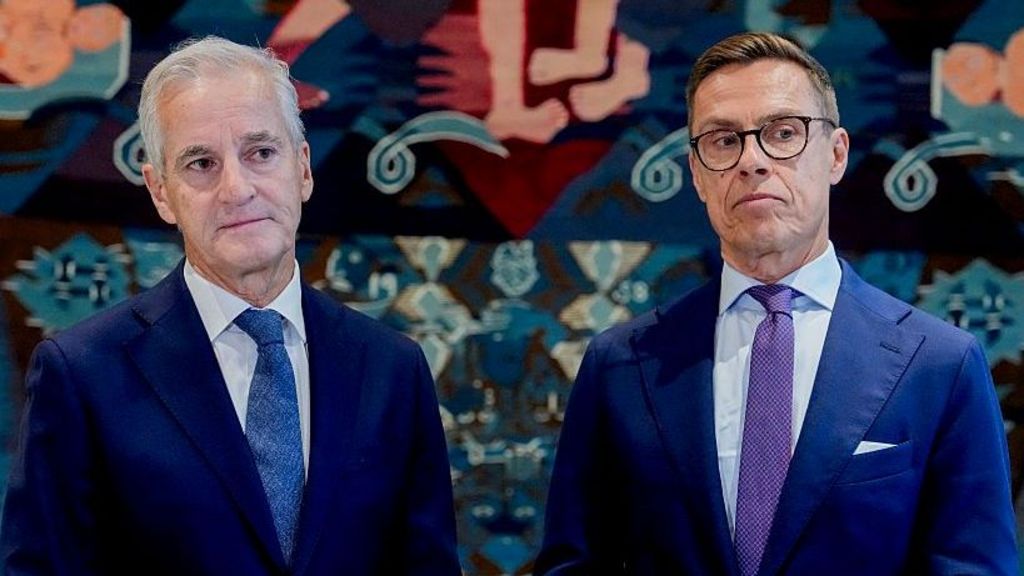
In an unprecedented, uncoordinated diplomatic move that marks the first direct high-level contact between European heads of government and Russian President Vladimir Putin since July 2025, Finnish President Alexander Stubb and Norwegian Prime Minister Jonas Gahr Støre held a frank, substantive joint phone call with Putin from Helsinki on Tuesday. The two Nordic nations, which share a direct land border with Russia, explicitly emphasized at the outset that their independent initiative does not represent the official position of the European Union or NATO as a collective, and they are not acting as proxies for other European leaders.
The stated core goal of the discussion was to lay groundwork for future diplomatic negotiations aimed at ending Russia’s full-scale 2022 invasion of Ukraine, a conflict Støre noted carries staggering human and material costs whose ripple effects of suffering and destruction will reverberate across generations. Stubb further underlined that the final outcome of the war will directly shape not just Finnish and Norwegian national security, but broader stability across the entire European continent. This call follows a prior multilateral meeting held in Oslo on October 20 that included Stubb, Støre, Ukrainian President Volodymyr Zelensky, and U.S. special envoy Steve Witkoff; shortly after that Oslo gathering, Witkoff traveled to St. Petersburg to hold face-to-face talks with Putin, paving the way for the upcoming trilateral negotiations between Ukraine, Russia, and the U.S. scheduled to take place in Abu Dhabi in November.
Immediately after wrapping up their conversation with Putin, Stubb and Støre held a follow-up discussion with Zelensky, who publicly expressed gratitude for their active, pragmatic support for Ukraine’s sovereignty and shared security goals. During their check-in, the three leaders reviewed details of the planned Abu Dhabi trilateral talks, and explored potential new European collaborative frameworks to strengthen Ukraine’s defensive capabilities, back ongoing diplomatic processes, and reinforce collective regional security.
For his part, Putin pushed his longstanding narrative during the call, claiming that confrontational policies pursued by the EU and NATO are the primary factor prolonging the ongoing conflict. The Kremlin has repeatedly alleged that European states’ military aid shipments to Ukraine are extending the war, even as Kremlin spokesman Dmitry Peskov noted just last weekend that the presence of a European negotiator at the formal peace table would be a welcome development.
The unannounced, uncoordinated nature of the Stubb-Støre-Putin call has already drawn public pushback from other European allies. Danish Prime Minister Mette Frederiksen told national broadcaster DR that she holds deep scepticism toward the dialogue, confirming that no other EU or Nordic partners were consulted or briefed in advance of the bilateral engagement. The independent diplomatic outreach comes amid recent strains in relations between the U.S., Ukraine, and traditional European allies, sparked by U.S. President Donald Trump’s recent decision to roll back select sanctions on Russia that would allow the country to resume oil exports to the American market.