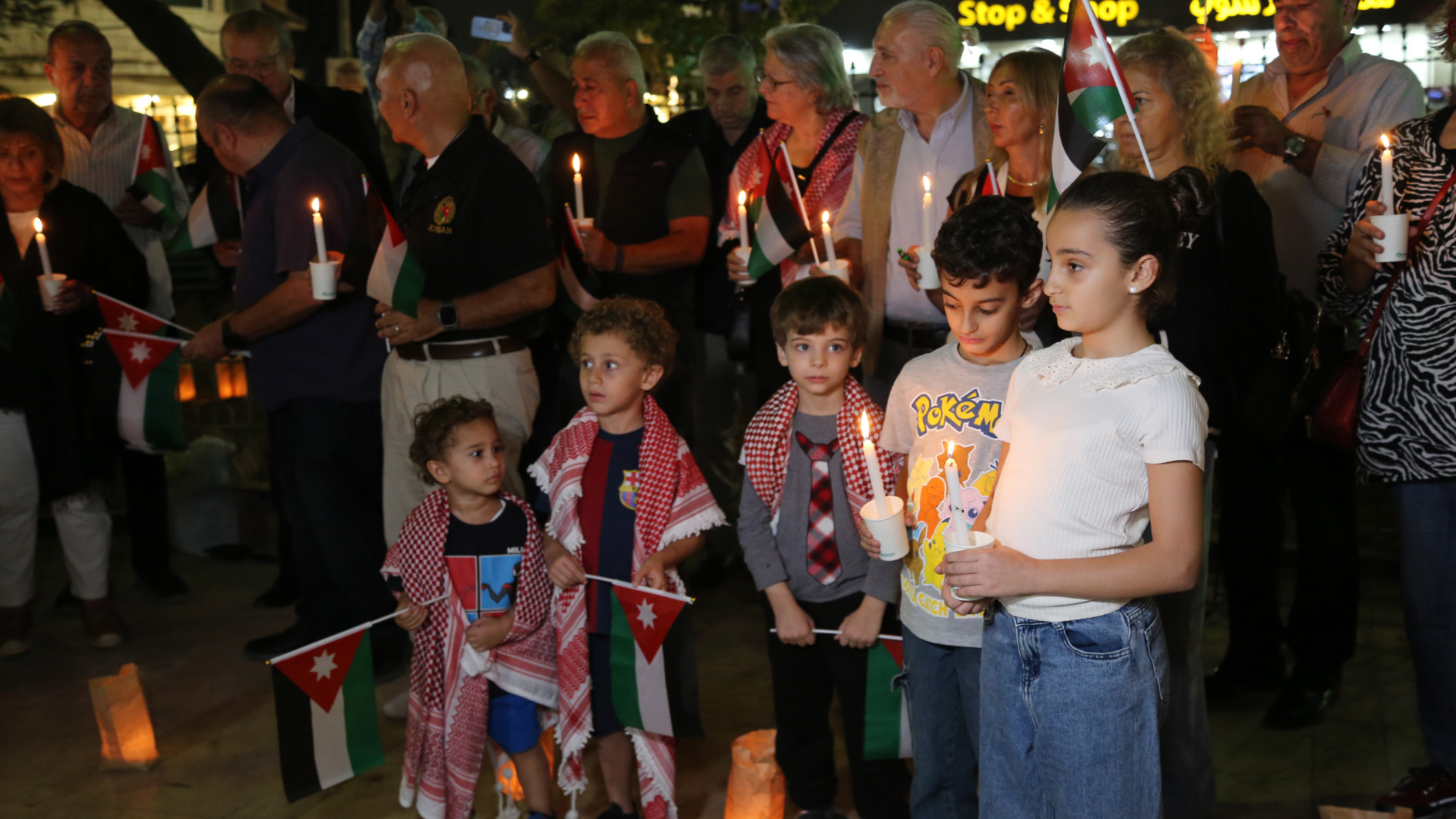
In the immediate aftermath of a devastating Friday assault on a Greek Orthodox church in southern Jordan, national flags flew at half-mast across the kingdom, and security deployments were visibly reinforced throughout the capital Amman, as communities grappled with unprecedented grief and anger. The targeted violence unfolded during a funeral service at St. George’s Church in the village of Hamoud, Karak governorate, leaving nine people dead and at least 34 others injured, sending shockwaves through a nation long proud of its tradition of interfaith coexistence.
For local residents, the attack represented an unthinkable break from Jordan’s longstanding social fabric. “We have never experienced anything like this… It was a shock for us. Mixed feelings of sadness and fury,” shared 47-year-old Christian Jordanian Rami Kawar, a resident of Madaba. Zohrab Markarian, a 73-year-old Armenian Jordanian who spent 25 years working as a personal photographer for the late King Hussein, echoed that sentiment, noting, “We were never made to feel different in Jordan. We never ever felt discriminated against as Christians in this country. The Muslims, they are more in pain than the Christians. They are hurt too.”
Across the weekend, hundreds of interfaith vigils sprung up in towns and cities nationwide, including a large gathering in Amman’s Paris Square in the al-Weibdeh district. Muslim and Christian attendees lit candles side by side to show solidarity with the grieving Christian community, recited a short surah from the Quran to honor the victims, and joined in a tearful collective rendition of the beloved pan-Arab patriotic anthem Mawtini (My Homeland).
Early Monday morning, Jordanian security forces apprehended three suspects, all members of an extended family, following a two-hour gun battle in the village of al-Judayyda, Karak governorate. Law enforcement also seized a large cache of firearms and ammunition from the suspects’ possession. Jordan’s Director of Public Security Obeidallah al-Maaytah later confirmed at a press conference that the attackers included two brothers and a third relative by marriage. Initially, government officials stated there was no evidence linking the suspects to external militant groups, but that assessment shifted rapidly as investigations progressed.
Late Monday, the Jordanian military announced it had conducted coordinated airstrikes targeting alleged militant hideouts in southern Syria’s Daraa and Sweida regions, after concluding the suspects were affiliated with terrorist groups operating across the border. The Jordanian side claimed the operation had been pre-coordinated with Damascus, but Syrian authorities disputed that account, stating they received no advance notification of the raids, which killed at least seven people including three children and one woman. Syria subsequently closed its primary commercial border crossing with Jordan in response.
No armed group has publicly claimed responsibility for the church attack to date. Witnesses confirmed between 150 and 200 worshippers and funeral attendees were inside and around St. George’s Church at the time of the assault, with most victims ranging in age from 50 to 70. Karak governorate, located roughly 120 kilometers southwest of Amman, hosts one of Jordan’s largest concentrations of the country’s Christian minority, who make up approximately 3% of the total national population, or around 250,000 people.
While Jordan has a long history of facing threats from extremist groups including the Islamic State, large-scale attacks targeting the country’s Christian community have been extremely rare. The last comparable mass casualty incident in Karak took place in 2016, when IS-linked gunmen killed 10 people including a Canadian tourist. The kingdom, a longstanding U.S. ally that participated in the international coalition against IS, has repeatedly confronted challenges of radicalization among segments of its youth population: hundreds of young Jordanians traveled to join armed factions in Syria and Iraq during the early years of the Syrian civil war. In April 2025, Jordan formally outlawed the Muslim Brotherhood and banned all its affiliated activities, following the arrest of 16 alleged group members accused of plotting attacks using rockets and drones, just months after the Brotherhood’s political wing won the largest share of seats in parliamentary elections.
King Abdullah II delivered a forceful public address in the wake of the attack, vowing, “The terrorist attack against Karak will be met with the harshest retaliation. Those who delude themselves into thinking that they can divide Jordanians with their bullets have no chance in the face of our unity.” The king, dressed in full military uniform, visited injured survivors in hospital the same day of the attack, while other royal family members traveled to Karak to attend the funeral rites for the slain victims. Omar al-Fouri, president of the Al-Weibdeh Old Residents’ Association, emphasized the deeply rooted nature of interfaith harmony in the capital’s historic district, home to multiple churches and a longstanding Christian community: “The people who died in Karak are Jordanians, whether they’re Muslims or Christians or anything, they’re Jordanians. Christians are not new to this land. They’re not guests here. They are the original people of the land.”
Residents expressed widespread confidence in the enhanced security measures the king immediately ordered to protect churches and Christian community centers nationwide. Minister of Local Administration Walid Masri also announced over the weekend that all municipal committees across the country had been directed to name one street in each local jurisdiction after one of the nine victims of the Karak attack. For many Jordanians who lived through the painful era of al-Qaeda suicide bombings in Amman in the early 2000s, the Friday assault has sparked fears of a potential resurgence of radical ideology among disaffected youth, though officials and community leaders uniformly stressed the three suspects do not represent broader national values. “God willing, they only represent themselves,” Maaytah stated during his press briefing.