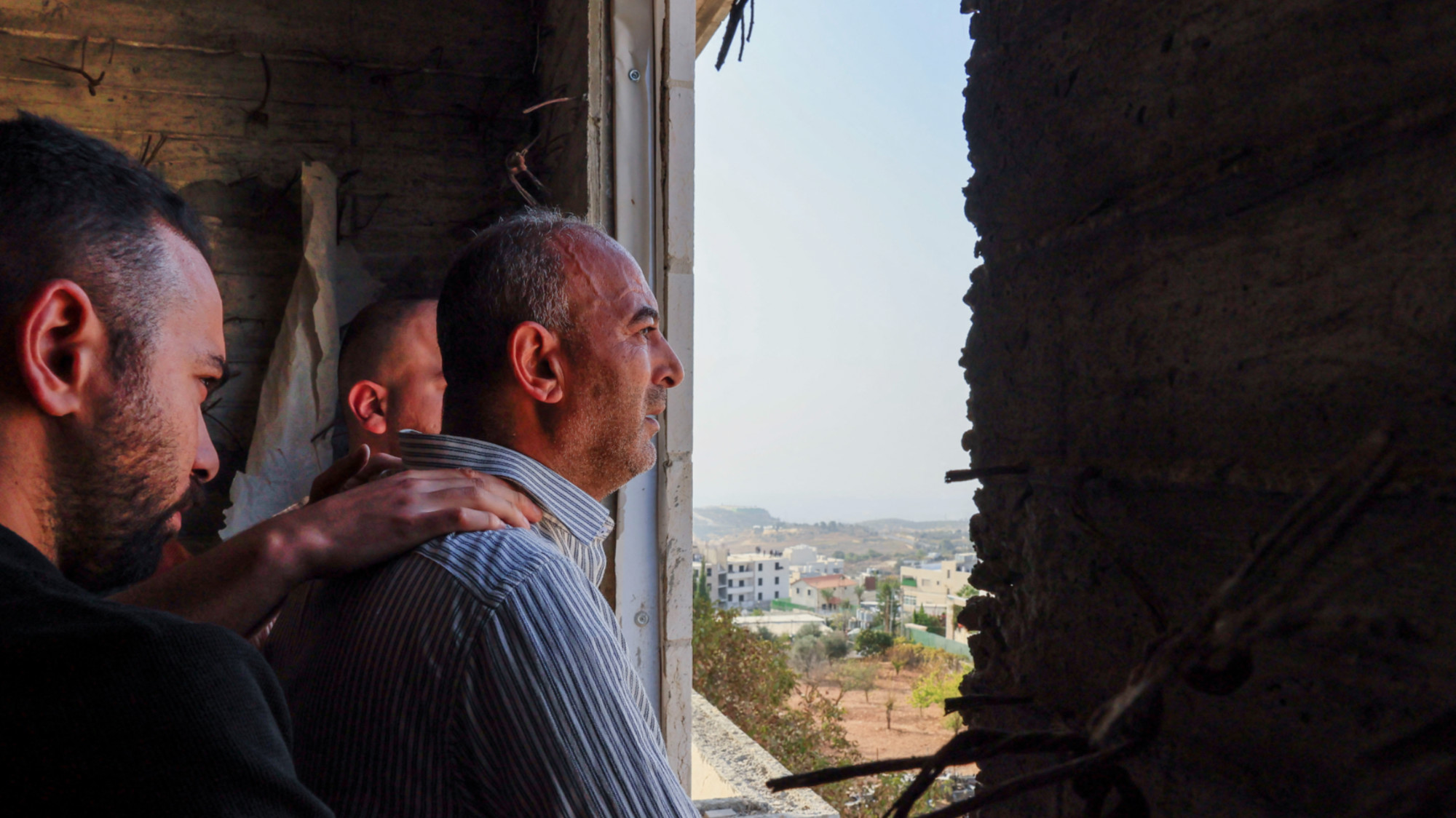
Less than two weeks away from her long-awaited wedding, 23-year-old Palestinian resident Mayar Amrish sat in her family’s sunlit spacious courtyard in Farsh al-Hawa, a neighborhood in the occupied West Bank city of Hebron, mapping out final details for her upcoming nuptials and the new chapter of her life ahead. Within mere hours, that quiet moment of domestic joy would be shattered, as their entire three-story family home was reduced to a pile of smoldering rubble by Israeli military bulldozers. The Amrish family was among the very first targets of a sweeping, city-wide Israeli military campaign codenamed “Roar of Judah”, launched in the immediate aftermath of a Friday shooting incident where two Palestinian attackers killed two Israeli soldiers. Widely condemned by human rights observers as a form of collective punishment against the broader Palestinian civilian population, the operation imposed a full, crippling lockdown on Hebron, paired with widespread home raids, mass arbitrary arrests, structural demolitions, and the forced displacement of thousands of local residents. The Amrish family’s only “offense” that marked them for destruction was their home’s proximity to the site of the earlier shooting. When Israeli local media first reported on Friday that the military planned to demolish residences near the attack location, a gut instinct of dread spurred Amrish to rush to pack clothing and critical legal documents. “Something inside me told me they were coming to tear it down,” she shared in an interview with Middle East Eye. “Sure enough, we had barely stuffed a few changes of clothes into bags when soldiers surrounded the house and screamed orders for us to leave immediately.” Just days prior, the family had finally breathed a collective sigh of relief: an Israeli court had formally suspended a long-pending demolition order against their 600-square-meter property, which had faced demolition threats for years due to its location in Area C of the occupied West Bank, a zone under full Israeli administrative and security control. Since completing construction of the home in 2021, the Amrish household had spent roughly 30,000 shekels ($9,600) in addition to tens of thousands more in legal fees and municipal fines fighting to save the home, which represented the fruit of 25 years of their father’s hard work saving while living abroad in Saudi Arabia, with total construction costs hitting nearly 2 million shekels ($645,000). Their reprieve was devastatingly short-lived. Israeli bulldozers moved in before the family could retrieve any of their furniture or personal belongings, razing the entire structure to the ground. Both of Amrish’s parents lost consciousness on the scene as they watched decades of accumulated labor and life savings turn to dust. The seven-member family has since been forced to take shelter with Amrish’s uncle, scrambling to find alternative permanent housing with no clear timeline for resolution. In the weeks following the launch of Operation Roar of Judah, Israeli military officials have stated the campaign’s stated goals include sweeping searches for unregistered weapons, dismantling what they label “terrorist infrastructure”, and interrogating dozens of Hebron residents. To date, forces have sealed off major sections of the city, carried out waves of raids and arrests, and pushed more than 3,100 Palestinians out of their residential neighborhoods. Israel’s sitting defense minister has publicly stated that displaced residents will not be granted permission to return to their homes until all purported “Hamas infrastructure” in Hebron has been fully dismantled. Data from the Palestinian Prisoners’ Club confirms 47 Palestinians have been formally arrested across Hebron since the operation began, with hundreds more subjected to intrusive field interrogations at military checkpoints. The Commission Against the Wall and Settlements has documented that Israeli forces have demolished multi-unit residential buildings, targeted dozens of commercial premises including a local tile and ceramics company and multiple auto parts stores, and bulldozed or damaged roughly seven dunums (0.7 hectares) of privately owned agricultural land. The vast majority of displaced residents hail from the Deir Baha and al-Jalada neighborhoods in western Hebron. Hebron’s city mayor Yousef al-Jabari confirmed that 488 families have been forced to evacuate their homes, impacting over 3,100 people in total. The city’s dedicated Support and Relief Committee, established to coordinate the crisis response, notes that the displaced population includes more than 1,000 children, dozens of elderly residents, pregnant and breastfeeding women, people living with disabilities, and individuals with chronic health conditions who require consistent medical care. As of the latest count, 198 displaced families are staying with host relatives, 19 have secured temporary rented accommodation, 22 have arranged other informal housing solutions, and a staggering 177 families report having no safe, stable place to shelter at all. Hamza Shabana, a 33-year-old father of a two-year-old daughter, lived with his wife in an eight-story residential building in Ein Deir Baha that housed at least 160 total residents. At dawn on the first Saturday of the operation, the family was forced to flee at gunpoint after Israeli troops surrounded the building and blared evacuation orders over loudspeakers, with no consideration for the vulnerable children and elderly people residing inside. “My wife, our little girl and I left without being able to grab anything more than two days’ worth of clothes; we walked out of our home with heavy, broken hearts,” Shabana recounted. Since that day, he and his small family have been bouncing between different relatives’ homes, sleeping in a different location almost every night. “There is no stability at all, and we are all living in fear of an unknown future,” he said. As the most populous governorate in the occupied West Bank, Hebron had an estimated population of 874,000 residents at the end of 2025, accounting for 15.7% of the total population of the State of Palestine. It also serves as a critical regional economic and industrial hub, with a diverse manufacturing ecosystem spanning food processing, leather goods, plastic production, footwear, stone and marble quarrying, jewellery production, and cross-regional trade. But the ongoing military operation and full closures imposed on the city’s entry and exit points are inflicting catastrophic damage on local livelihoods. Abdo Idris, head of the Federation of Chambers of Commerce and Industry in Hebron, revealed that total verified economic losses have already reached millions of shekels, with warnings that cumulative damages could soon climb into the tens of millions of shekels if the siege persists. Mayor al-Jabari added that the operation has brought industrial and commercial activity to a near standstill: factories have been forced to shutter their operations, workers are blocked from reaching their places of employment, and the flow of goods and critical raw materials in and out of the city has been almost completely obstructed. The Hebron municipality is currently collaborating with local economic authorities to conduct full damage assessments of destroyed infrastructure and commercial properties, but the ongoing military siege has prevented inspectors from accessing some of the hardest-hit neighborhoods. Al-Jabari warned that a prolonged military assault will deepen existing economic losses, permanently disrupt longstanding factory operations, cut off workers from their salaries, and compound the city’s already severe pre-existing economic and financial crisis. Despite facing dwindling operational resources, al-Jabari confirmed the municipality is continuing to deliver core public services to residents, supporting families to remain in their homes where possible, and facilitating safe returns for displaced populations. “The municipality continues to carry out its duties despite a scarcity of resources with the aim of supporting the resilience of the residents,” he emphasized. Islam Hassouna, a professor of economics and business at Palestine Polytechnic University, explained that the city closures are creating a stranglehold on two-way trade: Hebron’s signature manufactured products are blocked from reaching markets across the West Bank and Israel, while essential supply chains of food, medicine, and raw materials cannot enter the city. The economic disruption is layered, Hassouna noted, extending far beyond lost production and trade revenue: “They also encompass the psychological and social impacts of the siege and the displacement of residents, bringing with them fear and anxiety that further stifle economic activity.”