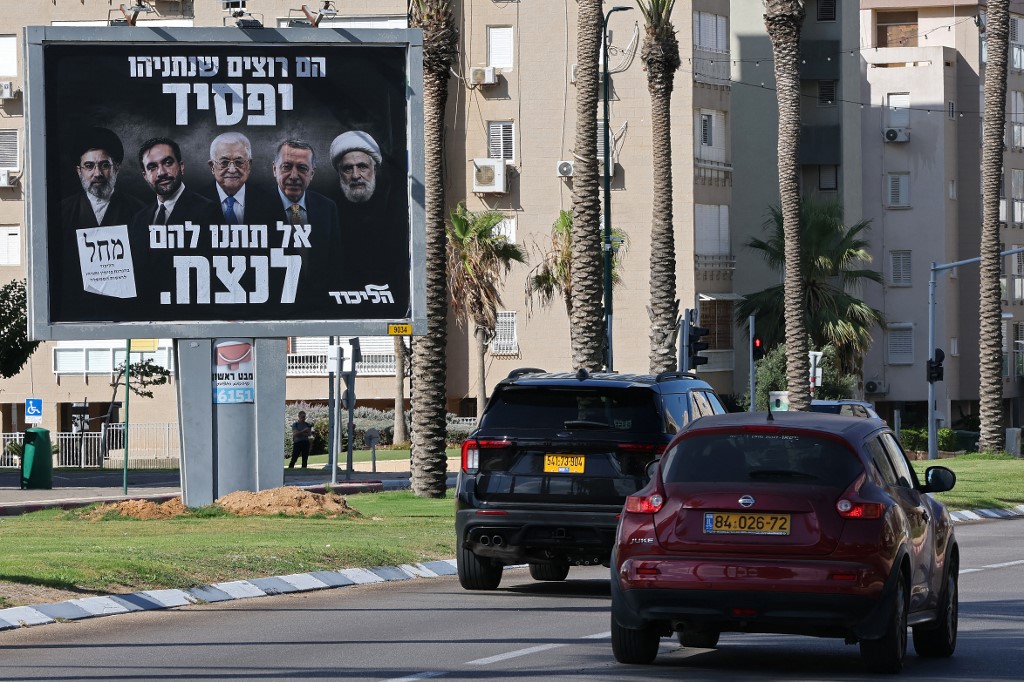
Just 48 hours ahead of Israel’s critical legislative elections, a series of explosive developments has roiled the country’s political landscape, starting with a high-stakes rift at the top of the national security apparatus. Per a Sunday exclusive from Israel’s Channel 12 News, Prime Minister Benjamin Netanyahu and sitting military chief of staff Eyal Zamir engaged in a tense, direct confrontation over a classified directive that Zamir warned could inadvertently spark a full-scale military conflict with Iran, in the final days before citizens head to the polls. The report did not publish the full details of the contested order, but confirmed that Zamir pushed back forcefully against Netanyahu’s instruction, refusing to greenlight any operational military action until he received formal, binding legal assurances that the move was justified under national security protocols. Multiple anonymous insiders close to the heated altercation told Channel 12 that senior ranks of the Israeli Defense Forces harbored deep fears that Netanyahu’s governing political tier was attempting to weaponize long-running tensions with Iran to generate last-minute electoral momentum, casting widespread doubt on the prime minister’s underlying motivations for the proposed action. Netanyahu and his newly appointed Defense Minister Israel Katz swiftly issued blanket denials of the entire account: in a public post on X published Monday, Katz explicitly stated that the Israeli government had no plans whatsoever to launch any offensive operation targeting Iran in the window before Tuesday’s vote. Channel 12’s reporting further contextualized that the unprecedented public-facing rift between political leadership and the military top brass unfolded in parallel with unconfirmed claims that Netanyahu had held direct talks with U.S. President Donald Trump to restart the long-running joint U.S.-Israeli coordinated campaign of pressure and targeted actions against Iranian military infrastructure. The allegations immediately sparked fierce backlash from Israel’s opposition camp. Gadi Eisenkot, Netanyahu’s leading electoral rival, issued a sharp rebuke on X Sunday, writing “Do not you dare place your personal political interests above the fundamental security of the state of Israel.” Eisenkot’s coalition partner Avigdor Lieberman, leader of the right-wing nationalist Yisrael Beiteinu faction, went even further, labeling the alleged scheme an act of outright treason. Speaking to Radio 103FM on Monday, Lieberman stated flatly that Netanyahu was “betraying this country in plain sight by trying to drag our entire nation into an unnecessary war for electoral gain” and vowed to push for a full formal investigation into the prime minister on formal treason charges if his bloc secures power after the vote. Alongside the explosive security drama, a separate independent analysis published Monday by leading Israeli women’s magazine LaIsha paints a stark picture of plummeting female representation in the incoming 25th Knesset. The outlet’s data, compiled from the latest pre-election polling, projects that only 31 women will secure seats in the 120-member legislative body, amounting to just over 25% of total seats. The figure marks a sharp downturn from the 45 women elected in the 2021 legislative vote, the highest total in Israeli political history, and also represents a drop from the 35 women who held seats in the outgoing Knesset. The breakdown of projected female lawmakers shows a stark partisan divide: 23 of the 31 winning female candidates are expected to come from centrist and Zionist opposition factions, including Eisenkot’s Yashar party, former prime minister Naftali Bennett’s Together party, Lieberman’s Yisrael Beiteinu, and the left-leaning The Democrats led by Yair Golan. By contrast, Netanyahu’s hardline governing bloc is on track to send a mere six women to the next Knesset. Two of the core factions in Netanyahu’s coalition, the ultra-Orthodox Shas and United Torah Judaism parties, bar women from running for public office entirely, meaning they will send zero female representatives, while his far-right Otzma Yehudit and Religious Zionism factions have also fielded almost no women in winnable slots. Palestinian-led political blocs, including the Islamist Ra’am party and the left-wing Joint List, are projected to send only two women total to the incoming legislature. Adding a final unexpected dynamic to the pre-election landscape, data compiled by Israeli financial daily Calcalist published Sunday reveals that roughly 90,000 Israeli citizens who normally reside abroad have already returned to the country in recent weeks, with the total expected to climb to 111,000 by election day. The figures, sourced from anonymized user location tracking data provided by a major Israeli telecommunications firm, represent a 94,000-person surge compared to average non-election periods. The unusual travel spike comes at a time when Israel has seen a major wave of emigration since 2023, with roughly 270,000 mostly highly educated, skilled citizens leaving the country for long-term residence abroad. The telecom firm’s analysts noted that the timing of the travel surge in mid-October, which does not align with typical holiday or tourist travel patterns, makes it overwhelmingly clear that the vast majority of the returning expats have traveled specifically to cast their ballots in the high-stakes vote. Independent cross-verification from Channel 13 News, drawing on passenger arrival data from Ben Gurion Airport, confirms the same scale of incoming expat arrivals. Political analysts note that a turnout of 90,000 eligible expat voters could translate to roughly two full Knesset seats, though outlets caution that the total arrival numbers include accompanying children who are not of voting age.
Israeli press review: Netanyahu accused of pushing Iran escalation ahead of election