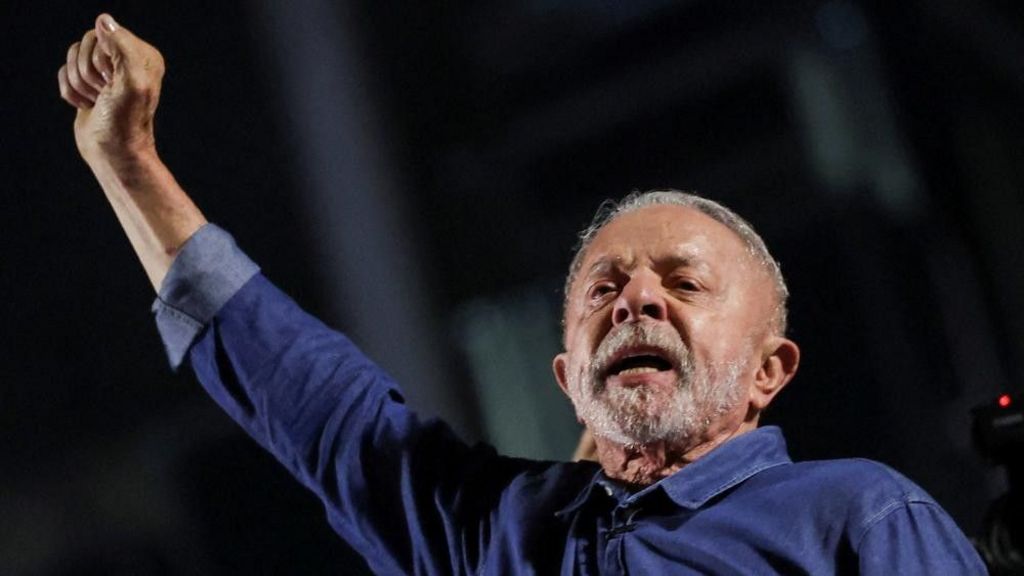
For 81-year-old Luiz Inácio Lula da Silva, Brazil’s iconic leftist statesman, his latest electoral triumph represents yet another seemingly impossible milestone in a decades-long career defined by resilience against overwhelming odds. In a remarkable turnaround, he reversed a narrow first-round deficit to clinch a new presidential mandate, defying a regional trend of right-wing, Trump-aligned electoral victories across Latin America.
Lula’s life trajectory reads like a narrative of extraordinary upward mobility against systemic poverty. Born to an illiterate peasant household, he worked as a peanut vendor and shoe-shiner in childhood, only learning to read at age 10. After training as a metalworker, he lost a finger in a 1960s industrial accident in the São Paulo metropolitan region, a turning point that pushed him into trade union activism. By 1975, he led a 100,000-strong metalworkers’ union, transforming previously state-aligned labor groups into a force of independent grassroots power, before co-founding Brazil’s first major socialist party, the Workers’ Party (PT), in 1980 alongside union organizers, intellectuals, faith activists and Trotskyist factions. Over time, the PT shifted from revolutionary structural reform pledges to a pragmatic social democratic policy platform.
During his first two terms in office from 2003 to 2010, Lula oversaw Brazil’s longest sustained economic expansion in 30 years, driving down historic national inequality through landmark social programs including the Bolsa Familia family grant scheme, which lifted an estimated 44 million Brazilians out of extreme poverty by pairing above-inflation minimum wage hikes with targeted state support. He left office with an 83% approval rating, a near-unprecedented level of popularity for a departing Latin American head of state, after cementing Brazil’s status as a rising global player. A subsequent throat cancer diagnosis, which led him to shave his famous beard mid-treatment, was declared fully resolved by doctors in 2012.
His post-presidency years brought dramatic upheaval, however. After his chosen successor’s administration saw economic growth collapse into recession, the sprawling Operation Car Wash corruption investigation swept Lula up in its dragnet: he was convicted on charges of accepting a beachfront apartment as a bribe, later followed by a second conviction for graft and money laundering linked to improvements on a family country home, resulting in a 12-year, 11-month prison sentence. Lula consistently maintained his innocence, framing the prosecutions as a politically motivated effort to bar him from public office. After serving 18 months behind bars, a 2021 Supreme Court ruling annulled all his convictions, ruling his pre-appeal incarceration had been unconstitutional, clearing the path for his 2022 presidential comeback against far-right incumbent Jair Bolsonaro.
His 2022-2026 term delivered mixed results. While supporters hailed him as a savior of the Amazon rainforest, satellite data confirming 2026’s first-half deforestation levels as the lowest in a decade validated his environmental policy gains, but controversial moves to approve exploratory offshore oil drilling near the Amazon delta drew backlash from climate advocates. Lula defended the decision as a pragmatic step, arguing fossil fuel revenues would fund the country’s long-term transition to renewable energy, with a formal commitment to full fossil fuel phase-out on the national agenda.
On the global stage, Lula has navigated fraught relations with returning U.S. President Donald Trump, who imposed a 50% tariff on Brazilian goods in July 2025, citing the 27-year prison sentence handed to Jair Bolsonaro over coup-related charges as justification. Lula publicly denounced the move as illegitimate foreign interference, declaring “he’s not emperor of the world.” Though a May 2026 White House meeting thawed their frosty dynamic, with Trump describing Lula as “dynamic” and the Brazilian leader calling the talks highly satisfactory, the U.S. later imposed a 25% across-the-board tariff on most Brazilian imports, with deep rifts remaining over trade policy, hemispheric governance, and Trump’s so-called “Donroe doctrine” asserting unchallenged U.S. dominance over the Western hemisphere. Lula has pushed back firmly, stating “Brazil does not fit into anyone’s backyard.”
A vocal advocate for reform of the United Nations Security Council to expand permanent membership to underrepresented nations including Brazil, India, Germany, Japan and African regional blocs, Lula has reaffirmed Brazil’s commitment to the BRICS bloc as a counterweight to Western geopolitical dominance, defending continued trade ties with Russia and ongoing purchases of Russian oil despite the ongoing conflict in Ukraine. Now, as he begins his new term after defeating Bolsonaro’s son Flávio in the recent run-off, even core PT allies acknowledge the steep challenge ahead: uniting a deeply polarized Brazilian nation, bridging longstanding social divides, and reconciling competing domestic priorities while navigating an increasingly fragmented global political landscape.