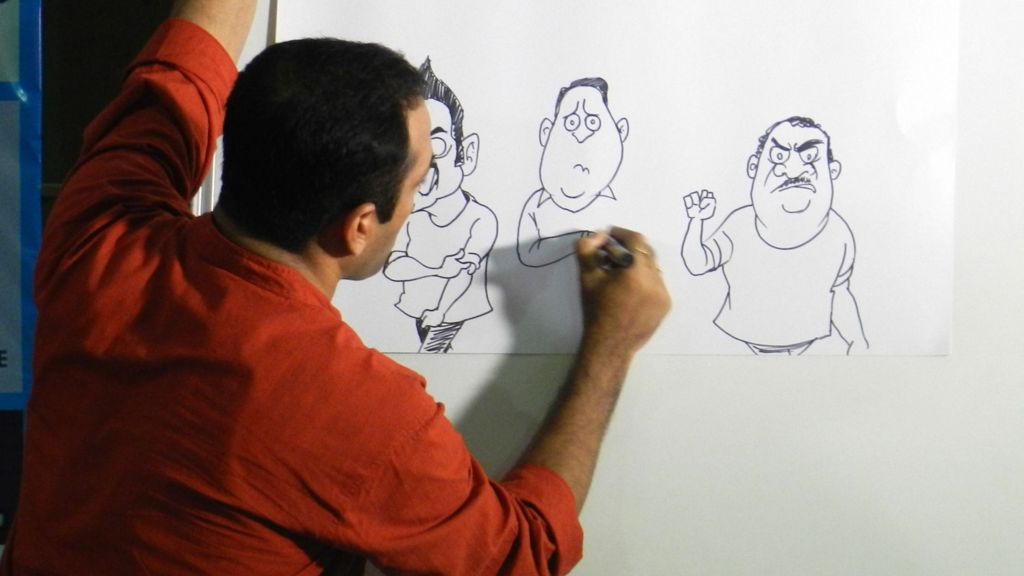
Veteran Indian political cartoonist Satish Acharya, 55, faced his second unexplained full Instagram account block in India in the span of three weeks in late October 2024, leaving domestic users unable to locate his profile via search or direct web links for three consecutive days. This latest restriction follows a nearly 10-day full block of his account between September 28 and October 6, during which visitors to his page saw a standard notice stating the profile was unavailable in compliance with India’s national Information Technology Rules. Acharya reports he first noticed gradual reductions in the reach of his satirical cartoons across Meta’s platforms several years prior, but the complete removal of access to his public profile left him deeply disheartened. He submitted formal inquiries to Meta, Instagram’s parent company, but received no response, and was preparing to file legal action when his account was unexpectedly restored in early October before the second temporary block took effect.
Acharya is not the only Indian political cartoonist to face platform restrictions recently: weeks prior, fellow illustrator Manjul had a single Instagram post criticizing the national election commission’s controversial voter roll revision, which resulted in the removal of 130 million registered names from electoral records, restricted without formal explanation, even as his full profile remained publicly accessible. In an official statement to the BBC, Meta confirmed it may temporarily restrict accounts and content to adhere to India’s IT Rules, but declined to disclose specific justifications for the measures targeting Acharya and Manjul.
These high-profile cases have amplified widespread concerns among free speech advocates, artists and media observers that existing regulatory frameworks are being deployed to curb India’s long, culturally cherished tradition of political satire. The national government maintains the 2021 IT Rules serve as a critical tool to eliminate unlawful and harmful online material, but critics argue the vaguely worded provisions enable unaccountable censorship that stifles legitimate public dissent.
The restrictions unfold against a backdrop of rapidly tightening online content oversight in India, as political satire and Gen-Z-focused humorous dissent have emerged as a powerful mobilizing force for young voters: viral memes and satirical social media content were a core driver of widespread 2024 protests over education policy and youth employment that ultimately led to the resignation of India’s education minister. While Prime Minister Narendra Modi’s ruling Bharatiya Janata Party has publicly directed all cabinet ministers to expand their social media footprint to better engage young audiences, official data obtained via a Right to Information request by *The Indian Express* shows federal government agencies sent nearly 195,000 content restriction and removal orders to major platforms including Meta’s Instagram and Facebook, as well as YouTube, between March and July 2024 via the government’s centralized Sahyog compliance portal. Technology policy expert Prateek Waghre notes Meta appears far more willing to comply with these official takedown requests than rival platform X, which has repeatedly pushed back on government content demands, though limited public transparency around platform compliance makes systematic comparison difficult. Recent media reports also indicate Indian IT ministry officials have pressured Meta to adjust its algorithmic recommendation systems to avoid steering users toward what authorities describe as a narrow set of divisive narratives, and strengthen pre-publication checks on content deemed capable of inciting public disorder. The BBC has submitted multiple requests for comment to the Indian IT ministry regarding the cartoonist restrictions and reported algorithm oversight mandates, and has not received a formal response as of press time.
Political cartooning has been a cornerstone of Indian journalistic culture since the nation gained independence, with legendary illustrator RK Laxman’s iconic “Common Man” character serving as a beloved, decades-long satirical observer of political governance. But efforts to censor political satire are far from a new phenomenon in India: during the 1970s national Emergency, when civil liberties were suspended and the press was placed under strict state control, pioneering cartoonist Abu Abraham saw dozens of his works rejected by official censors, while in 2012, illustrator Aseem Trivedi was arrested on sedition charges over cartoons critiquing the Indian constitution, charges that were later fully dropped. Today, India ranks 157th out of 180 countries in Reporters Without Borders’ 2024 World Press Freedom Index, with widespread criticism that the Modi administration has applied growing pressure to independent media outlets, a charge the government rejects, insisting India’s media ecosystem remains free and vibrant. Stand-up comedians focused on political satire, including popular performer Kunal Kamra who regularly jokes about Modi and the BJP, have also faced repeated legal action, cancelled shows and targeted harassment in recent years.
For India’s working political cartoonists, holding power to account is the core function of their craft. Sandeep Adhwaryu, a staff cartoonist for a leading national Indian newspaper, describes the community as a “default opposition” that is professionally obligated to question every ruling administration, a ethos Acharya has followed across his decades-long career: prior to 2014, much of his satirical work targeted the Congress-led ruling coalition, and his cartoons were frequently shared by BJP political figures, with no official content restrictions placed on his work beyond occasional online trolling. Since the BJP took national power, the majority of his satirical output has focused on Modi’s administration.
Social media platforms have removed longstanding barriers for independent, non-newspaper-affiliated cartoonists like Acharya and Manjul, allowing them to build massive national audiences without relying on traditional media editorial gatekeeping. As popular web comic creator Rachita Taneja, whose *Sanitary Panels* Instagram account has amassed hundreds of thousands of followers, notes, her entire career would not have been possible without open access to social media, but the platforms represent a double-edged sword: they are for-profit commercial entities that prioritize advertiser and state compliance over user free speech rights, creating new vulnerabilities for independent creators who are fully dependent on platform access to reach their audiences. Even cartoonists employed by traditional newsrooms report rising pressure to self-censor, with many choosing to soften captions, avoid sensitive political topics, or abandon controversial concepts entirely before submitting work for publication, a dynamic Adhwaryu warns is gradually becoming normalized across the industry even in the absence of explicit editorial censorship orders.
Despite these growing challenges, India’s community of political cartoonists has organized mutual support networks to defend their work: when Acharya’s account was first restricted in September, Taneja published a viral stick-figure cartoon in his solidarity. Adhwaryu remains optimistic that the centuries-old tradition of Indian political satire will adapt to the new regulatory environment, comparing the medium to a “shape-shifting virus” that mutates continuously to bypass new barriers and find new ways to reach audiences and hold power accountable.