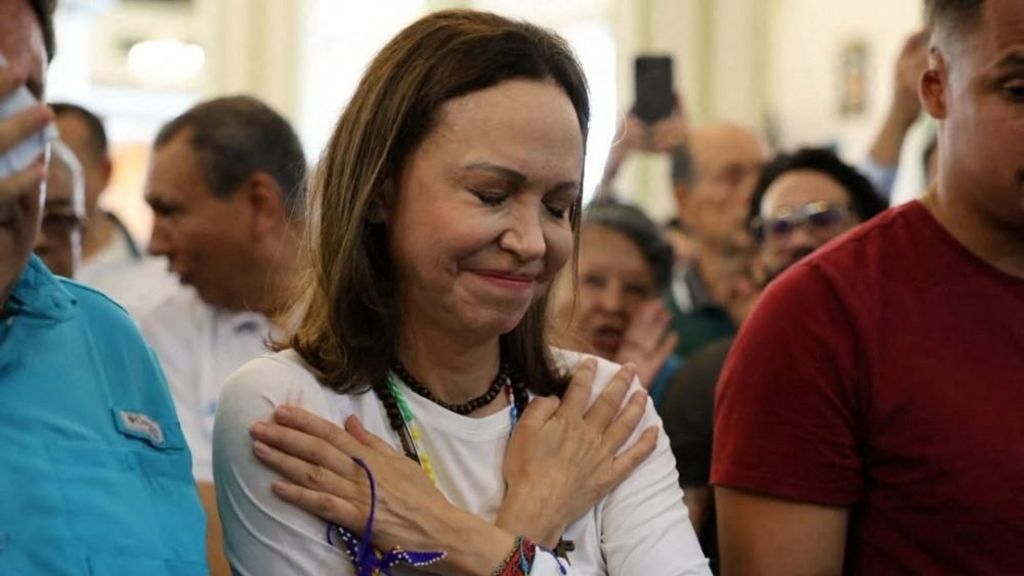
After more than 10 months spent in forced exile, prominent Venezuelan opposition figure María Corina Machado has arrived back on national soil, stepping into a deeply fractured, high-stakes political environment that has shifted dramatically since she fled the country late last year.
The landmark homecoming was first announced by Machado herself in a post on social media platform X on Sunday, where she shared a direct, rousing message to her supporters: “I am here. With you.” Mere minutes later, her close political ally Edmundo González Urrutia — the former presidential candidate who stood in for her in the 2024 general election — confirmed the news publicly, writing, “I am thrilled to announce to you that our leader, my dear María Corina, is on Venezuelan soil.”
Machado’s departure from Venezuela in December 2024 was to travel to Norway to accept a Nobel Peace Prize recognition, but shortly after she left the country, in January, a cascading series of political upheavals unfolded. The United States detained her long-time political rival, incumbent President Nicolás Maduro, after which the Trump administration formally backed Maduro’s deputy Delcy Rodríguez as the nation’s legitimate leader. Rodríguez was subsequently sworn in as interim president, and soon after signed a landmark bilateral oil agreement with the U.S. government.
González Urrutia struck an optimistic tone in his follow-up remarks to supporters, stating, “Today is a very important day for Venezuelans. Our sovereign voice returns with her to lead and guide this process!” He also confirmed that he plans to rejoin Machado on Venezuelan territory in the near future to push the nation forward “toward freedom.”
A senior advisor to Machado revealed back in September that over the preceding weeks, the opposition leader had made seven separate attempts to re-enter Venezuela, all of which were blocked by authorities. At this stage, full details of Machado’s immediate policy and political roadmap remain unconfirmed, though she has repeatedly stated in public remarks that she will mount another presidential bid if free and transparent elections are scheduled.
A longstanding, unyielding advocate for participatory democracy in Venezuela, Machado secured a landslide victory in the 2023 independent opposition presidential primary — a vote organized outside the jurisdiction of Maduro’s state-aligned electoral body — taking more than 90% of the total ballots cast. Despite that overwhelming mandate from opposition voters, the Maduro administration issued a formal ban barring Machado from holding any public office, leveling unsubstantiated accusations of electoral fraud and tax evasion against her. Machado has consistently rejected all the charges, framing them as entirely politically motivated efforts to sideline her from electoral politics.
When the official 2024 national presidential election was held, González Urrutia stood as the opposition’s official standard-bearer in Machado’s place to challenge Maduro. The state-run National Electoral Council, which has long been criticized for close ties to the ruling administration, declared Maduro the winner in the contest, but refused to release full, precinct-level vote tally documents to verify the result. The opposition coalition immediately contested the outcome, releasing thousands of certified copies of local vote count sheets to back its claim that González Urrutia was the actual winner of the popular vote.
In an exclusive statement provided to Margaret Brennan of CBS News, a key U.S. broadcast partner of the BBC, a spokesperson for Machado described her return as “a major step toward a democratic transition and free, fair, and verifiable presidential elections in the near future.” The development has already sparked widespread debate across Venezuela’s political factions, as observers brace for a potentially pivotal shift in the country’s long-running democratic stalemate.