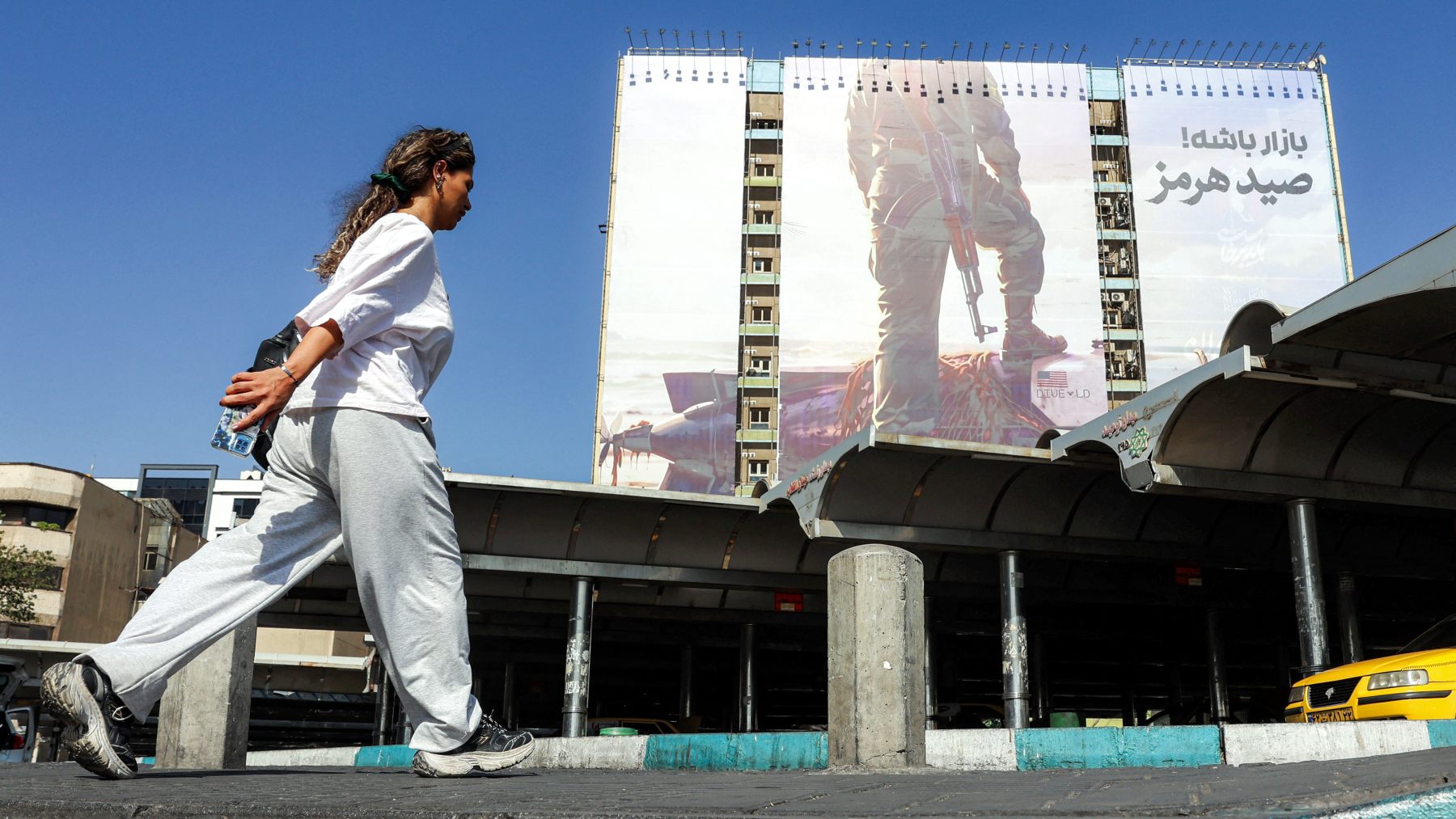
Top Iranian parliamentary leadership has issued a stark, uncompromising public warning to the United States that any additional aggressive military action against Iranian territory will trigger a response of unprecedented scale, as soaring geopolitical tensions around the strategic Strait of Hormuz push the longstanding rivals closer to open conflict. Addressing a formal session of Iran’s national parliament, Speaker Mohammad Baqer Qalibaf emphasized that the Islamic Republic will never cede to U.S. coercion, and will refuse to back down in the face of any direct military assault on its sovereign land.
Per reporting from Iran’s state-affiliated Tasnim News Agency, Qalibaf pushed back against what he framed as Washington’s misplaced assumption that a combination of targeted media pressure campaigns and overt military posturing could force the Iranian nation into submission. He stressed that contemporary Iran bears no resemblance to the era of the Pahlavi dynasty, when foreign powers could impose their will on the country, describing modern Iran as an unbreachable stronghold defined by deep national self-confidence, robust defensive capabilities, and unshakable collective resolve. The parliamentary leader confirmed that Iranian military forces are fully mobilized to deliver a forceful, disproportionate response to any incursion into Iranian territorial space, adding that even threats of a region-wide broader war will never persuade Tehran to abandon its core national interests. Qalibaf further noted that no diplomatic overture from the U.S. can be deemed credible until Washington alters its coercive, self-serving approach to the region, fulfills its long-unmet international obligations to Iran in tangible, verifiable ways, and abandons its pattern of aggressive unilateral actions that have left the U.S. mired in self-inflicted strategic difficulty over its recent strikes against Iranian targets.
This high-profile warning from Iran’s senior political leadership emerged exactly one day after U.S. President Donald Trump publicly stated that Washington could carry out targeted military strikes against Iranian sites as early as the following Sunday, while simultaneously claiming the U.S. remained open to negotiating a far-reaching, mutually beneficial “big, beautiful” agreement with Tehran to de-escalate spiraling tensions centered on the Strait of Hormuz. Tensions flared further on that referenced Sunday, when Iran’s regular army confirmed that its domestic air defense systems had successfully shot down a U.S.-made LUCAS drone operating over the southern port city of Bandar Abbas, a key coastal settlement located just miles from the narrow Strait of Hormuz waterway.
Iranian Foreign Minister Abbas Araghchi also delivered remarks framing the ongoing military confrontation with the U.S. and Israel as a transformative event that has permanently rewritten the regional security landscape, making a full return to pre-conflict management of the Strait of Hormuz impossible. Cited by Turkey’s Anadolu Agency via Iran’s Press TV, Araghchi explained that new on-the-ground realities have fundamentally altered the rules governing the critical shipping lane, and that neither the transit routes through the strait nor its operational oversight will revert to their pre-conflict status. The top Iranian diplomat added that Tehran is fully open to collaborative, region-led security frameworks for the waterway that are designed and agreed upon by neighboring nations, rather than systems imposed unilaterally by external global powers.
The Strait of Hormuz, a narrow chokepoint situated between the territorial borders of Iran and Oman, ranks as one of the most strategically vital maritime corridors on the planet, serving as the only direct link between the Persian Gulf and the open waters of the Gulf of Oman and Arabian Sea. Roughly a third of the world’s global seaborne energy supplies pass through the strait annually, meaning any disruption to its transit operations carries immediate, cascading risks for global oil and gas markets. Tehran and Washington now remain deeply at odds over the future governance of the waterway in the wake of recent military clashes: Iran has publicly asserted full sovereign authority over all vessel passage through the strait, while the U.S. has demanded completely unrestricted, unimpeded navigation for all commercial and military ships. A tentative interim de-escalation deal signed by the two sides in June to resolve earlier points of conflict has since collapsed into stalled negotiations, as fresh rounds of mutual military posturing push bilateral ties to their most strained point in decades.
Iran warns of ‘unimaginable’ response to US aggression as tensions rise over Hormuz