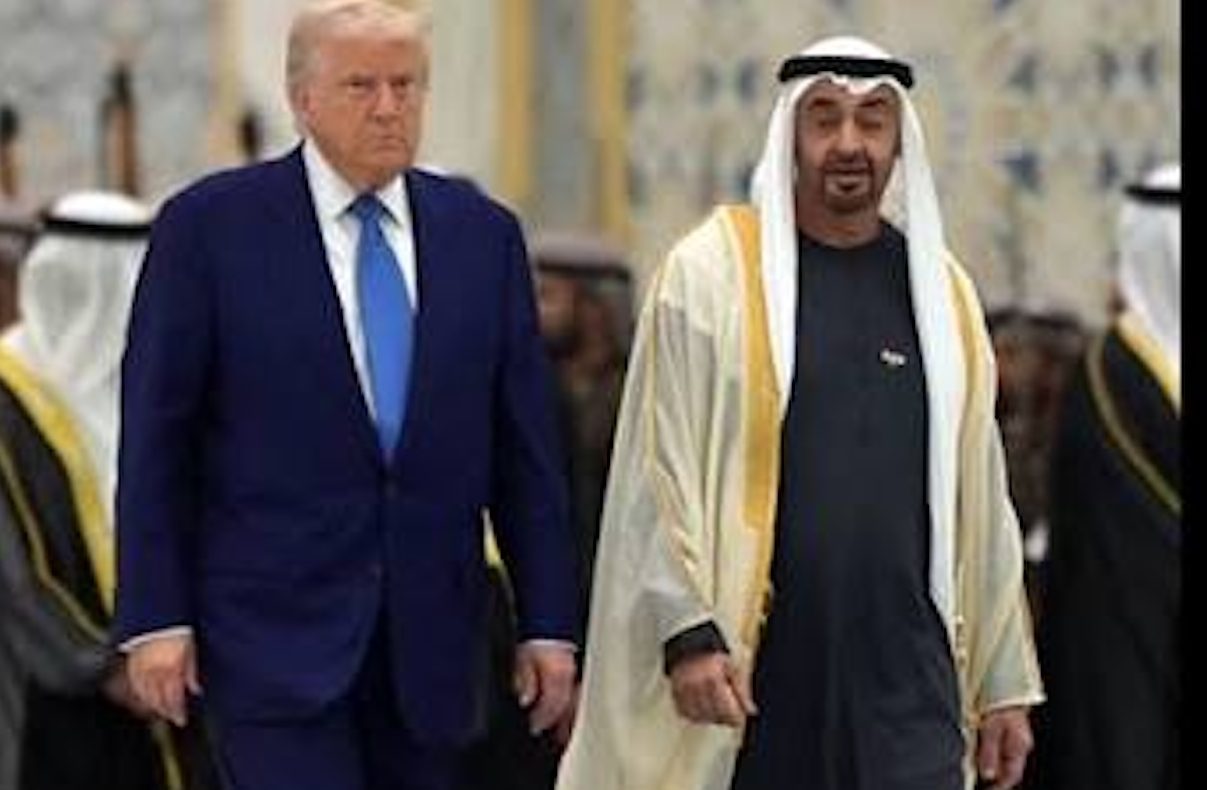
A newly released excerpt from investigative journalist Matthew Cole’s upcoming explosive book, published by Vanity Fair on a recent Thursday, has laid out a series of incendiary claims targeting Jared Kushner, former U.S. President Donald Trump’s son-in-law and current senior foreign policy adviser in Trump’s second administration. Titled *Princes and Thieves: Jared Kushner and Mohamed bin Zayed’s Secret Plot to Remake the Middle East*, the book asserts that at the outset of Trump’s first presidential term, United Arab Emirates leader Mohamed bin Zayed and then-future Saudi Crown Prince Mohammed bin Salman funneled a combined sum of roughly $2 billion into at least two undisclosed foreign bank accounts to which Kushner held access. The first account, codenamed “Alpha” and established at First Abu Dhabi Bank, operated as an informal off-the-books foreign policy fund that Kushner and bin Zayed partially co-managed to advance shared geopolitical priorities. The second, codenamed “Beta,” was structured to route funds from an Azerbaijani financial institution to an apparent Israeli government-linked account held at the Central Bank of Israel, with one anonymous source close to Cole’s investigation confirming this account was explicitly set up for Kushner’s personal financial benefit. Neither account was ever publicly or confidentially disclosed by Kushner during his tenure as a White House senior adviser, a position that required mandatory public and classified financial disclosure filings under U.S. federal ethics rules. As a government official with regular access to top-tier classified intelligence, Kushner was legally obligated to report any account where he held signatory authority or beneficiary rights. Cole’s reporting also draws on a 2020 tip from a reliable intelligence source that confirmed Dutch authorities had hacked Kushner’s personal mobile device and monitored him accessing a Dubai-based account holding hundreds of millions in Azerbaijani-origin funds, with records showing he transferred large sums to third parties including a regional warlord, private mercenary, and former contract killer. A former prosecutor who served on Special Counsel Robert Mueller’s 2016 Russian election interference investigation told Cole that if Kushner exchanged favorable U.S. government treatment for the Gulf state funding, he could face felony federal bribery charges, even if the only action he took was relaying a request to his father-in-law, then-President Trump. The former Mueller team official also noted that even if the accounts had been disclosed properly, Kushner would likely have been required to register as a foreign agent for acting on behalf of UAE and Saudi interests to secure influence within the White House. Within hours of the Vanity Fair excerpt’s publication, Kushner issued a fiery public rebuke via social media, dismissing all allegations as “completely insane, categorically false, and never happened.” He accused Cole of publishing unsubstantiated fiction, noting the journalist had failed to produce a single verifiable piece of evidence including bank statements, wire transfer receipts, account numbers, or transaction dates to back up the claims, and described the work as a deliberate blend of fantasy, partisan advocacy, and malicious fabrication. The allegations emerge at a critical juncture, as Kushner currently serves as the Trump administration’s special peace envoy, with formal mandates to lead high-stakes negotiations to end the Russia-Ukraine war and resolve the ongoing military conflict with Iran that the Trump administration launched in February of this year. Adding to the ongoing scrutiny, government ethics watchdog Citizens for Responsibility and Ethics in Washington filed a lawsuit last week in the U.S. District Court for the District of Columbia, seeking to block Kushner from serving in a senior foreign policy role without the required U.S. Senate confirmation.