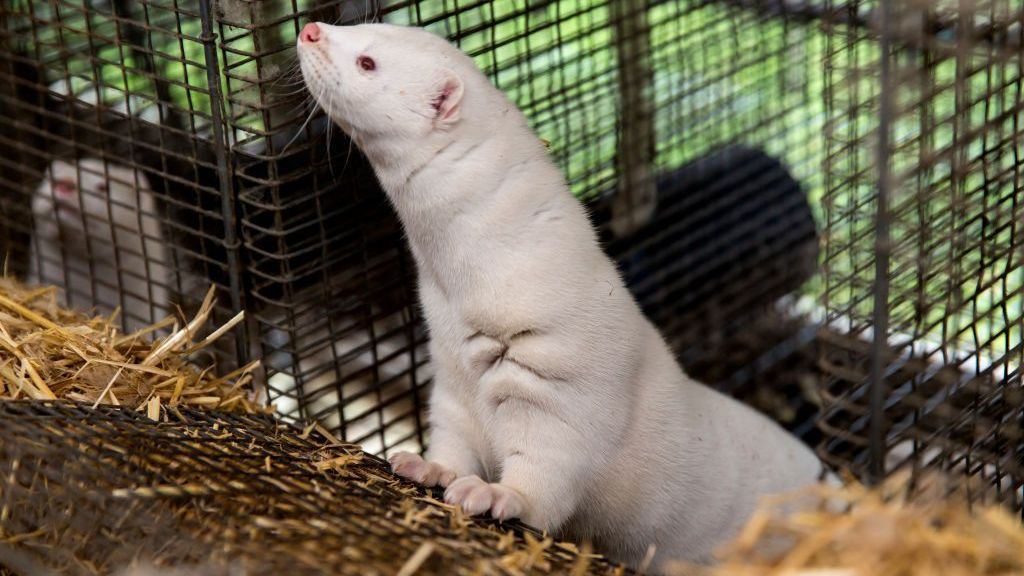
In a landmark policy shift, the Danish government has formally scrapped its previously planned application for an exemption to the upcoming European Union-wide ban on mink farming, paving the way for the complete elimination of the country’s remaining mink breeding operations by August 2029. Once the undisputed global leader in mink fur production, Denmark’s once-thriving fur industry has faced a steady, decades-long decline driven by mounting global regulatory restrictions on fur farming, plummeting consumer demand for fur products, and a devastating 2020 coronavirus outbreak that uncovered a mutated COVID-19 strain circulating in farmed mink populations. The EU’s sweeping prohibition on keeping mink, enacted after the species was added to the bloc’s invasive species register in 2025, is set to take official effect on August 7 of next year, with a two-year transition window built in to allow operators to wind down activities gradually, and an additional extension to 2029 to accommodate the small number of remaining farms. Danish Nature Minister Christian Rabjerg Madsen emphasized that the administration’s decision prioritizes long-overdue animal welfare protections, noting that “no industry earns the right to exist indefinitely simply because it has operated for generations; it must deliver net value to communities, the broader economy, and the animals in its care.” The prior Danish administration had moved to apply for a special carve-out for the domestic mink sector when the EU first rolled out the invasive species listing, but the new centre-left coalition government, sworn into office in June 2026, formally reversed that policy in a Friday announcement. Senior Social Democrat lawmaker Brigitte Vind hailed the move as “a historic win for animal welfare across the country,” adding that rejecting a special exemption for mink breeding was the only ethically and practically sound choice. Representatives of the Danish Mink Association, the trade body that represents the small cohort of remaining breeders, have been contacted for official response but had not issued a statement at press time. In recent years, Denmark has slipped from its long-held top rank in global mink fur output, with production volumes now lagging behind peer operations in Poland and China, leaving it one of a tiny handful of remaining European nations with active commercial mink farms. The sector was pushed to the brink of collapse during the height of the COVID-19 pandemic, when authorities ordered the mass cull of roughly 15 million mink to contain the mutated viral strain, a move that the government later acknowledged had no formal legal basis, sparking widespread public backlash. Today, only an estimated 15,000 mink remain across seven active breeding sites in the country. Local Danish media reports note that final compensation costs for the phase-out have not yet been finalized, though a senior animal welfare spokesperson from one of the governing coalition parties previously projected the total outlay would land at roughly 14 million Danish kroner (£1.56 million), with the final figure likely to rise slightly to account for unforeseen transition costs. The global debate over fur in fashion has ebbed and flowed in recent years, after decades of major fashion houses and industry publications committing to full fur bans amid widespread public outcry over unethical breeding practices, before fur re-emerged in mainstream discourse last year as high-profile celebrities and social media influencers began sporting both vintage real fur pieces and high-end faux fur alternatives.